Recombinant Human Progesterone-induced-blocking factor 1 (PIBF1) Protein

Recombinant Human Progesterone-induced-blocking factor 1 (PIBF1) Protein — The secreted form is a mediator of progesterone that by acting on the phospholipase A2 enzyme interferes with arachidonic acid metabolism, induces a Th2 biased immune response, and by controlling d… Purity >90%.

SKU: BCRECP-00647TM Category:

Product Specifications

Uniprot No.Q8WXW3
Gene NamesPIBF1
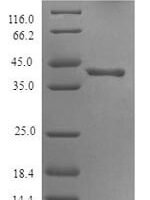
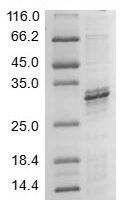
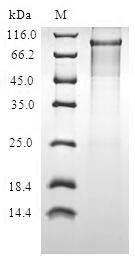
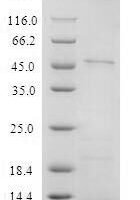
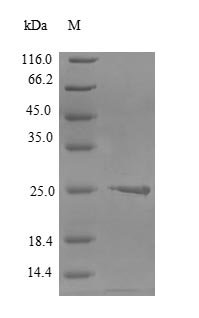
PurityGreater than 90% as determined by SDS-PAGE.
Expression Systemin vitro E.coli expression system
Expression Region1-757aa
SpeciesHomo sapiens(Human)
Tag InfoN-terminal 10xHis-tagged and C-terminal Myc-tagged
Molecular weight94.8kDa
BufferIf the delivery form is liquid, the default storage buffer is Tris/PBS-based buffer, 5%-50% glycerol.If the delivery form is lyophilized powder, the buffer before lyophilization is Tris/PBS-based buffer, 6% Trehalose.
StorageStore at -20°C/-80°C upon receipt, aliquoting is necessary for mutiple use. Avoid repeated freeze-thaw cycles.

Function

The secreted form is a mediator of progesterone that by acting on the phospholipase A2 enzyme interferes with arachidonic acid metabolism, induces a Th2 biased immune response, and by controlling decidual natural killer cells (NK) activity exerts an anti-abortive effect. Increases the production of Th2-type cytokines by signaling via the JAK/STAT pathway. Activates STAT6 and inhibits STAT4 phosphorylation.

Biological Context

Subcellular Location: Secreted
Tissue Specificity: Expressed at highest levels in testis. Moderate expression is detected in spleen, thymus, prostate, ovary, small intestine, and colon. Expressed in the first trimester pregnancy decidua. Localized to extravillous cytotrophoblast (at protein level). Also found in syncytiotrophoblast and part of the villous cytotrophoblast. Isoform 1 is expressed in first trimester and term villous trophoblast; trophoblast cells can additionally express other isoforms. Overexpressed in solid tumors from stomach and uterus and in cells from ovary, cervical, breast, lymphoma and leukemia cancer
Disease Association: [May be associated with microcephaly] | Joubert syndrome 33 (JBTS33) : A form of Joubert syndrome, a disorder presenting with cerebellar ataxia, oculomotor apraxia, hypotonia, neonatal breathing abnormalities and psychomotor delay. Neuroradiologically, it is characterized by cerebellar vermian hypoplasia/aplasia, thickened and reoriented superior cerebellar peduncles, and an abnormally large interpeduncular fossa, giving the appearance of a molar tooth on transaxial slices (molar tooth sign). Additional variable features include retinal dystrophy, renal disease, liver fibrosis, and polydactyly. JBTS33 inheritance is autosomal recessive. [The disease is caused by variants affecting the gene represented in this entry]

Product Specifications

Recombinant Human Progesterone-induced-blocking factor 1 (PIBF1) Protein is a recombinant protein from Homo sapiens(Human), expressed in in vitro E.coli expression system, covering amino acids 1-757aa, with N-terminal 10xHis-tagged and C-terminal Myc-tagged tag, molecular weight 94.8kDa, purity Greater than 90% as determined by SDS-PAGE.. Suitable for ELISA and Western Blot applications.
Recommended applications depend on the target, product format, and product-specific validation data. Refer to the product datasheet or Certificate of Analysis (CoA), or contact BioCrest Sci for application guidance.

Biological Activity: Not implied unless activity data are explicitly listed on this product page, the datasheet, or the CoA.

Storage: Store at -20°C/-80°C upon receipt, aliquoting is necessary for mutiple use. Avoid repeated freeze-thaw cycles.

Shipping & Lead Time: Availability, shipping conditions, and estimated lead time are confirmed in the formal quotation or order confirmation based on the product format, destination, and order requirements.

Protein Biology

Function

The secreted form is a mediator of progesterone that by acting on the phospholipase A2 enzyme interferes with arachidonic acid metabolism, induces a Th2 biased immune response, and by controlling decidual natural killer cells (NK) activity exerts an anti-abortive effect (PubMed:12516630, PubMed:14634107, PubMed:3863495). Increases the production of Th2-type cytokines by signaling via the JAK/STAT pathway. Activates STAT6 and inhibits STAT4 phosphorylation. Signaling via a not identified receptor seems to implicate IL4R and a GPI-anchored protein (PubMed:16393965, PubMed:25218441)

Subcellular Location

Secreted

Disease Association

[May be associated with microcephaly] | Joubert syndrome 33 (JBTS33) : A form of Joubert syndrome, a disorder presenting with cerebellar ataxia, oculomotor apraxia, hypotonia, neonatal breathing abnormalities and psychomotor delay. Neuroradiologically, it is characterized by cerebellar vermian hypoplasia/aplasia, thickened and reoriented superior cerebellar peduncles, and an abnormally large interpeduncular fossa, giving the appearance of a molar tooth on transaxial slices (molar tooth sign). Additional variable features include retinal dystrophy, renal disease, liver fibrosis, and polydactyly. JBTS33 inheritance is autosomal recessive. [The disease is caused by variants affecting the gene represented in this entry]

Tissue Specificity

Expressed at highest levels in testis. Moderate expression is detected in spleen, thymus, prostate, ovary, small intestine, and colon (PubMed:11935316). Expressed in the first trimester pregnancy decidua (PubMed:12516630). Localized to extravillous cytotrophoblast (at protein level). Also found in syncytiotrophoblast and part of the villous cytotrophoblast. Isoform 1 is expressed in first trimester and term villous trophoblast; trophoblast cells can additionally express other isoforms (PubMed:18817979). Overexpressed in solid tumors from stomach and uterus and in cells from ovary, cervical, breast, lymphoma and leukemia cancer (PubMed:25218441)

Subunit

Isoform 1 interacts with PCM1, BBS4 and CEP63 (PubMed:21224392, PubMed:23110211, PubMed:26297806). Interacts with IL4R (PubMed:25218441). Interacts with CFAP53 (PubMed:26538025)

Gene: PIBF1  |  Organism: Homo sapiens  |  Synonyms: Centrosomal protein of 90 kDa
Key Publications

Frequently Asked Questions

How do I order or inquire about this product?

Submit the Online Inquiry form with your required quantity and specifications, or email sales@biocrestsci.com. Available sizes, pricing, stock status, documentation, and estimated lead time are confirmed in the formal quotation.

What is the shipping and delivery time?

Availability, dispatch timing, shipping conditions, and delivery estimates depend on the product format, destination, and order requirements. These details are confirmed in the formal quotation or order confirmation.

How should this product be stored?

Follow the storage and handling instructions in the product-specific datasheet and Certificate of Analysis (CoA). Requirements may vary by product form and formulation; contact BioCrest Sci if product-specific guidance is needed.

What quality controls are performed on your products?

Quality-control data such as identity, purity, endotoxin level, or biological activity are provided only when specified on this product page, the datasheet, or Certificate of Analysis (CoA). Biological activity is not implied unless explicitly stated.

Shopping Cart
Scroll to Top