,

Recombinant Human Proprotein convertase subtilisin/kexin type 9 (PCSK9) (D374Y), Biotinylated (Active)

Recombinant Human Proprotein convertase subtilisin/kexin type 9 (PCSK9) (D374Y), Biotinylated (Active) — Crucial player in the regulation of plasma cholesterol homeostasis. Purity >95%.

SKU: BCRECP-001354 Categories: ,

Product Specifications

Product SkuBCRECP-001354
Product DescriptionRecombinant Human Proprotein convertase subtilisin/kexin type 9 (PCSK9) (D374Y) Protein is expressed from Mammalian cell with C-terminal 10xHis-Avi-tagged. It contains 31-692aa(D374Y). [Accession | Q8NBP7].
Uniprot No.Q8NBP7
Gene NamesPCSK9
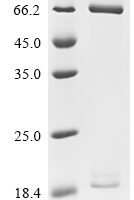
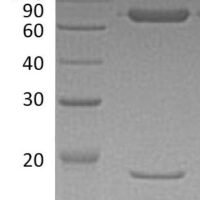
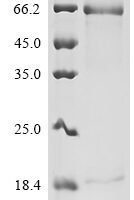
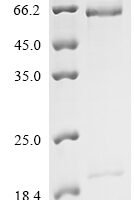
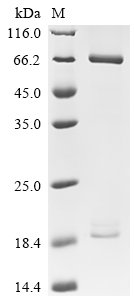
PurityGreater than 95% as determined by SDS-PAGE.
Expression SystemMammalian cell
Expression Region31-692aa(D374Y)
SpeciesHomo sapiens (Human)
Tag InfoC-terminal 10xHis-Avi-tagged
Molecular weight76.0kDa
ActivityPlease contact us to obtain bioactivity data.
BufferIf the delivery form is liquid, the default storage buffer is Tris/PBS-based buffer, 5%-50% glycerol. If the delivery form is lyophilized powder, the buffer before lyophilization is Tris/PBS-based buffer, 6% Trehalose.
StorageStore at -20°C/-80°C upon receipt, aliquoting is necessary for mutiple use. Avoid repeated freeze-thaw cycles.
Research AreasSignal Transduction

Function

Crucial player in the regulation of plasma cholesterol homeostasis. Binds to low-density lipid receptor family members: low density lipoprotein receptor (LDLR), very low density lipoprotein receptor (VLDLR), apolipoprotein E receptor (LRP1/APOER) and apolipoprotein receptor 2 (LRP8/APOER2), and promotes their degradation in intracellular acidic compartments. Acts via a non-proteolytic mechanism to enhance the degradation of the hepatic LDLR through a clathrin LDLRAP1/ARH-mediated pathway.

Biological Context

Subcellular Location: Cytoplasm; Secreted; Endosome; Lysosome; Cell surface; Endoplasmic reticulum; Golgi apparatus
Tissue Specificity: Expressed in neuro-epithelioma, colon carcinoma, hepatic and pancreatic cell lines, and in Schwann cells
Disease Association: Hypercholesterolemia, familial, 3 (FHCL3) : A form of hypercholesterolemia, a disorder of lipoprotein metabolism characterized by elevated serum low-density lipoprotein (LDL) cholesterol levels, which result in excess deposition of cholesterol in tissues and leads to xanthelasma, xanthomas, accelerated atherosclerosis and increased risk of premature coronary heart disease. FHCL3 inheritance is autosomal dominant. [The disease is caused by variants affecting the gene represented in this entry]

Product Specifications

Recombinant Human Proprotein convertase subtilisin/kexin type 9 (PCSK9) (D374Y), Biotinylated (Active) is a recombinant protein from Homo sapiens (Human), expressed in Mammalian cell, covering amino acids 31-692aa(D374Y), with C-terminal 10xHis-Avi-tagged tag, molecular weight 76.0kDa, purity Greater than 95% as determined by SDS-PAGE.. Suitable for ELISA and Western Blot applications.

SDS-PAGE: Single band at expected molecular weight confirming purity.

ELISA: Suitable as coating antigen or detection standard.

Western Blot: Compatible with standard Western Blot protocols.

Protein Interaction: Validated for SPR (Surface Plasmon Resonance) and BLI (Bio-Layer Interferometry) studies.

Shipping: Shipped at ambient temperature. Lyophilized protein is stable during transit.

Storage: Store lyophilized protein at -20°C to -80°C. Reconstituted protein should be aliquoted and stored at -80°C. Avoid repeated freeze-thaw cycles.

Shelf Life: 12 months from date of receipt when stored as recommended.

Shipping Time: Orders placed before 2 PM EST ship same day. International orders typically deliver within 5-10 business days.

Protein Biology

Function

Crucial player in the regulation of plasma cholesterol homeostasis. Binds to low-density lipid receptor family members: low density lipoprotein receptor (LDLR), very low density lipoprotein receptor (VLDLR), apolipoprotein E receptor (LRP1/APOER) and apolipoprotein receptor 2 (LRP8/APOER2), and promotes their degradation in intracellular acidic compartments (PubMed:18039658). Acts via a non-proteolytic mechanism to enhance the degradation of the hepatic LDLR through a clathrin LDLRAP1/ARH-mediated pathway. May prevent the recycling of LDLR from endosomes to the cell surface or direct it to lysosomes for degradation. Can induce ubiquitination of LDLR leading to its subsequent degradation (PubMed:17461796, PubMed:18197702, PubMed:18799458, PubMed:22074827). Inhibits intracellular degradation of APOB via the autophagosome/lysosome pathway in a LDLR-independent manner. Involved in the disposal of non-acetylated intermediates of BACE1 in the early secretory pathway (PubMed:18660751). Inhibits epithelial Na(+) channel (ENaC)-mediated Na(+) absorption by reducing ENaC surface expression primarily by increasing its proteasomal degradation. Regulates neuronal apoptosis via modulation of LRP8/APOER2 levels and related anti-apoptotic signaling pathways

Subcellular Location

Cytoplasm; Secreted; Endosome; Lysosome; Cell surface; Endoplasmic reticulum; Golgi apparatus

Disease Association

Hypercholesterolemia, familial, 3 (FHCL3) : A form of hypercholesterolemia, a disorder of lipoprotein metabolism characterized by elevated serum low-density lipoprotein (LDL) cholesterol levels, which result in excess deposition of cholesterol in tissues and leads to xanthelasma, xanthomas, accelerated atherosclerosis and increased risk of premature coronary heart disease. FHCL3 inheritance is autosomal dominant. [The disease is caused by variants affecting the gene represented in this entry]

Tissue Specificity

Expressed in neuro-epithelioma, colon carcinoma, hepatic and pancreatic cell lines, and in Schwann cells

Subunit

Monomer. Can self-associate to form dimers and higher multimers which may have increased LDLR degrading activity. The precursor protein but not the mature protein may form multimers. Interacts with APOB, VLDLR, LRP8/APOER2 and BACE1. The full-length immature form (pro-PCSK9) interacts with SCNN1A, SCNN1B and SCNN1G. The pro-PCSK9 form (via C-terminal domain) interacts with LDLR. Interacts (via the C-terminal domain) with ANXA2 (via repeat Annexin 1); the interaction inhibits the degradation of LDLR (PubMed:18799458)

Gene: PCSK9  |  Organism: Homo sapiens  |  Synonyms: Neural apoptosis-regulated convertase 1; Proprotein convertase 9; Subtilisin/kexin-like protease PC9
Key Publications

Frequently Asked Questions

How do I order or inquire about this product?

Fill out the Online Inquiry form with your required quantity and specifications. You can also email sales@biocrestsci.com. Our team typically responds within 4 business hours with a quote and availability confirmation.

What is the shipping and delivery time?

Orders placed before 2 PM EST ship the same day. Domestic (US) delivery typically takes 2-3 business days. International orders deliver within 5-10 business days. All products are shipped at ambient temperature with appropriate packaging to ensure stability.

How should I store this recombinant protein?

Lyophilized proteins should be stored at -20°C to -80°C upon receipt. After reconstitution, aliquot and store at -80°C. Avoid repeated freeze-thaw cycles. Shelf life is 12 months from date of receipt when stored as recommended.

What quality controls are performed on your products?

Each product undergoes SDS-PAGE purity analysis (typically >85-95%), endotoxin testing, and bioactivity validation. Products are validated for ELISA, Western Blot, and SPR/BLI applications as specified on this product page. A Certificate of Analysis (CoA) is available upon request.

Shopping Cart
Scroll to Top