
Function
Pyruvate kinase that catalyzes the conversion of phosphoenolpyruvate to pyruvate with the synthesis of ATP, and which plays a key role in glycolysis. Also produces the side product 2-phospholactate which can inhibit fructose-2,6-bisphosphate production. 2-phospholactate can be dephosphorylated by PGP which prevents the inhibition of fructose-2,6-bisphosphate production and allows glycolysis to occur.
Biological Context
Disease Association: Pyruvate kinase hyperactivity (PKHYP) : Autosomal dominant phenotype characterized by increase of red blood cell ATP. [The disease is caused by variants affecting the gene represented in this entry] | Anemia, congenital, non-spherocytic hemolytic, 2 (CNSHA2) : An autosomal recessive disorder characterized by a variable degree of chronic hemolysis and decreased red cell pyruvate kinase activity. Clinical manifestations range from fatal anemia at birth to a fully compensated hemolysis without apparent anemia. [The disease is caused by variants affecting the gene represented in this entry]
Pathway: Carbohydrate degradation; glycolysis; pyruvate from D-glyceraldehyde 3-phosphate: step 5/5
Product Specifications
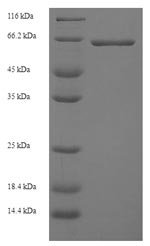
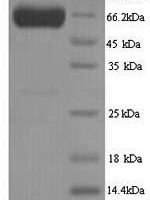
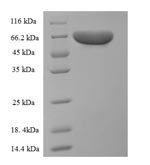
Recombinant Human Pyruvate kinase PKLR (PKLR) is a recombinant protein from Homo sapiens (Human), expressed in E.coli, covering amino acids 1-574aa, with N-terminal 6xHis-tagged tag, molecular weight 65.8kDa, purity Greater than 90% as determined by SDS-PAGE.. Suitable for ELISA and Western Blot applications. Explore more Kinase proteins →
![Human Succinate dehydrogenase [ubiquinone] flavoprotein subunit, mitochondrial (SDHA), partial Recombinant Protein, N-GST - BioCrest Sci](https://www.biocrestsci.com/wp-content/uploads/protein/1/BCACP-838381-SDS-150x200.jpg)