Recombinant Human R-spondin-2 (RSPO2), partial

Recombinant Human R-spondin-2 (RSPO2), partial — Activator of the canonical Wnt signaling pathway by acting as a ligand for LGR4-6 receptors. Purity >85%.

SKU: BCRECP-001570 Category:

Product Specifications

Product SkuBCRECP-001570
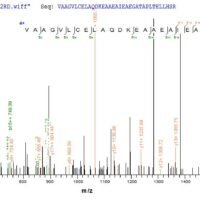
Product DescriptionRecombinant Human R-spondin-2 (RSPO2) Protein is expressed from E.coli with C-terminal 10xHis-tagged. It contains 22-205aa. [Accession | Q6UXX9].
Uniprot No.Q6UXX9
Gene NamesRSPO2
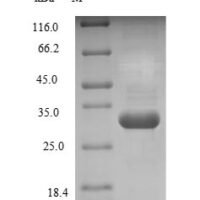
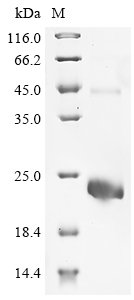
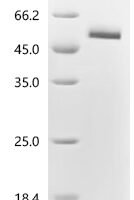
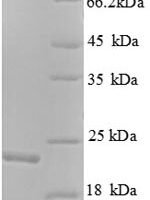
PurityGreater than 85% as determined by SDS-PAGE.
Expression SystemE.coli
Expression Region22-205aa
SpeciesHomo sapiens (Human)
Tag InfoC-terminal 10xHis-tagged
Molecular weight22.8kDa
ActivityPlease contact us to obtain bioactivity data.
BufferIf the delivery form is liquid, the default storage buffer is Tris/PBS-based buffer, 5%-50% glycerol. If the delivery form is lyophilized powder, the buffer before lyophilization is Tris/PBS-based buffer, 6% Trehalose.
StorageStore at -20°C/-80°C upon receipt, aliquoting is necessary for mutiple use. Avoid repeated freeze-thaw cycles.
Research AreasDevelopmental Biology

Function

Activator of the canonical Wnt signaling pathway by acting as a ligand for LGR4-6 receptors. Upon binding to LGR4-6 (LGR4, LGR5 or LGR6), LGR4-6 associate with phosphorylated LRP6 and frizzled receptors that are activated by extracellular Wnt receptors, triggering the canonical Wnt signaling pathway to increase expression of target genes. Also regulates the canonical Wnt/beta-catenin-dependent pathway and non-canonical Wnt signaling by acting as an inhibitor of ZNRF3, an important regulator of the Wnt signaling pathway.

Biological Context

Subcellular Location: Secreted
Disease Association: Tetraamelia syndrome 2 (TETAMS2) : A form of tetraamelia, a rare disease characterized by rudimentary appendages or complete absence of all four limbs, and other anomalies such as craniofacial, nervous system, pulmonary, skeletal and urogenital defects. TETAMS2 patients manifest limb deformities, bilateral agenesis of the lungs, abnormalities of the pulmonary vasculature, labioscrotal fold aplasia, and dysmorphic features including bilateral cleft lip/palate, ankyloglossia, mandibular hypoplasia, and microretrognathia. TETAMS2 transmission pattern is consistent with autosomal recessive inheritance. [The disease is caused by variants affecting the gene represented in this entry] | Humerofemoral hypoplasia with radiotibial ray deficiency (HHRRD) : A severe disease characterized by reduction of all four limbs as well as hypoplasia of the upper limb girdle and pelvis. Rudimentary finger- or toe-like appendages may be present. HHRRD transmission pattern is consistent with autosomal recessive inheritance. [The disease is caused by variants affecting the gene represented in this entry]

Product Specifications

Recombinant Human R-spondin-2 (RSPO2), partial is a recombinant protein from Homo sapiens (Human), expressed in E.coli, covering amino acids 22-205aa, with C-terminal 10xHis-tagged tag, molecular weight 22.8kDa, purity Greater than 85% as determined by SDS-PAGE.. Suitable for ELISA and Western Blot applications.
Recommended applications depend on the target, product format, and product-specific validation data. Refer to the product datasheet or Certificate of Analysis (CoA), or contact BioCrest Sci for application guidance.

Biological Activity: Please contact us to obtain bioactivity data.

Storage: Store at -20°C/-80°C upon receipt, aliquoting is necessary for mutiple use. Avoid repeated freeze-thaw cycles.

Shipping & Lead Time: Availability, shipping conditions, and estimated lead time are confirmed in the formal quotation or order confirmation based on the product format, destination, and order requirements.

Protein Biology

Function

Activator of the canonical Wnt signaling pathway by acting as a ligand for LGR4-6 receptors. Upon binding to LGR4-6 (LGR4, LGR5 or LGR6), LGR4-6 associate with phosphorylated LRP6 and frizzled receptors that are activated by extracellular Wnt receptors, triggering the canonical Wnt signaling pathway to increase expression of target genes. Also regulates the canonical Wnt/beta-catenin-dependent pathway and non-canonical Wnt signaling by acting as an inhibitor of ZNRF3, an important regulator of the Wnt signaling pathway (PubMed:21727895, PubMed:21909076, PubMed:22615920). During embryonic development, plays a crucial role in limb specification, amplifying the Wnt signaling pathway independently of LGR4-6 receptors, possibly by acting as a direct antagonistic ligand to RNF43 and ZNRF3, hence governing the number of limbs an embryo should form (PubMed:29769720)

Subcellular Location

Secreted

Disease Association

Tetraamelia syndrome 2 (TETAMS2) : A form of tetraamelia, a rare disease characterized by rudimentary appendages or complete absence of all four limbs, and other anomalies such as craniofacial, nervous system, pulmonary, skeletal and urogenital defects. TETAMS2 patients manifest limb deformities, bilateral agenesis of the lungs, abnormalities of the pulmonary vasculature, labioscrotal fold aplasia, and dysmorphic features including bilateral cleft lip/palate, ankyloglossia, mandibular hypoplasia, and microretrognathia. TETAMS2 transmission pattern is consistent with autosomal recessive inheritance. [The disease is caused by variants affecting the gene represented in this entry] | Humerofemoral hypoplasia with radiotibial ray deficiency (HHRRD) : A severe disease characterized by reduction of all four limbs as well as hypoplasia of the upper limb girdle and pelvis. Rudimentary finger- or toe-like appendages may be present. HHRRD transmission pattern is consistent with autosomal recessive inheritance. [The disease is caused by variants affecting the gene represented in this entry]

Subunit

Interacts with WNT1 (By similarity). Binds heparin (By similarity). Interacts with LGR4, LGR5 and LGR6 (PubMed:21727895, PubMed:21909076, PubMed:22615920, PubMed:29769720). Interacts with E3 ubiquitin ligases RNF43 and ZNRF3 (PubMed:29769720)

Gene: RSPO2  |  Organism: Homo sapiens  |  Synonyms: Roof plate-specific spondin-2
Key Publications

Frequently Asked Questions

How do I order or inquire about this product?

Submit the Online Inquiry form with your required quantity and specifications, or email sales@biocrestsci.com. Available sizes, pricing, stock status, documentation, and estimated lead time are confirmed in the formal quotation.

What is the shipping and delivery time?

Availability, dispatch timing, shipping conditions, and delivery estimates depend on the product format, destination, and order requirements. These details are confirmed in the formal quotation or order confirmation.

How should this product be stored?

Follow the storage and handling instructions in the product-specific datasheet and Certificate of Analysis (CoA). Requirements may vary by product form and formulation; contact BioCrest Sci if product-specific guidance is needed.

What quality controls are performed on your products?

Quality-control data such as identity, purity, endotoxin level, or biological activity are provided only when specified on this product page, the datasheet, or Certificate of Analysis (CoA). Biological activity is not implied unless explicitly stated.

Shopping Cart
Scroll to Top