, ,

Recombinant Human Receptor-interacting serine/threonine-protein kinase 1 (RIPK1)

Recombinant Human Receptor-interacting serine/threonine-protein kinase 1 (RIPK1) — Serine-threonine kinase which is a key regulator of TNF-mediated apoptosis, necroptosis and inflammatory pathways. Purity >85%.

SKU: BCRECP-001538 Categories: , ,

Product Specifications

Product SkuBCRECP-001538
Product DescriptionRecombinant Human Receptor-interacting serine/threonine-protein kinase 1 (RIPK1) Protein is expressed from Baculovirus with C-terminal 6xHis-tagged. It contains 1-671aa. [Accession | Q13546].
Uniprot No.Q13546
Gene NamesRIPK1
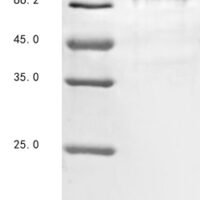
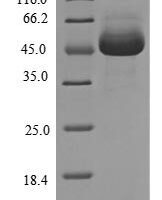
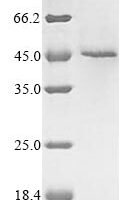
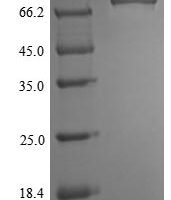
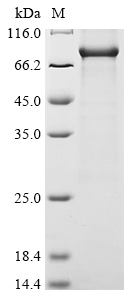
PurityGreater than 85% as determined by SDS-PAGE.
Expression SystemBaculovirus
Expression Region1-671aa
SpeciesHomo sapiens (Human)
Tag InfoC-terminal 6xHis-tagged
Molecular weight81.6kDa
ActivityPlease contact us to obtain bioactivity data.
BufferIf the delivery form is liquid, the default storage buffer is Tris/PBS-based buffer, 5%-50% glycerol. If the delivery form is lyophilized powder, the buffer before lyophilization is Tris/PBS-based buffer, 6% Trehalose.
StorageStore at -20°C/-80°C upon receipt, aliquoting is necessary for mutiple use. Avoid repeated freeze-thaw cycles.
Research AreasCell Biology

Function

Serine-threonine kinase which is a key regulator of TNF-mediated apoptosis, necroptosis and inflammatory pathways. Exhibits kinase activity-dependent functions that regulate cell death and kinase-independent scaffold functions regulating inflammatory signaling and cell survival.

Product Specifications

Recombinant Human Receptor-interacting serine/threonine-protein kinase 1 (RIPK1) — Serine-threonine kinase which is a key regulator of TNF-mediated apoptosis, necroptosis and inflammatory pathways. Purity >85%. Suitable for ELISA and Western Blot applications.

SDS-PAGE: Single band at expected molecular weight confirming purity.

ELISA: Suitable as coating antigen or detection standard.

Western Blot: Compatible with standard Western Blot protocols.

Protein Interaction: Validated for SPR (Surface Plasmon Resonance) and BLI (Bio-Layer Interferometry) studies.

Shipping: Shipped at ambient temperature. Lyophilized protein is stable during transit.

Storage: Store lyophilized protein at -20°C to -80°C. Reconstituted protein should be aliquoted and stored at -80°C. Avoid repeated freeze-thaw cycles.

Shelf Life: 12 months from date of receipt when stored as recommended.

Shipping Time: Orders placed before 2 PM EST ship same day. International orders typically deliver within 5-10 business days.

Protein Biology

Function

Serine-threonine kinase which is a key regulator of TNF-mediated apoptosis, necroptosis and inflammatory pathways (PubMed:17703191, PubMed:24144979, PubMed:31827280, PubMed:31827281, PubMed:32657447, PubMed:35831301). Exhibits kinase activity-dependent functions that regulate cell death and kinase-independent scaffold functions regulating inflammatory signaling and cell survival (PubMed:11101870, PubMed:19524512, PubMed:19524513, PubMed:29440439, PubMed:30988283). Has kinase-independent scaffold functions: upon binding of TNF to TNFR1, RIPK1 is recruited to the TNF-R1 signaling complex (TNF-RSC also known as complex I) where it acts as a scaffold protein promoting cell survival, in part, by activating the canonical NF-kappa-B pathway (By similarity). Kinase activity is essential to regulate necroptosis and apoptosis, two parallel forms of cell death: upon activation of its protein kinase activity, regulates assembly of two death-inducing complexes, namely complex IIa (RIPK1-FADD-CASP8), which drives apoptosis, and the complex IIb (RIPK1-RIPK3-MLKL), which drives necroptosis (By similarity). RIPK1 is required to limit CASP8-dependent TNFR1-induced apoptosis (By similarity). In normal conditions, RIPK1 acts as an inhibitor of RIPK3-dependent necroptosis, a process mediated by RIPK3 component of complex IIb, which catalyzes phosphorylation of MLKL upon induction by ZBP1 (PubMed:19524512, PubMed:19524513, PubMed:29440439, PubMed:30988283). Inhibits RIPK3-mediated necroptosis via FADD-mediated recruitment of CASP8, which cleaves RIPK1 and limits TNF-induced necroptosis (PubMed:19524512, PubMed:19524513, PubMed:29440439, PubMed:30988283). Required to inhibit apoptosis and necroptosis during embryonic development: acts by preventing the interaction of TRADD with FADD thereby limiting aberrant activation of CASP8 (By similarity). In addition to apoptosis and necroptosis, also involved in inflammatory response by promoting transcriptional production of pro-inflammatory cytokines, such as interleukin-6 (IL6) (PubMed:31827280, PubMed:31827281). Phosphorylates RIPK3: RIPK1 and RIPK3 undergo reciprocal auto- and trans-phosphorylation (PubMed:19524513). Phosphorylates DAB2IP at 'Ser-728' in a TNF-dependent manner, and thereby activates the MAP3K5-JNK apoptotic cascade (PubMed:15310755, PubMed:17389591). Required for ZBP1-induced NF-kappa-B activation in response to DNA damage (By similarity)

Subcellular Location

Cytoplasm; Cell membrane

Disease Association

Immunodeficiency 57 with autoinflammation (IMD57) : An autosomal recessive primary immunodeficiency characterized by lymphopenia and recurrent viral, bacterial, and fungal infections. Patients exhibit early-onset inflammatory bowel disease involving the upper and lower gastrointestinal tract, and develop progressive polyarthritis. [The disease is caused by variants affecting the gene represented in this entry. RIPK1-deficient immune cells from IMD57 patients have impaired proinflammatory signaling leading to dysregulated cytokine secretion and are prone to necroptosis] | Autoinflammation with episodic fever and lymphadenopathy (AIEFL) : An autosomal dominant immunologic disorder characterized by early onset of recurrent episodes of unexplained fever, lymphadenopathy, hepatosplenomegaly, and increased levels of inflammatory cytokines and chemokines in patient serum. [The disease is caused by variants affecting the gene represented in this entry]

Subunit

(Microbial infection) Interacts (via RIP homotypic interaction motif) with herpes simplex virus 2/HHV-2 protein RIR1/ICP10 (via RIP homotypic interaction motif); this interaction prevents necroptosis activation

Gene: RIPK1  |  Organism: Homo sapiens  |  Synonyms: Cell death protein RIP; Receptor-interacting protein 1

Frequently Asked Questions

How do I order or inquire about this product?

Fill out the Online Inquiry form with your required quantity and specifications. You can also email sales@biocrestsci.com. Our team typically responds within 4 business hours with a quote and availability confirmation.

What is the shipping and delivery time?

Orders placed before 2 PM EST ship the same day. Domestic (US) delivery typically takes 2-3 business days. International orders deliver within 5-10 business days. All products are shipped at ambient temperature with appropriate packaging to ensure stability.

How should I store this recombinant protein?

Lyophilized proteins should be stored at -20°C to -80°C upon receipt. After reconstitution, aliquot and store at -80°C. Avoid repeated freeze-thaw cycles. Shelf life is 12 months from date of receipt when stored as recommended.

What quality controls are performed on your products?

Each product undergoes SDS-PAGE purity analysis (typically >85-95%), endotoxin testing, and bioactivity validation. Products are validated for ELISA, Western Blot, and SPR/BLI applications as specified on this product page. A Certificate of Analysis (CoA) is available upon request.

Shopping Cart
Scroll to Top