Function
Component of the signal recognition particle (SRP) complex, a ribonucleoprotein complex that mediates the cotranslational targeting of secretory and membrane proteins to the endoplasmic reticulum (ER). The SRP complex interacts with the signal sequence in nascent secretory and membrane proteins and directs them to the membrane of the ER. The SRP complex targets the ribosome-nascent chain complex to the SRP receptor (SR), which is anchored in the ER, where SR compaction and GTPase rearrangement drive cotranslational protein translocation into the ER.
Biological Context
Subcellular Location: Cytoplasm; Endoplasmic reticulum
Disease Association: Bone marrow failure syndrome 1 (BMFS1) : An autosomal dominant disease characterized by aplastic anemia and myelodysplasia resulting from bone marrow failure. Aplastic anemia is a form of anemia in which the bone marrow fails to produce adequate numbers of peripheral blood elements. Myelodysplasia is a clonal hematopoietic stem cell disorder in which immature cells in the bone marrow become malformed and dysfunctional. [The disease is caused by variants affecting the gene represented in this entry]
Product Specifications
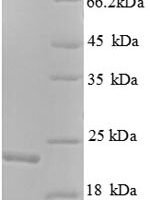
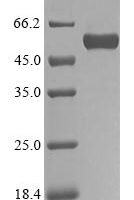
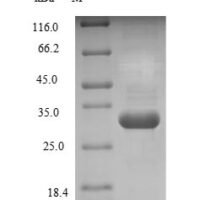
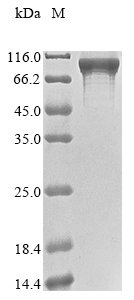
Recombinant Human Signal recognition particle subunit SRP72 (SRP72) is a recombinant protein from Homo sapiens (Human), expressed in E.coli, covering amino acids 2-671aa, with N-terminal GST-tagged tag, molecular weight 101.1kDa, purity Greater than 85% as determined by SDS-PAGE.. Suitable for ELISA and Western Blot applications.