,

Recombinant Human T-cell surface glycoprotein CD3 epsilon chain (CD3E), partial

Recombinant Human T-cell surface glycoprotein CD3 epsilon chain (CD3E), partial — Part of the TCR-CD3 complex present on T-lymphocyte cell surface that plays an essential role in adaptive immune response. Purity >95%.

SKU: BCRECP-000286 Categories: ,

Product Specifications

Product SkuBCRECP-000286
Product DescriptionRecombinant Human T-cell surface glycoprotein CD3 epsilon chain (CD3E) Protein is expressed from Mammalian cell with C-terminal hFc1-tagged. It contains 22-126aa. [Accession | P07766].
Uniprot No.P07766
Gene NamesCD3E
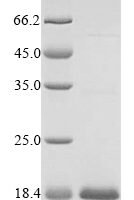
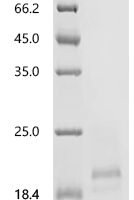
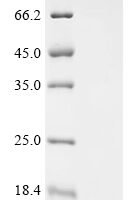
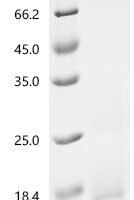
PurityGreater than 95% as determined by SDS-PAGE.
Expression SystemMammalian cell
Expression Region22-126aa
SpeciesHomo sapiens (Human)
Tag InfoC-terminal hFc1-tagged
Molecular weight40.8kDa
ActivityPlease contact us to obtain bioactivity data.
BufferIf the delivery form is liquid, the default storage buffer is Tris/PBS-based buffer, 5%-50% glycerol. If the delivery form is lyophilized powder, the buffer before lyophilization is Tris/PBS-based buffer, 6% Trehalose.
StorageStore at -20°C/-80°C upon receipt, aliquoting is necessary for mutiple use. Avoid repeated freeze-thaw cycles.
Research AreasImmunology

Function

Part of the TCR-CD3 complex present on T-lymphocyte cell surface that plays an essential role in adaptive immune response. When antigen presenting cells (APCs) activate T-cell receptor (TCR), TCR-mediated signals are transmitted across the cell membrane by the CD3 chains CD3D, CD3E, CD3G and CD247/CD3Z. All CD3 chains contain immunoreceptor tyrosine-based activation motifs (ITAMs) in their cytoplasmic domain.

Biological Context

Subcellular Location: Cell membrane (Single-pass type I membrane protein)
Disease Association: Immunodeficiency 18 (IMD18) : An autosomal recessive primary immunodeficiency characterized by onset in infancy or early childhood of recurrent infections. The severity is variable, encompassing both a mild immunodeficiency and severe combined immunodeficiency (SCID), resulting in early death without bone marrow transplantation in some patients. Immunologic work-up of the IMD18 SCID patients shows a T cell-negative, B cell-positive, natural killer (NK) cell-positive phenotype, whereas T-cell development is not impaired in the mild form of IMD18. [The disease is caused by variants affecting the gene represented in this entry]

Product Specifications

Recombinant Human T-cell surface glycoprotein CD3 epsilon chain (CD3E), partial is a recombinant protein from Homo sapiens (Human), expressed in Mammalian cell, covering amino acids 22-126aa, with C-terminal hFc1-tagged tag, molecular weight 40.8kDa, purity Greater than 95% as determined by SDS-PAGE.. Suitable for ELISA and Western Blot applications.

SDS-PAGE: Single band at expected molecular weight confirming purity.

ELISA: Suitable as coating antigen or detection standard.

Western Blot: Compatible with standard Western Blot protocols.

Protein Interaction: Validated for SPR (Surface Plasmon Resonance) and BLI (Bio-Layer Interferometry) studies.

Shipping: Shipped at ambient temperature. Lyophilized protein is stable during transit.

Storage: Store lyophilized protein at -20°C to -80°C. Reconstituted protein should be aliquoted and stored at -80°C. Avoid repeated freeze-thaw cycles.

Shelf Life: 12 months from date of receipt when stored as recommended.

Shipping Time: Orders placed before 2 PM EST ship same day. International orders typically deliver within 5-10 business days.

Protein Biology

Function

Part of the TCR-CD3 complex present on T-lymphocyte cell surface that plays an essential role in adaptive immune response (PubMed:15294938, PubMed:15546002, PubMed:2470098, PubMed:40592325, PubMed:8490660). When antigen presenting cells (APCs) activate T-cell receptor (TCR), TCR-mediated signals are transmitted across the cell membrane by the CD3 chains CD3D, CD3E, CD3G and CD247/CD3Z (PubMed:2470098, PubMed:40592325). All CD3 chains contain immunoreceptor tyrosine-based activation motifs (ITAMs) in their cytoplasmic domain (PubMed:2470098, PubMed:40592325). Upon TCR engagement, these motifs become phosphorylated by Src family protein tyrosine kinases LCK and FYN, resulting in the activation of downstream signaling pathways (PubMed:2470098, PubMed:40592325). CD3E ITAM phosphorylation creates docking sites for the protein kinase ZAP70 leading to ZAP70 phosphorylation and its conversion into a catalytically active enzyme (By similarity). In addition of this role of signal transduction in T-cell activation, CD3E plays an essential role in correct T-cell development (By similarity). Also participates in internalization and cell surface down-regulation of TCR-CD3 complexes via endocytosis sequences present in CD3E cytosolic region (PubMed:10384095, PubMed:26507128). In addition to its role as a TCR coreceptor, it serves as a receptor for ITPRIPL1 (PubMed:38614099). Ligand recognition inhibits T-cell activation by promoting interaction with NCK1, which prevents CD3E-ZAP70 interaction and blocks the ERK-NFkB signaling cascade and calcium influx (PubMed:12110186, PubMed:38614099)

Subcellular Location

Cell membrane (Single-pass type I membrane protein)

Disease Association

Immunodeficiency 18 (IMD18) : An autosomal recessive primary immunodeficiency characterized by onset in infancy or early childhood of recurrent infections. The severity is variable, encompassing both a mild immunodeficiency and severe combined immunodeficiency (SCID), resulting in early death without bone marrow transplantation in some patients. Immunologic work-up of the IMD18 SCID patients shows a T cell-negative, B cell-positive, natural killer (NK) cell-positive phenotype, whereas T-cell development is not impaired in the mild form of IMD18. [The disease is caused by variants affecting the gene represented in this entry]

Subunit

The TCR-CD3 complex is composed of a CD3D-CD3E and a CD3G-CD3E heterodimers that preferentially associate with TCRalpha and TCRbeta, respectively, to form TCRalpha-CD3E-CD3G and TCRbeta/CD3G-CD3E trimers (PubMed:15136729, PubMed:15534202, PubMed:40592325). In turn, the hexamer interacts with CD247/CD3Z homodimer to form the TCR-CD3 complex (PubMed:15136729, PubMed:15534202). Alternatively, TCRalpha and TCRbeta can be replaced by TCRgamma and TCRdelta. Interacts with CD6 (PubMed:15294938). Interacts (via Proline-rich sequence) with NCK1; the interaction is ligand dependent but independent of tyrosine kinase activation (PubMed:12110186, PubMed:15972658, PubMed:38614099). Interacts with NUMB; this interaction is important for TCR-CD3 internalization and subsequent degradation (PubMed:26507128). Interacts (when tyrosine phosphorylated) with LAG3; disrupting the association between CD3E and LCK and preventing TCR activation (PubMed:15534202)

Gene: CD3E  |  Organism: Homo sapiens  |  Synonyms: T-cell surface antigen T3/Leu-4 epsilon chain
Key Publications

Frequently Asked Questions

How do I order or inquire about this product?

Fill out the Online Inquiry form with your required quantity and specifications. You can also email sales@biocrestsci.com. Our team typically responds within 4 business hours with a quote and availability confirmation.

What is the shipping and delivery time?

Orders placed before 2 PM EST ship the same day. Domestic (US) delivery typically takes 2-3 business days. International orders deliver within 5-10 business days. All products are shipped at ambient temperature with appropriate packaging to ensure stability.

How should I store this recombinant protein?

Lyophilized proteins should be stored at -20°C to -80°C upon receipt. After reconstitution, aliquot and store at -80°C. Avoid repeated freeze-thaw cycles. Shelf life is 12 months from date of receipt when stored as recommended.

What quality controls are performed on your products?

Each product undergoes SDS-PAGE purity analysis (typically >85-95%), endotoxin testing, and bioactivity validation. Products are validated for ELISA, Western Blot, and SPR/BLI applications as specified on this product page. A Certificate of Analysis (CoA) is available upon request.

Shopping Cart
Scroll to Top