Function
Integral membrane glycoprotein that plays an essential role in the immune response and serves multiple functions in responses against both external and internal offenses. In T-cells, functions primarily as a coreceptor for MHC class I molecule:peptide complex. The antigens presented by class I peptides are derived from cytosolic proteins while class II derived from extracellular proteins.
Biological Context
Subcellular Location: Secreted
Tissue Specificity: CD8 on thymus-derived T-cells usually consists of a disulfide-linked alpha/CD8A and a beta/CD8B chain. Less frequently, CD8 can be expressed as a CD8A homodimer. A subset of natural killer cells, memory T-cells, intraepithelial lymphocytes, monocytes and dendritic cells expresses CD8A homodimers. Expressed at the cell surface of plasmacytoid dendritic cells upon herpes simplex virus-1 stimulation
Disease Association: Immunodeficiency 116 (IMD116) : An autosomal recessive immunologic defect characterized by absence of CD8+ cells, leading to recurrent bacterial infections. [The disease is caused by variants affecting the gene represented in this entry]
Product Specifications
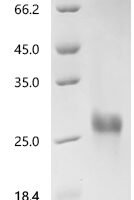
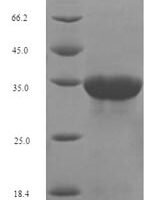
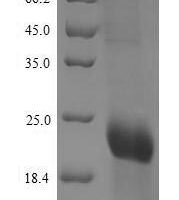
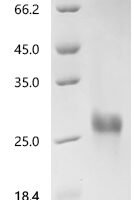
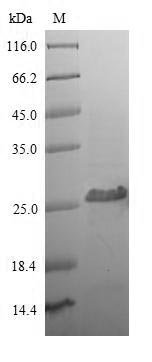
Recombinant Human T-cell surface glycoprotein CD8 alpha chain (CD8A), partial is a recombinant protein from Homo sapiens (Human), expressed in Mammalian cell, covering amino acids 22-182aa, with N-terminal 6xHis-Myc-tagged tag, molecular weight 21.6kDa, purity Greater than 90% as determined by SDS-PAGE.. Suitable for ELISA and Western Blot applications. Explore more CD proteins →