Function
RNA-binding protein that is involved in various steps of RNA biogenesis and processing. Preferentially binds, via its two RNA recognition motifs RRM1 and RRM2, to GU-repeats on RNA molecules predominantly localized within long introns and in the 3'UTR of mRNAs. In turn, regulates the splicing of many non-coding and protein-coding RNAs including proteins involved in neuronal survival, as well as mRNAs that encode proteins relevant for neurodegenerative diseases.
Biological Context
Subcellular Location: Nucleus; Cytoplasm; Cytoplasm, Stress granule; Mitochondrion
Tissue Specificity: Ubiquitously expressed. In particular, expression is high in pancreas, placenta, lung, genital tract and spleen
Disease Association: Amyotrophic lateral sclerosis 10 (ALS10) : A neurodegenerative disorder affecting upper motor neurons in the brain and lower motor neurons in the brain stem and spinal cord, resulting in fatal paralysis. Sensory abnormalities are absent. The pathologic hallmarks of the disease include pallor of the corticospinal tract due to loss of motor neurons, presence of ubiquitin-positive inclusions within surviving motor neurons, and deposition of pathologic aggregates. The etiology of amyotrophic lateral sclerosis is likely to be multifactorial, involving both genetic and environmental factors. The disease is inherited in 5-10% of the cases. [The disease is caused by variants affecting the gene represented in this entry. Neurodegeneration is caused by activation of the cGAS-STING pathway: defects in TARDBP trigger mitochondrial DNA release into the cytosol via the permeability transition pore. Released mitochondrial DNA is then detected by CGAS, leading to activation of the cGAS-STING pathway, triggering type-I interferon production and autoinflammation ]
Product Specifications
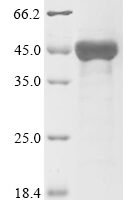
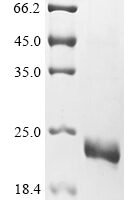
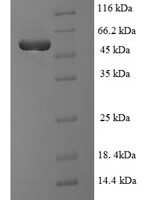
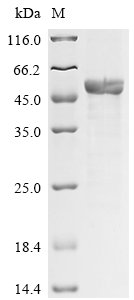
Recombinant Human TAR DNA-binding protein 43 (TARDBP) is a recombinant protein from Homo sapiens (Human), expressed in E.coli, covering amino acids 1-414aa, with N-terminal 6xHis-tagged tag, molecular weight 52.3kDa, purity Greater than 85% as determined by SDS-PAGE.. Suitable for ELISA and Western Blot applications.