, ,

Recombinant Human TGF-beta-activated kinase 1 and MAP3K7-binding protein 2 (TAB2), partial

Recombinant Human TGF-beta-activated kinase 1 and MAP3K7-binding protein 2 (TAB2), partial — Adapter required to activate the JNK and NF-kappa-B signaling pathways through the specific recognition of ‘Lys-63’-linked polyubiquitin chains by its RanBP2-type zinc finger (NZF). Purity >85%.

SKU: BCRECP-001727 Categories: , ,

Product Specifications

Product SkuBCRECP-001727
Product DescriptionRecombinant Human TGF-beta-activated kinase 1 and MAP3K7-binding protein 2 (TAB2) Protein is expressed from Baculovirus with N-terminal 10xHis-tagged and C-terminal Myc-tagged. It contains 401-693aa. [Accession | Q9NYJ8].
Uniprot No.Q9NYJ8
Gene NamesTAB2
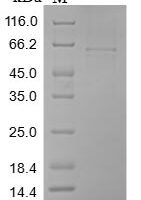
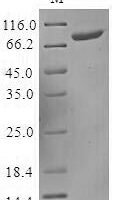
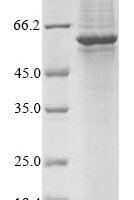
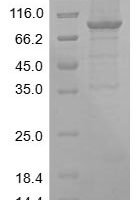
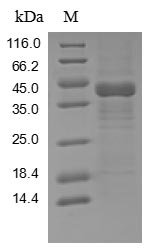
PurityGreater than 85% as determined by SDS-PAGE.
Expression SystemBaculovirus
Expression Region401-693aa
SpeciesHomo sapiens (Human)
Tag InfoN-terminal 10xHis-tagged and C-terminal Myc-tagged
Molecular weight37.1kDa
ActivityPlease contact us to obtain bioactivity data.
BufferIf the delivery form is liquid, the default storage buffer is Tris/PBS-based buffer, 5%-50% glycerol. If the delivery form is lyophilized powder, the buffer before lyophilization is Tris/PBS-based buffer, 6% Trehalose.
StorageStore at -20°C/-80°C upon receipt, aliquoting is necessary for mutiple use. Avoid repeated freeze-thaw cycles.
Research AreasImmunology

Function

Adapter required to activate the JNK and NF-kappa-B signaling pathways through the specific recognition of 'Lys-63'-linked polyubiquitin chains by its RanBP2-type zinc finger (NZF). Acts as an adapter linking MAP3K7/TAK1 and TRAF6 to 'Lys-63'-linked polyubiquitin chains. The RanBP2-type zinc finger (NZF) specifically recognizes Lys-63'-linked polyubiquitin chains unanchored or anchored to the substrate proteins such as RIPK1/RIP1 and RIPK2: this acts as a scaffold to organize a large signaling complex to promote autophosphorylation of MAP3K7/TAK1, and subsequent activation of I-kappa-B-kinase (IKK) core complex by MAP3K7/TAK1.

Biological Context

Subcellular Location: Membrane (Peripheral membrane protein); Endosome membrane (Peripheral membrane protein); Lysosome membrane (Peripheral membrane protein); Cytoplasm, cytosol
Tissue Specificity: Widely expressed. In the embryo, expressed in the ventricular trabeculae, endothelial cells of the conotruncal cushions of the outflow tract and in the endothelial cells lining the developing aortic valves
Disease Association: Congenital heart defects, multiple types, 2 (CHTD2) : A disease characterized by congenital developmental abnormalities involving structures of the heart. CHTD2 patients have left ventricular outflow tract obstruction, subaortic stenosis, residual aortic regurgitation, atrial fibrillation, bicuspid aortic valve and aortic dilation. [The disease is caused by variants affecting the gene represented in this entry. A chromosomal aberration involving TAB2 has been found in a family with congenital heart disease. Translocation t(2;6)(q21;q25)]

Product Specifications

Recombinant Human TGF-beta-activated kinase 1 and MAP3K7-binding protein 2 (TAB2), partial is a recombinant protein from Homo sapiens (Human), expressed in Baculovirus, covering amino acids 401-693aa, with N-terminal 10xHis-tagged and C-terminal Myc-tagged tag, molecular weight 37.1kDa, purity Greater than 85% as determined by SDS-PAGE.. Suitable for ELISA and Western Blot applications.

SDS-PAGE: Single band at expected molecular weight confirming purity.

ELISA: Suitable as coating antigen or detection standard.

Western Blot: Compatible with standard Western Blot protocols.

Protein Interaction: Validated for SPR (Surface Plasmon Resonance) and BLI (Bio-Layer Interferometry) studies.

Shipping: Shipped at ambient temperature. Lyophilized protein is stable during transit.

Storage: Store lyophilized protein at -20°C to -80°C. Reconstituted protein should be aliquoted and stored at -80°C. Avoid repeated freeze-thaw cycles.

Shelf Life: 12 months from date of receipt when stored as recommended.

Shipping Time: Orders placed before 2 PM EST ship same day. International orders typically deliver within 5-10 business days.

Protein Biology

Function

Adapter required to activate the JNK and NF-kappa-B signaling pathways through the specific recognition of 'Lys-63'-linked polyubiquitin chains by its RanBP2-type zinc finger (NZF) (PubMed:10882101, PubMed:11460167, PubMed:15327770, PubMed:22158122, PubMed:27746020, PubMed:33184450, PubMed:36681779). Acts as an adapter linking MAP3K7/TAK1 and TRAF6 to 'Lys-63'-linked polyubiquitin chains (PubMed:10882101, PubMed:11460167, PubMed:15327770, PubMed:22158122, PubMed:27746020). The RanBP2-type zinc finger (NZF) specifically recognizes Lys-63'-linked polyubiquitin chains unanchored or anchored to the substrate proteins such as RIPK1/RIP1 and RIPK2: this acts as a scaffold to organize a large signaling complex to promote autophosphorylation of MAP3K7/TAK1, and subsequent activation of I-kappa-B-kinase (IKK) core complex by MAP3K7/TAK1 (PubMed:15327770, PubMed:18079694, PubMed:22158122). Also recognizes and binds Lys-63'-linked polyubiquitin chains of heterotypic 'Lys-63'-/'Lys-48'-linked branched ubiquitin chains (PubMed:27746020). Regulates the IL1-mediated translocation of NCOR1 out of the nucleus (By similarity). Involved in heart development (PubMed:20493459)

Subcellular Location

Membrane (Peripheral membrane protein); Endosome membrane (Peripheral membrane protein); Lysosome membrane (Peripheral membrane protein); Cytoplasm, cytosol

Disease Association

Congenital heart defects, multiple types, 2 (CHTD2) : A disease characterized by congenital developmental abnormalities involving structures of the heart. CHTD2 patients have left ventricular outflow tract obstruction, subaortic stenosis, residual aortic regurgitation, atrial fibrillation, bicuspid aortic valve and aortic dilation. [The disease is caused by variants affecting the gene represented in this entry. A chromosomal aberration involving TAB2 has been found in a family with congenital heart disease. Translocation t(2;6)(q21;q25)]

Tissue Specificity

Widely expressed. In the embryo, expressed in the ventricular trabeculae, endothelial cells of the conotruncal cushions of the outflow tract and in the endothelial cells lining the developing aortic valves

Subunit

Interacts with MAP3K7 and TRAF6 (PubMed:10882101). Identified in the TRIKA2 complex composed of MAP3K7, TAB1 and TAB2 (PubMed:11460167). Binds 'Lys-63'-linked polyubiquitin chains (PubMed:19675569, PubMed:19935683). Interacts with NCOR1 and HDAC3 to form a ternary complex (By similarity). Interacts (via C-terminal) with NUMBL (via PTB domain) (PubMed:18299187). Interacts (via the C-terminus) with DYNC2I2 (via WD domains) (PubMed:19521662). Interacts with RBCK1 (PubMed:17449468). Interacts with TRIM5 (PubMed:21512573). Interacts with TRIM38 (via B30.2/SPRY domain), leading to its translocation to lysosomes and degradation (PubMed:24434549). Interacts with ASB1; this interaction promotes TAB2 stability (PubMed:33431678)

Gene: TAB2  |  Organism: Homo sapiens  |  Synonyms: Mitogen-activated protein kinase kinase kinase 7-interacting protein 2; TAK1-binding protein 2; TGF-beta-activated kinase 1-binding protein 2
Key Publications

Frequently Asked Questions

How do I order or inquire about this product?

Fill out the Online Inquiry form with your required quantity and specifications. You can also email sales@biocrestsci.com. Our team typically responds within 4 business hours with a quote and availability confirmation.

What is the shipping and delivery time?

Orders placed before 2 PM EST ship the same day. Domestic (US) delivery typically takes 2-3 business days. International orders deliver within 5-10 business days. All products are shipped at ambient temperature with appropriate packaging to ensure stability.

How should I store this recombinant protein?

Lyophilized proteins should be stored at -20°C to -80°C upon receipt. After reconstitution, aliquot and store at -80°C. Avoid repeated freeze-thaw cycles. Shelf life is 12 months from date of receipt when stored as recommended.

What quality controls are performed on your products?

Each product undergoes SDS-PAGE purity analysis (typically >85-95%), endotoxin testing, and bioactivity validation. Products are validated for ELISA, Western Blot, and SPR/BLI applications as specified on this product page. A Certificate of Analysis (CoA) is available upon request.

Shopping Cart
Scroll to Top