,

Recombinant Human TNFAIP3-interacting protein 1 (TNIP1)

Recombinant Human TNFAIP3-interacting protein 1 (TNIP1) — Inhibits NF-kappa-B activation and TNF-induced NF-kappa-B-dependent gene expression by regulating TAX1BP1 and A20/TNFAIP3-mediated deubiquitination of IKBKG; proposed to link A20/TNFAIP3 to ubiquit… Purity >85%.

SKU: BCRECP-001818 Categories: ,

Product Specifications

Product SkuBCRECP-001818
Product DescriptionRecombinant Human TNFAIP3-interacting protein 1 (TNIP1) Protein is expressed from E.coli with N-terminal 10xHis-tagged and C-terminal Myc-tagged. It contains 1-636aa. [Accession | Q15025].
Uniprot No.Q15025
Gene NamesTNIP1
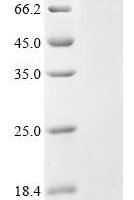
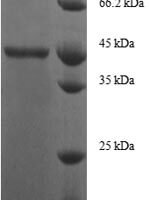
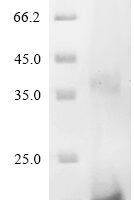
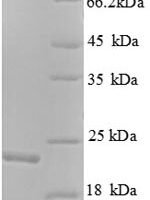
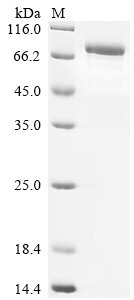
PurityGreater than 85% as determined by SDS-PAGE.
Expression SystemE.coli
Expression Region1-636aa
SpeciesHomo sapiens (Human)
Tag InfoN-terminal 10xHis-tagged and C-terminal Myc-tagged
Molecular weight76.9kDa
ActivityPlease contact us to obtain bioactivity data.
BufferIf the delivery form is liquid, the default storage buffer is Tris/PBS-based buffer, 5%-50% glycerol. If the delivery form is lyophilized powder, the buffer before lyophilization is Tris/PBS-based buffer, 6% Trehalose.
StorageStore at -20°C/-80°C upon receipt, aliquoting is necessary for mutiple use. Avoid repeated freeze-thaw cycles.
Research AreasImmunology

Function

Inhibits NF-kappa-B activation and TNF-induced NF-kappa-B-dependent gene expression by regulating TAX1BP1 and A20/TNFAIP3-mediated deubiquitination of IKBKG; proposed to link A20/TNFAIP3 to ubiquitinated IKBKG. Involved in regulation of EGF-induced ERK1/ERK2 signaling pathway; blocks MAPK3/MAPK1 nuclear translocation and MAPK1-dependent transcription. Increases cell surface CD4(T4) antigen expression.

Biological Context

Subcellular Location: Cytoplasm; Nucleus
Tissue Specificity: Ubiquitous. Strongly expressed in peripheral blood lymphocytes, spleen and skeletal muscle, and is weakly expressed in the brain. In peripheral blood mononucleocytes, isoform 4 is mainly expressed and isoform 1 and isoform 7 are almost not expressed. Expression of isoform 1 and isoform 7 increases in leukemic cells

Product Specifications

Recombinant Human TNFAIP3-interacting protein 1 (TNIP1) is a recombinant protein from Homo sapiens (Human), expressed in E.coli, covering amino acids 1-636aa, with N-terminal 10xHis-tagged and C-terminal Myc-tagged tag, molecular weight 76.9kDa, purity Greater than 85% as determined by SDS-PAGE.. Suitable for ELISA and Western Blot applications.

Recommended applications depend on the target, product format, and product-specific validation data. Refer to the product datasheet or Certificate of Analysis (CoA), or contact BioCrest Sci for application guidance.

Biological Activity: Please contact us to obtain bioactivity data.

Storage: Store at -20°C/-80°C upon receipt, aliquoting is necessary for mutiple use. Avoid repeated freeze-thaw cycles.

Shipping & Lead Time: Availability, shipping conditions, and estimated lead time are confirmed in the formal quotation or order confirmation based on the product format, destination, and order requirements.

Protein Biology

Function

Inhibits NF-kappa-B activation and TNF-induced NF-kappa-B-dependent gene expression by regulating TAX1BP1 and A20/TNFAIP3-mediated deubiquitination of IKBKG; proposed to link A20/TNFAIP3 to ubiquitinated IKBKG (PubMed:21885437). Involved in regulation of EGF-induced ERK1/ERK2 signaling pathway; blocks MAPK3/MAPK1 nuclear translocation and MAPK1-dependent transcription. Increases cell surface CD4(T4) antigen expression. Involved in the anti-inflammatory response of macrophages and positively regulates TLR-induced activation of CEBPB. Involved in the prevention of autoimmunity; this function implicates binding to polyubiquitin. Involved in leukocyte integrin activation during inflammation; this function is mediated by association with SELPLG and dependent on phosphorylation by SRC-family kinases. Interacts with HIV-1 matrix protein and is packaged into virions and overexpression can inhibit viral replication. May regulate matrix nuclear localization, both nuclear import of PIC (Preintegration complex) and export of GAG polyprotein and viral genomic RNA during virion production. In case of infection, promotes association of IKBKG with Shigella flexneri E3 ubiquitin-protein ligase ipah9.8 p which in turn promotes polyubiquitination of IKBKG leading to its proteasome-dependent degradation and thus is perturbing NF-kappa-B activation during bacterial infection

Subcellular Location

Cytoplasm; Nucleus

Tissue Specificity

Ubiquitous. Strongly expressed in peripheral blood lymphocytes, spleen and skeletal muscle, and is weakly expressed in the brain. In peripheral blood mononucleocytes, isoform 4 is mainly expressed and isoform 1 and isoform 7 are almost not expressed. Expression of isoform 1 and isoform 7 increases in leukemic cells

Subunit

(Microbial infection) Interacts with Shigella flexneri ipah9.8; the interaction promotes polyubiquitination of IKBKG

Gene: TNIP1  |  Organism: Homo sapiens  |  Synonyms: A20-binding inhibitor of NF-kappa-B activation 1; HIV-1 Nef-interacting protein; Nef-associated factor 1; Nip40-1; Virion-associated nuclear shuttling protein
Key Publications

Frequently Asked Questions

How do I order or inquire about this product?

Submit the Online Inquiry form with your required quantity and specifications, or email sales@biocrestsci.com. Available sizes, pricing, stock status, documentation, and estimated lead time are confirmed in the formal quotation.

What is the shipping and delivery time?

Availability, dispatch timing, shipping conditions, and delivery estimates depend on the product format, destination, and order requirements. These details are confirmed in the formal quotation or order confirmation.

How should this product be stored?

Follow the storage and handling instructions in the product-specific datasheet and Certificate of Analysis (CoA). Requirements may vary by product form and formulation; contact BioCrest Sci if product-specific guidance is needed.

What quality controls are performed on your products?

Quality-control data such as identity, purity, endotoxin level, or biological activity are provided only when specified on this product page, the datasheet, or Certificate of Analysis (CoA). Biological activity is not implied unless explicitly stated.

Shopping Cart
Scroll to Top