Function
Multifunctional protein that regulates the growth and differentiation of various cell types and is involved in various processes, such as normal development, immune function, microglia function and responses to neurodegeneration. Activation into mature form follows different steps: following cleavage of the proprotein in the Golgi apparatus, Latency-associated peptide (LAP) and Transforming growth factor beta-1 (TGF-beta-1) chains remain non-covalently linked rendering TGF-beta-1 inactive during storage in extracellular matrix. At the same time, LAP chain interacts with 'milieu molecules', such as LTBP1, LRRC32/GARP and LRRC33/NRROS that control activation of TGF-beta-1 and maintain it in a latent state during storage in extracellular milieus.
Biological Context
Subcellular Location: Secreted
Tissue Specificity: Highly expressed in bone. Abundantly expressed in articular cartilage and chondrocytes and is increased in osteoarthritis (OA). Colocalizes with ASPN in chondrocytes within OA lesions of articular cartilage
Disease Association: Camurati-Engelmann disease 1 (CAEND1) : A form of Camurati-Engelmann disease, an autosomal dominant disorder characterized by hyperostosis and sclerosis of the diaphyses of long bones. Sclerotic changes at the skull base may also be present. The disease typically presents in childhood with pain, muscular weakness, and waddling gait. Systemic manifestations such as anemia, leukopenia, and hepatosplenomegaly may also occur. [The disease is caused by variants affecting the gene represented in this entry] | Inflammatory bowel disease, immunodeficiency, and encephalopathy (IBDIMDE) : An autosomal recessive disorder characterized by severe infantile inflammatory bowel disease manifesting as bloody diarrhea and failure to thrive, global developmental delay, epilepsy, brain atrophy and encephalopathy. Affected individuals suffer from recurrent infections associated with impaired T-cell response to stimulation and decreased T-cell subsets, including regulatory and helper T cells. [The disease is caused by variants affecting the gene represented in this entry]
Product Specifications
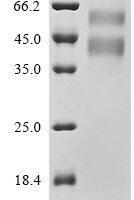
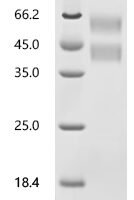
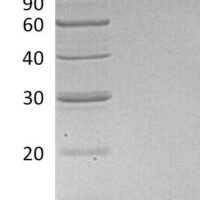
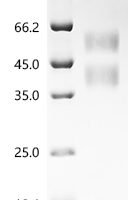
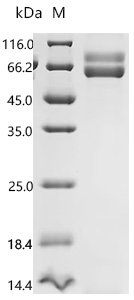
Recombinant Human Transforming growth factor beta-1 proprotein (TGFB1) is a recombinant protein from Homo sapiens (Human), expressed in Mammalian cell, covering amino acids 30-390aa, with N-terminal hFc1-tagged tag, molecular weight 67.3kDa, purity Greater than 95% as determined by SDS-PAGE.. Suitable for ELISA and Western Blot applications. Explore more Growth Factor proteins →