Function
Constitutively open nonselective divalent cation-conducting channels which mediate the influx of Ca(2+), Mg(2+), Mn(2+), Ba(2+), and Ni(2+) into the cytoplasm, leading to membrane depolarization. Impermeable to zinc ions. In addition, forms heteromultimeric ion channels with TRPM3 which are permeable for calcium and zinc ions.
Biological Context
Subcellular Location: Cell membrane (Multi-pass membrane protein); Endoplasmic reticulum membrane (Multi-pass membrane protein); Cell projection, axon
Tissue Specificity: Expressed in the retina where it localizes to the outer plexiform layer. Specifically, it is expressed in retinal bipolar cells (BPCs) of the ON subtype. Highly expressed in benign melanocytic nevi and diffusely expressed in various in situ melanomas, but not detected in melanoma metastases. Also expressed in melanocytes and pigmented metastatic melanoma cell lines. In melanocytes expression appears to be regulated at the level of transcription and mRNA processing
Disease Association: Night blindness, congenital stationary, 1C (CSNB1C) : A non-progressive retinal disorder characterized by impaired night vision, often associated with nystagmus and myopia. [The disease is caused by variants affecting the gene represented in this entry]
Product Specifications
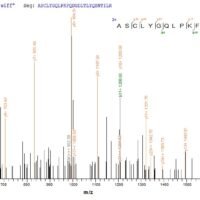
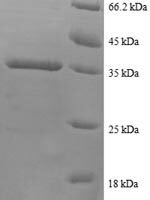
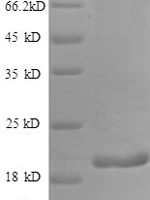
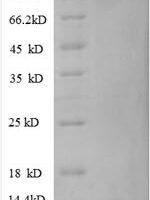
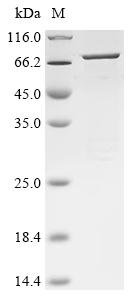
Recombinant Human Transient receptor potential cation channel subfamily M member 1 (TRPM1), partial is a recombinant protein from Homo sapiens (Human), expressed in E.coli, covering amino acids 1127-1603aa, with N-terminal 10xHis-tagged and C-terminal Myc-tagged tag, molecular weight 61.5kDa, purity Greater than 90% as determined by SDS-PAGE.. Suitable for ELISA and Western Blot applications.