Function
Binds to actin filaments in muscle and non-muscle cells. Plays a central role, in association with the troponin complex, in the calcium dependent regulation of vertebrate striated muscle contraction. Smooth muscle contraction is regulated by interaction with caldesmon.
Biological Context
Subcellular Location: Cytoplasm, cytoskeleton
Disease Association: Congenital myopathy 4A, autosomal dominant (CMYO4A) : A muscular disorder characterized by onset of muscle weakness in infancy or childhood. Most affected individuals show mildly delayed motor development, hypotonia, generalized muscle weakness, and weakness of the proximal limb muscles and neck muscles, resulting in difficulty running and easy fatigability. Many patients have respiratory insufficiency with reduced vital capacity. Skeletal muscle biopsy shows nemaline rod inclusions, subsarcolemmal 'cap' structures, and fiber-type disproportion. [The disease is caused by variants affecting the gene represented in this entry] | Congenital myopathy 4B, autosomal recessive (CMYO4B) : A muscular disorder characterized by muscle weakness appearing in infancy or early childhood. Most affected individuals show congenital contractures, delayed motor development, hypotonia, respiratory insufficiency, generalized muscle weakness, and weakness of the proximal limb muscles and neck muscles, resulting in difficulty walking or inability to walk. Skeletal muscle biopsy shows variable histologic findings, including nemaline rods, type 1 fiber predomination, and centralized nuclei. [The disease is caused by variants affecting the gene represented in this entry] | [A chromosomal aberration involving TPM3 is found in papillary thyroid carcinomas (PTCs). A rearrangement with NTRK1 generates the TRK fusion transcript by fusing the amino end of isoform 2 of TPM3 to the 3'-end of NTRK1]
Product Specifications
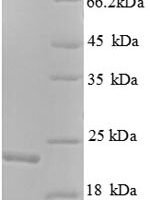
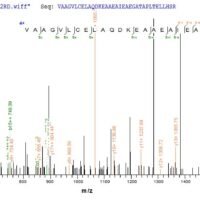
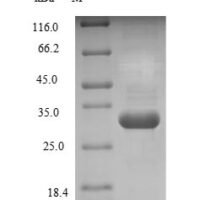
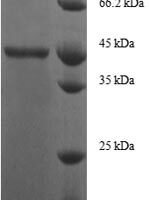
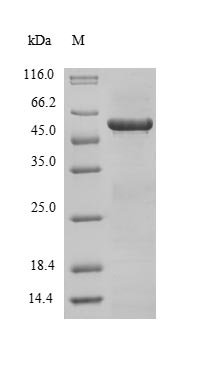
Recombinant Human Tropomyosin alpha-3 chain (TPM3) is a recombinant protein from Homo sapiens (Human), expressed in E.coli, covering amino acids 2-285aa, with N-terminal GST-tagged tag, molecular weight 59.8kDa, purity Greater than 85% as determined by SDS-PAGE.. Suitable for ELISA and Western Blot applications.