, ,

Recombinant Human Tyrosine-protein kinase BTK (BTK)

Recombinant Human Tyrosine-protein kinase BTK (BTK) — Non-receptor tyrosine kinase indispensable for B lymphocyte development, differentiation and signaling. Purity >90%.

SKU: BCRECP-000180 Categories: , ,

Product Specifications

Product SkuBCRECP-000180
Product DescriptionRecombinant Human Tyrosine-protein kinase BTK (BTK) Protein is expressed from Baculovirus with N-terminal 10xHis-tagged. It contains 1-659aa. [Accession | Q06187].
Uniprot No.Q06187
Gene NamesBTK
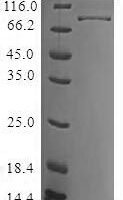
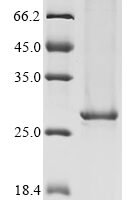
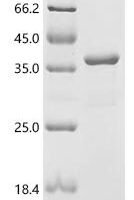
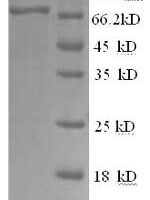
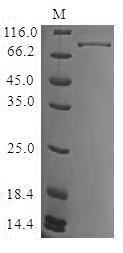
PurityGreater than 90% as determined by SDS-PAGE.
Expression SystemBaculovirus
Expression Region1-659aa
SpeciesHomo sapiens (Human)
Tag InfoN-terminal 10xHis-tagged
Molecular weight78.3kDa
ActivityPlease contact us to obtain bioactivity data.
BufferIf the delivery form is liquid, the default storage buffer is Tris/PBS-based buffer, 5%-50% glycerol. If the delivery form is lyophilized powder, the buffer before lyophilization is Tris/PBS-based buffer, 6% Trehalose.
StorageStore at -20°C/-80°C upon receipt, aliquoting is necessary for mutiple use. Avoid repeated freeze-thaw cycles.
Research AreasImmunology

Function

Non-receptor tyrosine kinase indispensable for B lymphocyte development, differentiation and signaling. Binding of antigen to the B-cell antigen receptor (BCR) triggers signaling that ultimately leads to B-cell activation. After BCR engagement and activation at the plasma membrane, phosphorylates PLCG2 at several sites, igniting the downstream signaling pathway through calcium mobilization, followed by activation of the protein kinase C (PKC) family members.

Biological Context

Subcellular Location: Cytoplasm; Cell membrane (Peripheral membrane protein); Nucleus; Membrane raft
Tissue Specificity: Predominantly expressed in B-lymphocytes
Disease Association: X-linked agammaglobulinemia (XLA) : Humoral immunodeficiency disease which results in developmental defects in the maturation pathway of B-cells. Affected boys have normal levels of pre-B-cells in their bone marrow but virtually no circulating mature B-lymphocytes. This results in a lack of immunoglobulins of all classes and leads to recurrent bacterial infections like otitis, conjunctivitis, dermatitis, sinusitis in the first few years of life, or even some patients present overwhelming sepsis or meningitis, resulting in death in a few hours. Treatment in most cases is by infusion of intravenous immunoglobulin. [The disease is caused by variants affecting the gene represented in this entry] | Growth hormone deficiency, isolated, 3, with agammaglobulinemia (IGHD3) : An X-linked recessive disorder characterized by growth hormone deficiency, short stature, delayed bone age, agammaglobulinemia with markedly reduced numbers of B cells, and good response to treatment with growth hormone. [The disease may be caused by variants affecting the gene represented in this entry]

Product Specifications

Recombinant Human Tyrosine-protein kinase BTK (BTK) is a recombinant protein from Homo sapiens (Human), expressed in Baculovirus, covering amino acids 1-659aa, with N-terminal 10xHis-tagged tag, molecular weight 78.3kDa, purity Greater than 90% as determined by SDS-PAGE.. Suitable for ELISA and Western Blot applications.

SDS-PAGE: Single band at expected molecular weight confirming purity.

ELISA: Suitable as coating antigen or detection standard.

Western Blot: Compatible with standard Western Blot protocols.

Protein Interaction: Validated for SPR (Surface Plasmon Resonance) and BLI (Bio-Layer Interferometry) studies.

Shipping: Shipped at ambient temperature. Lyophilized protein is stable during transit.

Storage: Store lyophilized protein at -20°C to -80°C. Reconstituted protein should be aliquoted and stored at -80°C. Avoid repeated freeze-thaw cycles.

Shelf Life: 12 months from date of receipt when stored as recommended.

Shipping Time: Orders placed before 2 PM EST ship same day. International orders typically deliver within 5-10 business days.

Protein Biology

Function

Non-receptor tyrosine kinase indispensable for B lymphocyte development, differentiation and signaling (PubMed:19290921). Binding of antigen to the B-cell antigen receptor (BCR) triggers signaling that ultimately leads to B-cell activation (PubMed:19290921). After BCR engagement and activation at the plasma membrane, phosphorylates PLCG2 at several sites, igniting the downstream signaling pathway through calcium mobilization, followed by activation of the protein kinase C (PKC) family members (PubMed:11606584). PLCG2 phosphorylation is performed in close cooperation with the adapter protein B-cell linker protein BLNK (PubMed:11606584). BTK acts as a platform to bring together a diverse array of signaling proteins and is implicated in cytokine receptor signaling pathways (PubMed:16517732, PubMed:17932028). Plays an important role in the function of immune cells of innate as well as adaptive immunity, as a component of the Toll-like receptors (TLR) pathway (PubMed:16517732). The TLR pathway acts as a primary surveillance system for the detection of pathogens and are crucial to the activation of host defense (PubMed:16517732). Especially, is a critical molecule in regulating TLR9 activation in splenic B-cells (PubMed:16517732, PubMed:17932028). Within the TLR pathway, induces tyrosine phosphorylation of TIRAP which leads to TIRAP degradation (PubMed:16415872). BTK also plays a critical role in transcription regulation (PubMed:19290921). Induces the activity of NF-kappa-B, which is involved in regulating the expression of hundreds of genes (PubMed:19290921). BTK is involved on the signaling pathway linking TLR8 and TLR9 to NF-kappa-B (PubMed:19290921). Acts as an activator of NLRP3 inflammasome assembly by mediating phosphorylation of NLRP3 (PubMed:34554188). Transiently phosphorylates transcription factor GTF2I on tyrosine residues in response to BCR (PubMed:9012831). GTF2I then translocates to the nucleus to bind regulatory enhancer elements to modulate gene expression (PubMed:9012831). ARID3A and NFAT are other transcriptional target of BTK (PubMed:16738337). BTK is required for the formation of functional ARID3A DNA-binding complexes (PubMed:16738337). There is however no evidence that BTK itself binds directly to DNA (PubMed:16738337). BTK has a dual role in the regulation of apoptosis (PubMed:9751072). Plays a role in STING1-mediated induction of type I interferon (IFN) response by phosphorylating DDX41 (PubMed:25704810)

Subcellular Location

Cytoplasm; Cell membrane (Peripheral membrane protein); Nucleus; Membrane raft

Disease Association

X-linked agammaglobulinemia (XLA) : Humoral immunodeficiency disease which results in developmental defects in the maturation pathway of B-cells. Affected boys have normal levels of pre-B-cells in their bone marrow but virtually no circulating mature B-lymphocytes. This results in a lack of immunoglobulins of all classes and leads to recurrent bacterial infections like otitis, conjunctivitis, dermatitis, sinusitis in the first few years of life, or even some patients present overwhelming sepsis or meningitis, resulting in death in a few hours. Treatment in most cases is by infusion of intravenous immunoglobulin. [The disease is caused by variants affecting the gene represented in this entry] | Growth hormone deficiency, isolated, 3, with agammaglobulinemia (IGHD3) : An X-linked recessive disorder characterized by growth hormone deficiency, short stature, delayed bone age, agammaglobulinemia with markedly reduced numbers of B cells, and good response to treatment with growth hormone. [The disease may be caused by variants affecting the gene represented in this entry]

Tissue Specificity

Predominantly expressed in B-lymphocytes

Subunit

Part of a complex composed of EEIG1, TNFRSF11A/RANK, PLCG2, GAB2, TEC and BTK; complex formation increases in the presence of TNFSF11/RANKL (By similarity). Binds GTF2I through the PH domain. Interacts with SH3BP5 via the SH3 domain. Interacts with IBTK via its PH domain. Interacts with ARID3A, CAV1, FASLG, PIN1, TLR8 and TLR9. Interacts with MPL/TPOR (PubMed:24607955). Interacts with STAC2; this interaction affects association with PLCG2 and subsequent PLCG2 phosphorylation (By similarity)

Gene: BTK  |  Organism: Homo sapiens  |  Synonyms: Agammaglobulinemia tyrosine kinase; B-cell progenitor kinase; Bruton tyrosine kinase
Key Publications

Frequently Asked Questions

How do I order or inquire about this product?

Fill out the Online Inquiry form with your required quantity and specifications. You can also email sales@biocrestsci.com. Our team typically responds within 4 business hours with a quote and availability confirmation.

What is the shipping and delivery time?

Orders placed before 2 PM EST ship the same day. Domestic (US) delivery typically takes 2-3 business days. International orders deliver within 5-10 business days. All products are shipped at ambient temperature with appropriate packaging to ensure stability.

How should I store this recombinant protein?

Lyophilized proteins should be stored at -20°C to -80°C upon receipt. After reconstitution, aliquot and store at -80°C. Avoid repeated freeze-thaw cycles. Shelf life is 12 months from date of receipt when stored as recommended.

What quality controls are performed on your products?

Each product undergoes SDS-PAGE purity analysis (typically >85-95%), endotoxin testing, and bioactivity validation. Products are validated for ELISA, Western Blot, and SPR/BLI applications as specified on this product page. A Certificate of Analysis (CoA) is available upon request.

Shopping Cart
Scroll to Top