, ,

Recombinant Human Tyrosine-protein kinase Mer (MERTK), partial (Active)

Recombinant Human Tyrosine-protein kinase Mer (MERTK), partial (Active) — Receptor tyrosine kinase that transduces signals from the extracellular matrix into the cytoplasm by binding to several ligands including LGALS3, TUB, TULP1 or GAS6. Purity >95%.

SKU: BCACP-000148 Categories: , ,
Product SKUBCACP-000148
Product DescriptionRecombinant Human Tyrosine-protein kinase Mer (MERTK) protein is expressed from Mammalian cell with C-terminal 10xHis-tagged. It contains 21-505aa. [Accession | Q12866].
Uniprot No.Q12866
Gene NamesMERTK
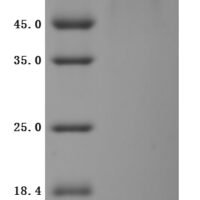
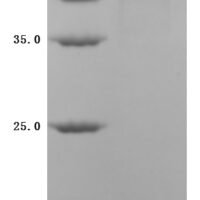
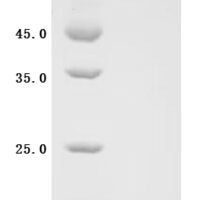
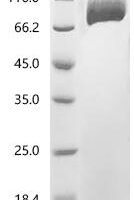
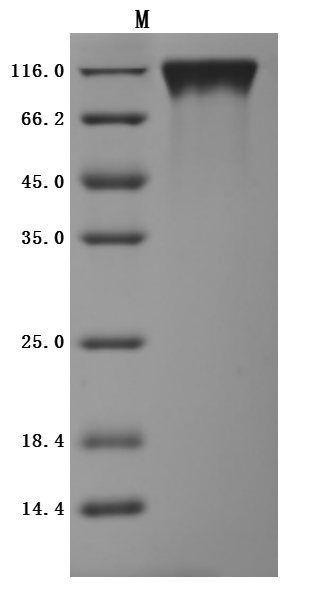
PurityGreater than 95% as determined by SDS-PAGE.Greater than 95% as determined by SEC-HPLC.
Expression SystemMammalian cell
Expression Region21-505aa
SpeciesHomo sapiens (Human)
Tag InfoC-terminal 10xHis-tagged
Molecular weight55.4 kDa
ActivityMeasured by its binding ability in a functional ELISA. Immobilized Human IGFLR1 at 2 μg/mL can bind Human IGFL1, the EC50 is 32.33-47.52 ng/mL.
BufferLyophilized from a 0.2 μm filtered 20 mM Tris-HCl, 0.5 M NaCl, 6% Trehalose, pH 8.0
StorageStore at -20°C/-80°C upon receipt, aliquoting is necessary for mutiple use. Avoid repeated freeze-thaw cycles.
Alternative Names(Proto-oncogene c-Mer) (Receptor tyrosine kinase MerTK)

Function

Receptor tyrosine kinase that transduces signals from the extracellular matrix into the cytoplasm by binding to several ligands including LGALS3, TUB, TULP1 or GAS6. Regulates many physiological processes including cell survival, migration, differentiation, and phagocytosis of apoptotic cells (efferocytosis). Ligand binding at the cell surface induces autophosphorylation of MERTK on its intracellular domain that provides docking sites for downstream signaling molecules.

Biological Context

Subcellular Location: Cell membrane (Single-pass type I membrane protein)
Tissue Specificity: Not expressed in normal B- and T-lymphocytes but is expressed in numerous neoplastic B- and T-cell lines. Highly expressed in testis, ovary, prostate, lung, and kidney, with lower expression in spleen, small intestine, colon, and liver
Disease Association: Retinitis pigmentosa 38 (RP38) : A retinal dystrophy belonging to the group of pigmentary retinopathies. Retinitis pigmentosa is characterized by retinal pigment deposits visible on fundus examination and primary loss of rod photoreceptor cells followed by secondary loss of cone photoreceptors. Patients typically have night vision blindness and loss of midperipheral visual field. As their condition progresses, they lose their far peripheral visual field and eventually central vision as well. [The disease is caused by variants affecting the gene represented in this entry]

Product Specifications

Recombinant Human Tyrosine-protein kinase Mer (MERTK), partial (Active) is a recombinant protein from Homo sapiens (Human), expressed in Mammalian cell, covering amino acids 21-505aa, with C-terminal 10xHis-tagged tag, molecular weight 55.4 kDa, purity Greater than 95% as determined by SDS-PAGE.Greater than 95% as determined by SEC-HPLC.. Suitable for ELISA and Western Blot applications.

Recommended applications depend on the target, product format, and product-specific validation data. Refer to the product datasheet or Certificate of Analysis (CoA), or contact BioCrest Sci for application guidance.

Biological Activity: Measured by its binding ability in a functional ELISA. Immobilized Human IGFLR1 at 2 μg/mL can bind Human IGFL1, the EC50 is 32.33-47.52 ng/mL.

Storage: Store at -20°C/-80°C upon receipt, aliquoting is necessary for mutiple use. Avoid repeated freeze-thaw cycles.

Shipping & Lead Time: Availability, shipping conditions, and estimated lead time are confirmed in the formal quotation or order confirmation based on the product format, destination, and order requirements.

Protein Biology

Function

Receptor tyrosine kinase that transduces signals from the extracellular matrix into the cytoplasm by binding to several ligands including LGALS3, TUB, TULP1 or GAS6. Regulates many physiological processes including cell survival, migration, differentiation, and phagocytosis of apoptotic cells (efferocytosis). Ligand binding at the cell surface induces autophosphorylation of MERTK on its intracellular domain that provides docking sites for downstream signaling molecules. Following activation by ligand, interacts with GRB2 or PLCG2 and induces phosphorylation of MAPK1, MAPK2, FAK/PTK2 or RAC1. MERTK signaling plays a role in various processes such as macrophage clearance of apoptotic cells, platelet aggregation, cytoskeleton reorganization and engulfment (PubMed:32640697). Functions in the retinal pigment epithelium (RPE) as a regulator of rod outer segments fragments phagocytosis. Also plays an important role in inhibition of Toll-like receptors (TLRs)-mediated innate immune response by activating STAT1, which selectively induces production of suppressors of cytokine signaling SOCS1 and SOCS3

Subcellular Location

Cell membrane (Single-pass type I membrane protein)

Disease Association

Retinitis pigmentosa 38 (RP38) : A retinal dystrophy belonging to the group of pigmentary retinopathies. Retinitis pigmentosa is characterized by retinal pigment deposits visible on fundus examination and primary loss of rod photoreceptor cells followed by secondary loss of cone photoreceptors. Patients typically have night vision blindness and loss of midperipheral visual field. As their condition progresses, they lose their far peripheral visual field and eventually central vision as well. [The disease is caused by variants affecting the gene represented in this entry]

Tissue Specificity

Not expressed in normal B- and T-lymphocytes but is expressed in numerous neoplastic B- and T-cell lines. Highly expressed in testis, ovary, prostate, lung, and kidney, with lower expression in spleen, small intestine, colon, and liver

Subunit

Interacts (upon activation) with TNK2; stimulates TNK2 autophosphorylation. Interacts (via N-terminus) with extracellular ligands LGALS3, TUB, TULP1 and GAS6 (By similarity). Interacts with VAV1 in a phosphotyrosine-independent manner. Interacts with TIMD4; this interaction enhances TIMD4-mediated efferocytosis (PubMed:32640697)

Gene: MERTK  |  Organism: Homo sapiens  |  Synonyms: Proto-oncogene c-Mer; Receptor tyrosine kinase MerTK
Key Publications

Frequently Asked Questions

How do I order or inquire about this product?

Submit the Online Inquiry form with your required quantity and specifications, or email sales@biocrestsci.com. Available sizes, pricing, stock status, documentation, and estimated lead time are confirmed in the formal quotation.

What is the shipping and delivery time?

Availability, dispatch timing, shipping conditions, and delivery estimates depend on the product format, destination, and order requirements. These details are confirmed in the formal quotation or order confirmation.

How should this product be stored?

Follow the storage and handling instructions in the product-specific datasheet and Certificate of Analysis (CoA). Requirements may vary by product form and formulation; contact BioCrest Sci if product-specific guidance is needed.

What quality controls are performed on your products?

Quality-control data such as identity, purity, endotoxin level, or biological activity are provided only when specified on this product page, the datasheet, or Certificate of Analysis (CoA). Biological activity is not implied unless explicitly stated.

Shopping Cart
Scroll to Top