
Function
Protein tyrosine phosphatase which may play a role in the regulation of lymphangiogenesis, cell-cell adhesion, cell-matrix adhesion, cell migration, cell growth and also regulates TGF-beta gene expression, thereby modulating epithelial-mesenchymal transition. Mediates beta-catenin dephosphorylation at adhesion junctions. Acts as a negative regulator of the oncogenic property of YAP, a downstream target of the hippo pathway, in a cell density-dependent manner.
Biological Context
Subcellular Location: Cytoplasm; Cytoplasm, cytoskeleton; Nucleus
Tissue Specificity: Ubiquitous
Disease Association: Choanal atresia and lymphedema (CATLPH) : A disease characterized by posterior choanal atresia and lymphedema. Additional features are a high-arched palate, hypoplastic nipples, and mild pectus excavatum. [The disease is caused by variants affecting the gene represented in this entry. A homozygous deletion in PTPN14 predicted to result in frameshift and premature truncation, has been shown to be the cause of choanal atresia and lymphedema in one family] | [Influence clinical severity of hereditary haemorragic telagiectasia (HHT)]
Product Specifications
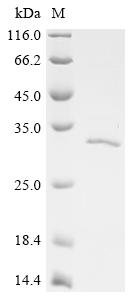
Recombinant Human Tyrosine-protein phosphatase non-receptor type 14 (PTPN14), partial is a recombinant protein from Homo sapiens (Human), expressed in E.coli, covering amino acids 1-189aa, with C-terminal 6xHis-tagged tag, molecular weight 29.3kDa, purity Greater than 90% as determined by SDS-PAGE.. Suitable for ELISA and Western Blot applications. Explore more Enzyme proteins →
![Human Succinate dehydrogenase [ubiquinone] flavoprotein subunit, mitochondrial (SDHA), partial Recombinant Protein, N-GST - BioCrest Sci](https://www.biocrestsci.com/wp-content/uploads/protein/1/BCACP-838381-SDS-150x200.jpg)