,

Recombinant Human Tyrosine-protein phosphatase non-receptor type substrate 1 (SIRPA), partial (Active)

Recombinant Human Tyrosine-protein phosphatase non-receptor type substrate 1 (SIRPA), partial (Active) — Immunoglobulin-like cell surface receptor for CD47. Purity >95%.

SKU: BCRECP-001635 Categories: ,

Product Specifications

Product SkuBCRECP-001635
Product DescriptionRecombinant Human Tyrosine-protein phosphatase non-receptor type substrate 1 (SIRPA) Protein is expressed from Mammalian cell with C-terminal 6xHis-Myc-tagged. It contains 31-370aa. [Accession | P78324].
Uniprot No.P78324
Gene NamesSIRPA
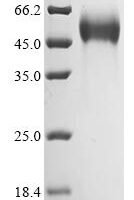
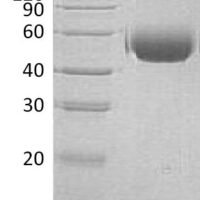
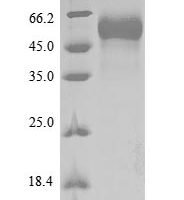
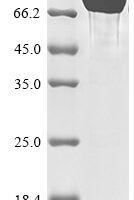
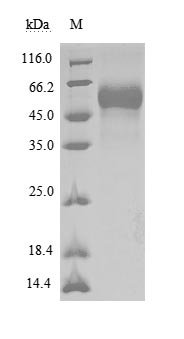
PurityGreater than 95% as determined by SDS-PAGE.
Expression SystemMammalian cell
Expression Region31-370aa
SpeciesHomo sapiens (Human)
Tag InfoC-terminal 6xHis-Myc-tagged
Molecular weight41.8kDa
ActivityPlease contact us to obtain bioactivity data.
BufferIf the delivery form is liquid, the default storage buffer is Tris/PBS-based buffer, 5%-50% glycerol. If the delivery form is lyophilized powder, the buffer before lyophilization is Tris/PBS-based buffer, 6% Trehalose.
StorageStore at -20°C/-80°C upon receipt, aliquoting is necessary for mutiple use. Avoid repeated freeze-thaw cycles.
Research AreasCancer

Function

Immunoglobulin-like cell surface receptor for CD47. Acts as docking protein and induces translocation of PTPN6, PTPN11 and other binding partners from the cytosol to the plasma membrane. Supports adhesion of cerebellar neurons, neurite outgrowth and glial cell attachment.

Biological Context

Subcellular Location: Membrane (Single-pass type I membrane protein)
Tissue Specificity: Ubiquitous. Highly expressed in brain. Detected on myeloid cells, but not T-cells. Detected at lower levels in heart, placenta, lung, testis, ovary, colon, liver, small intestine, prostate, spleen, kidney, skeletal muscle and pancreas

Product Specifications

Recombinant Human Tyrosine-protein phosphatase non-receptor type substrate 1 (SIRPA), partial (Active) is a recombinant protein from Homo sapiens (Human), expressed in Mammalian cell, covering amino acids 31-370aa, with C-terminal 6xHis-Myc-tagged tag, molecular weight 41.8kDa, purity Greater than 95% as determined by SDS-PAGE.. Suitable for ELISA and Western Blot applications.

SDS-PAGE: Single band at expected molecular weight confirming purity.

ELISA: Suitable as coating antigen or detection standard.

Western Blot: Compatible with standard Western Blot protocols.

Protein Interaction: Validated for SPR (Surface Plasmon Resonance) and BLI (Bio-Layer Interferometry) studies.

Shipping: Shipped at ambient temperature. Lyophilized protein is stable during transit.

Storage: Store lyophilized protein at -20°C to -80°C. Reconstituted protein should be aliquoted and stored at -80°C. Avoid repeated freeze-thaw cycles.

Shelf Life: 12 months from date of receipt when stored as recommended.

Shipping Time: Orders placed before 2 PM EST ship same day. International orders typically deliver within 5-10 business days.

Protein Biology

Function

Immunoglobulin-like cell surface receptor for CD47. Acts as docking protein and induces translocation of PTPN6, PTPN11 and other binding partners from the cytosol to the plasma membrane. Supports adhesion of cerebellar neurons, neurite outgrowth and glial cell attachment. May play a key role in intracellular signaling during synaptogenesis and in synaptic function (By similarity). Involved in the negative regulation of receptor tyrosine kinase-coupled cellular responses induced by cell adhesion, growth factors or insulin. Mediates negative regulation of phagocytosis, mast cell activation and dendritic cell activation. CD47 binding prevents maturation of immature dendritic cells and inhibits cytokine production by mature dendritic cells. Plays a role in antiviral immunity and limits new world arenavirus infection by decreasing virus internalization (By similarity). Receptor for THBS1 (PubMed:24511121). Interaction with THBS1 stimulates phosphorylation of SIRPA (By similarity). In response to THBS1, involved in ROS signaling in non-phagocytic cells, stimulating NADPH oxidase-derived ROS production (PubMed:24511121)

Subcellular Location

Membrane (Single-pass type I membrane protein)

Tissue Specificity

Ubiquitous. Highly expressed in brain. Detected on myeloid cells, but not T-cells. Detected at lower levels in heart, placenta, lung, testis, ovary, colon, liver, small intestine, prostate, spleen, kidney, skeletal muscle and pancreas

Subunit

Binds PTPN11 when tyrosine-phosphorylated, except in macrophages, where it primarily binds PTPN6. Binds GRB2 in vitro. Binds FGR (By similarity). Binds JAK2 irrespective of its phosphorylation status and forms a stable complex. Binds SCAP1 and/or SCAP2. The resulting complex recruits FYB1. Binds PTK2B. Interacts with TRIM2 (By similarity)

Gene: SIRPA  |  Organism: Homo sapiens  |  Synonyms: Brain Ig-like molecule with tyrosine-based activation motifs; CD172 antigen-like family member A; Inhibitory receptor SHPS-1; Macrophage fusion receptor; MyD-1 antigen; Signal-regulatory protein alpha-1; Signal-regulatory protein alpha-2; Signal-regulatory protein alpha-3; p84
Key Publications

Frequently Asked Questions

How do I order or inquire about this product?

Fill out the Online Inquiry form with your required quantity and specifications. You can also email sales@biocrestsci.com. Our team typically responds within 4 business hours with a quote and availability confirmation.

What is the shipping and delivery time?

Orders placed before 2 PM EST ship the same day. Domestic (US) delivery typically takes 2-3 business days. International orders deliver within 5-10 business days. All products are shipped at ambient temperature with appropriate packaging to ensure stability.

How should I store this recombinant protein?

Lyophilized proteins should be stored at -20°C to -80°C upon receipt. After reconstitution, aliquot and store at -80°C. Avoid repeated freeze-thaw cycles. Shelf life is 12 months from date of receipt when stored as recommended.

What quality controls are performed on your products?

Each product undergoes SDS-PAGE purity analysis (typically >85-95%), endotoxin testing, and bioactivity validation. Products are validated for ELISA, Western Blot, and SPR/BLI applications as specified on this product page. A Certificate of Analysis (CoA) is available upon request.

Shopping Cart
Scroll to Top