, , ,

Recombinant Human umor necrosis factor receptor superfamily member 16 (NGFR),Biotinylated-VLPs Protein

Recombinant Human umor necrosis factor receptor superfamily member 16 (NGFR),Biotinylated-VLPs Protein — Low affinity receptor which can bind to NGF, BDNF, NTF3, and NTF4.

Product Specifications

Uniprot No.P08138
Gene NamesNGFR
Expression SystemMammalian cell
Expression Region29-427aa
SpeciesHomo sapiens (Human)
Tag InfoN-terminal 6xHis-Avi-tagged(This tag can be tested only under denaturing conditions)
Molecular weight46.5kDa
BufferIf the delivery form is liquid, the default storage buffer is Tris/PBS-based buffer, 5%-50% glycerol.If the delivery form is lyophilized powder, the buffer before lyophilization is Tris/PBS-based buffer, 6% Trehalose.
StorageStore at -20°C/-80°C upon receipt, aliquoting is necessary for mutiple use. Avoid repeated freeze-thaw cycles.

Function

Low affinity receptor which can bind to NGF, BDNF, NTF3, and NTF4. Forms a heterodimeric receptor with SORCS2 that binds the precursor forms of NGF, BDNF and NTF3 with high affinity, and has much lower affinity for mature NGF and BDNF. Plays an important role in differentiation and survival of specific neuronal populations during development.

Biological Context

Subcellular Location: Cell membrane (Single-pass type I membrane protein); Cytoplasm; Perikaryon; Cell projection, growth cone; Cell projection, dendritic spine

Product Specifications

Recombinant Human umor necrosis factor receptor superfamily member 16 (NGFR),Biotinylated-VLPs Protein is a recombinant protein from Homo sapiens (Human), expressed in Mammalian cell, covering amino acids 29-427aa, with N-terminal 6xHis-Avi-tagged(This tag can be tested only under denaturing conditions) tag, molecular weight 46.5kDa. Suitable for ELISA and Western Blot applications.

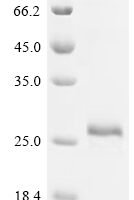
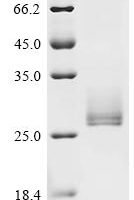
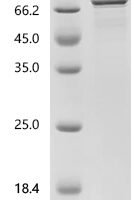
SDS-PAGE: Single band at expected molecular weight confirming purity.

ELISA: Suitable as coating antigen or detection standard.

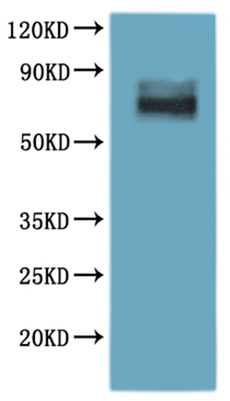
Western Blot: Compatible with standard Western Blot protocols.

Protein Interaction: Validated for SPR (Surface Plasmon Resonance) and BLI (Bio-Layer Interferometry) studies.

Shipping: Shipped at ambient temperature. Lyophilized protein is stable during transit.

Storage: Store lyophilized protein at -20°C to -80°C. Reconstituted protein should be aliquoted and stored at -80°C. Avoid repeated freeze-thaw cycles.

Shelf Life: 12 months from date of receipt when stored as recommended.

Shipping Time: Orders placed before 2 PM EST ship same day. International orders typically deliver within 5-10 business days.

Protein Biology

Function

Low affinity receptor which can bind to NGF, BDNF, NTF3, and NTF4. Forms a heterodimeric receptor with SORCS2 that binds the precursor forms of NGF, BDNF and NTF3 with high affinity, and has much lower affinity for mature NGF and BDNF (PubMed:24908487). Plays an important role in differentiation and survival of specific neuronal populations during development (By similarity). Can mediate cell survival as well as cell death of neural cells. Plays a role in the inactivation of RHOA (PubMed:26646181). Plays a role in the regulation of the translocation of GLUT4 to the cell surface in adipocytes and skeletal muscle cells in response to insulin, probably by regulating RAB31 activity, and thereby contributes to the regulation of insulin-dependent glucose uptake (By similarity). Necessary for the circadian oscillation of the clock genes BMAL1, PER1, PER2 and NR1D1 in the suprachiasmatic nucleus (SCmgetaN) of the brain and in liver and of the genes involved in glucose and lipid metabolism in the liver (PubMed:23785138). Together with BFAR negatively regulates NF-kappa-B and JNK-related signaling pathways (PubMed:22566094)

Subcellular Location

Cell membrane (Single-pass type I membrane protein); Cytoplasm; Perikaryon; Cell projection, growth cone; Cell projection, dendritic spine

Subunit

Homodimer; disulfide-linked (By similarity). Heterodimer with SORCS2. The extracellular domains of the heterodimer bind NGF (PubMed:22155786, PubMed:24908487). The cytoplasmic region of the heterodimer binds TRIO. NGF binding mediates dissociation of TRIO from the receptor complex (PubMed:22155786). Interacts with RTN4R (PubMed:19052207). Interacts with TRAF2, TRAF4, TRAF6, PTPN13 and RANBP9 (PubMed:10514511, PubMed:10544233, PubMed:12963025, PubMed:9915784). Interacts through TRAF6 with SQSTM1 which bridges NGFR to NTRK1 (PubMed:11244088). Interacts with BEX1 (By similarity). Interacts with BEX3 (By similarity). Interacts with KIDINS220 and NTRK1. Can form a ternary complex with NTRK1 and KIDINS220 and this complex is affected by the expression levels of KIDINS220. An increase in KIDINS220 expression leads to a decreased association of NGFR and NTRK1. Interacts with NTRK2; may regulate the ligand specificity of the NTRK2 receptor (By similarity). Interacts (via death domain) with RAB31 (By similarity). Interacts with LINGO1 (PubMed:14966521). Interacts with NRADD (By similarity). Interacts with MAGED1; the interaction antagonizes the association NGFR:NTRK1 (By similarity). Interacts (via death domain) with ARHGDIA and RIPK2 (PubMed:26646181). Interacts with BFAR (PubMed:22566094)

Gene: NGFR  |  Organism: Homo sapiens  |  Synonyms: Gp80-LNGFR; Low affinity neurotrophin receptor p75NTR; Low-affinity nerve growth factor receptor; Low-affinity nerve growth factor receptor p75NGFR; Low-affinity nerve growth factor receptor p75NGR; p75 ICD
Key Publications

Frequently Asked Questions

How do I order or inquire about this product?

Fill out the Online Inquiry form with your required quantity and specifications. You can also email sales@biocrestsci.com. Our team typically responds within 4 business hours with a quote and availability confirmation.

What is the shipping and delivery time?

Orders placed before 2 PM EST ship the same day. Domestic (US) delivery typically takes 2-3 business days. International orders deliver within 5-10 business days. All products are shipped at ambient temperature with appropriate packaging to ensure stability.

How should I store this recombinant protein?

Lyophilized proteins should be stored at -20°C to -80°C upon receipt. After reconstitution, aliquot and store at -80°C. Avoid repeated freeze-thaw cycles. Shelf life is 12 months from date of receipt when stored as recommended.

What quality controls are performed on your products?

Each product undergoes SDS-PAGE purity analysis (typically >85-95%), endotoxin testing, and bioactivity validation. Products are validated for ELISA, Western Blot, and SPR/BLI applications as specified on this product page. A Certificate of Analysis (CoA) is available upon request.

Shopping Cart
Scroll to Top