Recombinant Human Wolframin (WFS1) Protein

Recombinant Human Wolframin (WFS1) Protein — Participates in the regulation of cellular Ca(2+) homeostasis, at least partly, by modulating the filling state of the endoplasmic reticulum Ca(2+) store. Purity >85%.

SKU: BCRECP-00365TM Category:

Product Specifications

Uniprot No.O76024
Gene NamesWFS1
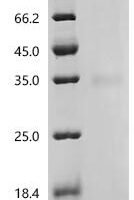
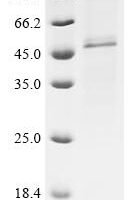
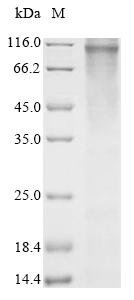
PurityGreater than 85% as determined by SDS-PAGE.
Expression Systemin vitro E.coli expression system
Expression Region1-890aa
SpeciesHomo sapiens (Human)
Tag InfoN-terminal 10xHis-tagged
Molecular weight106.3kDa
ActivityNot Test
BufferIf the delivery form is liquid, the default storage buffer is Tris/PBS-based buffer, 5%-50% glycerol.If the delivery form is lyophilized powder, the buffer before lyophilization is Tris/PBS-based buffer, 6% Trehalose.
StorageStore at -20°C/-80°C upon receipt, aliquoting is necessary for mutiple use. Avoid repeated freeze-thaw cycles.

Function

Participates in the regulation of cellular Ca(2+) homeostasis, at least partly, by modulating the filling state of the endoplasmic reticulum Ca(2+) store. Negatively regulates the ER stress response and positively regulates the stability of V-ATPase subunits ATP6V1A and ATP1B1 by preventing their degradation through an unknown proteasome-independent mechanism.

Biological Context

Subcellular Location: Endoplasmic reticulum membrane (Multi-pass membrane protein); Cytoplasmic vesicle, secretory vesicle
Tissue Specificity: Highly expressed in heart followed by brain, placenta, lung and pancreas. Weakly expressed in liver, kidney and skeletal muscle. Also expressed in islet and beta-cell insulinoma cell line
Disease Association: Wolfram syndrome 1 (WFS1) : A rare disorder characterized by juvenile-onset insulin-dependent diabetes mellitus with optic atrophy. Other manifestations include diabetes insipidus, sensorineural deafness, dementia, psychiatric illnesses. [The disease is caused by variants affecting the gene represented in this entry] | Deafness, autosomal dominant, 6 (DFNA6) : A form of non-syndromic sensorineural hearing loss. Sensorineural deafness results from damage to the neural receptors of the inner ear, the nerve pathways to the brain, or the area of the brain that receives sound information. DFNA6 is a low-frequency hearing loss in which frequencies of 2000 Hz and below are predominantly affected. Many patients have tinnitus, but there are otherwise no associated features such as vertigo. Because high-frequency hearing is generally preserved, patients retain excellent understanding of speech, although presbycusis or noise exposure may cause high-frequency loss later in life. DFNA6 worsens over time without progressing to profound deafness. [The disease is caused by variants affecting the gene represented in this entry] | Wolfram-like syndrome autosomal dominant (WFSL) : A disease characterized by the clinical triad of congenital progressive hearing impairment, diabetes mellitus, and optic atrophy. The hearing impairment, which is usually diagnosed in the first decade of life, is relatively constant and alters mainly low- and middle-frequency ranges. [The disease is caused by variants affecting the gene represented in this entry] | Cataract 41 (CTRCT41) : An opacification of the crystalline lens of the eye that frequently results in visual impairment or blindness. Opacities vary in morphology, are often confined to a portion of the lens, and may be static or progressive. [The disease is caused by variants affecting the gene represented in this entry]

Product Specifications

Recombinant Human Wolframin (WFS1) Protein is a recombinant protein from Homo sapiens (Human), expressed in in vitro E.coli expression system, covering amino acids 1-890aa, with N-terminal 10xHis-tagged tag, molecular weight 106.3kDa, purity Greater than 85% as determined by SDS-PAGE.. Suitable for ELISA and Western Blot applications.
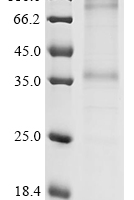
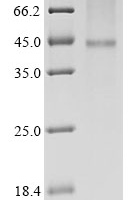
SDS-PAGE: Single band at expected molecular weight confirming purity.

ELISA: Suitable as coating antigen or detection standard.

Western Blot: Compatible with standard Western Blot protocols.

Protein Interaction: Validated for SPR (Surface Plasmon Resonance) and BLI (Bio-Layer Interferometry) studies.

Shipping: Shipped at ambient temperature. Lyophilized protein is stable during transit.

Storage: Store lyophilized protein at -20°C to -80°C. Reconstituted protein should be aliquoted and stored at -80°C. Avoid repeated freeze-thaw cycles.

Shelf Life: 12 months from date of receipt when stored as recommended.

Shipping Time: Orders placed before 2 PM EST ship same day. International orders typically deliver within 5-10 business days.

Protein Biology

Function

Participates in the regulation of cellular Ca(2+) homeostasis, at least partly, by modulating the filling state of the endoplasmic reticulum Ca(2+) store (PubMed:16989814). Negatively regulates the ER stress response and positively regulates the stability of V-ATPase subunits ATP6V1A and ATP1B1 by preventing their degradation through an unknown proteasome-independent mechanism (PubMed:23035048)

Subcellular Location

Endoplasmic reticulum membrane (Multi-pass membrane protein); Cytoplasmic vesicle, secretory vesicle

Disease Association

Wolfram syndrome 1 (WFS1) : A rare disorder characterized by juvenile-onset insulin-dependent diabetes mellitus with optic atrophy. Other manifestations include diabetes insipidus, sensorineural deafness, dementia, psychiatric illnesses. [The disease is caused by variants affecting the gene represented in this entry] | Deafness, autosomal dominant, 6 (DFNA6) : A form of non-syndromic sensorineural hearing loss. Sensorineural deafness results from damage to the neural receptors of the inner ear, the nerve pathways to the brain, or the area of the brain that receives sound information. DFNA6 is a low-frequency hearing loss in which frequencies of 2000 Hz and below are predominantly affected. Many patients have tinnitus, but there are otherwise no associated features such as vertigo. Because high-frequency hearing is generally preserved, patients retain excellent understanding of speech, although presbycusis or noise exposure may cause high-frequency loss later in life. DFNA6 worsens over time without progressing to profound deafness. [The disease is caused by variants affecting the gene represented in this entry] | Wolfram-like syndrome autosomal dominant (WFSL) : A disease characterized by the clinical triad of congenital progressive hearing impairment, diabetes mellitus, and optic atrophy. The hearing impairment, which is usually diagnosed in the first decade of life, is relatively constant and alters mainly low- and middle-frequency ranges. [The disease is caused by variants affecting the gene represented in this entry] | Cataract 41 (CTRCT41) : An opacification of the crystalline lens of the eye that frequently results in visual impairment or blindness. Opacities vary in morphology, are often confined to a portion of the lens, and may be static or progressive. [The disease is caused by variants affecting the gene represented in this entry]

Tissue Specificity

Highly expressed in heart followed by brain, placenta, lung and pancreas. Weakly expressed in liver, kidney and skeletal muscle. Also expressed in islet and beta-cell insulinoma cell line

Subunit

Interacts with ATP6V1A

Gene: WFS1  |  Organism: Homo sapiens
Key Publications

Frequently Asked Questions

How do I order or inquire about this product?

Fill out the Online Inquiry form with your required quantity and specifications. You can also email sales@biocrestsci.com. Our team typically responds within 4 business hours with a quote and availability confirmation.

What is the shipping and delivery time?

Orders placed before 2 PM EST ship the same day. Domestic (US) delivery typically takes 2-3 business days. International orders deliver within 5-10 business days. All products are shipped at ambient temperature with appropriate packaging to ensure stability.

How should I store this recombinant protein?

Lyophilized proteins should be stored at -20°C to -80°C upon receipt. After reconstitution, aliquot and store at -80°C. Avoid repeated freeze-thaw cycles. Shelf life is 12 months from date of receipt when stored as recommended.

What quality controls are performed on your products?

Each product undergoes SDS-PAGE purity analysis (typically >85-95%), endotoxin testing, and bioactivity validation. Products are validated for ELISA, Western Blot, and SPR/BLI applications as specified on this product page. A Certificate of Analysis (CoA) is available upon request.

Shopping Cart
Scroll to Top