,

Recombinant Mouse 2-acylglycerol O-acyltransferase 2 (Mogat2) Protein

Recombinant Mouse 2-acylglycerol O-acyltransferase 2 (Mogat2) Protein — Involved in glycerolipid synthesis and lipid metabolism. Purity >85%.

SKU: BCRECP-00098TM Categories: ,

Product Specifications

Uniprot No.Q80W94
Gene NamesMogat2
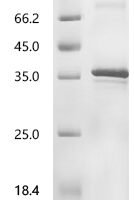
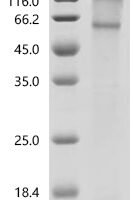
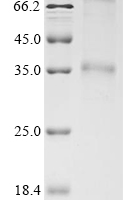
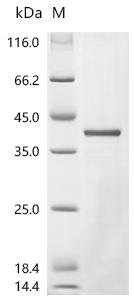
PurityGreater than 85% as determined by SDS-PAGE.
Expression Systemin vitro E.coli expression system
Expression Region1-334aa
SpeciesMus musculus (Mouse)
Tag InfoN-terminal 10xHis-tagged
Molecular weight44.6kDa
ActivityNot Test
BufferIf the delivery form is liquid, the default storage buffer is Tris/PBS-based buffer, 5%-50% glycerol.If the delivery form is lyophilized powder, the buffer before lyophilization is Tris/PBS-based buffer, 6% Trehalose.
StorageStore at -20°C/-80°C upon receipt, aliquoting is necessary for mutiple use. Avoid repeated freeze-thaw cycles.

Function

Involved in glycerolipid synthesis and lipid metabolism. Plays a central role in absorption of dietary fat in the small intestine by catalyzing the resynthesis of triacylglycerol in enterocytes (Probable). Catalyzes the formation of diacylglycerol, the precursor of triacylglycerol, by transferring the acyl chain of a fatty acyl-CoA to a monoacylglycerol.

Biological Context

Subcellular Location: Endoplasmic reticulum membrane (Multi-pass membrane protein); Cytoplasm, perinuclear region
Tissue Specificity: Mainly expressed in small intestine. Detected in the small intestine in a proximal-to-distal gradient that correlated with fat absorption pattern. Present not only in the villi, but also in the crypt regions of the small intestine, which suggests that expression occurs prior to the maturation of enterocytes. Not detectable in other sections of the digestive tract, including stomach, cecum, colon and rectum, or other tissues such as kidney, liver and adipocytes (at protein level). Also detected in kidney, adipose and stomach. Expressed at very low level in liver, skeletal muscle and spleen. Not expressed in brain, heart, lung, skin, testis and thymus
Pathway: Glycerolipid metabolism; triacylglycerol biosynthesis

Product Specifications

Recombinant Mouse 2-acylglycerol O-acyltransferase 2 (Mogat2) Protein is a recombinant protein from Mus musculus (Mouse), expressed in in vitro E.coli expression system, covering amino acids 1-334aa, with N-terminal 10xHis-tagged tag, molecular weight 44.6kDa, purity Greater than 85% as determined by SDS-PAGE.. Suitable for ELISA and Western Blot applications.

SDS-PAGE: Single band at expected molecular weight confirming purity.

ELISA: Suitable as coating antigen or detection standard.

Western Blot: Compatible with standard Western Blot protocols.

Protein Interaction: Validated for SPR (Surface Plasmon Resonance) and BLI (Bio-Layer Interferometry) studies.

Shipping: Shipped at ambient temperature. Lyophilized protein is stable during transit.

Storage: Store lyophilized protein at -20°C to -80°C. Reconstituted protein should be aliquoted and stored at -80°C. Avoid repeated freeze-thaw cycles.

Shelf Life: 12 months from date of receipt when stored as recommended.

Shipping Time: Orders placed before 2 PM EST ship same day. International orders typically deliver within 5-10 business days.

Protein Biology

Function

Involved in glycerolipid synthesis and lipid metabolism (PubMed:12576479, PubMed:12621063, PubMed:12730219, PubMed:14966132). Plays a central role in absorption of dietary fat in the small intestine by catalyzing the resynthesis of triacylglycerol in enterocytes (Probable). Catalyzes the formation of diacylglycerol, the precursor of triacylglycerol, by transferring the acyl chain of a fatty acyl-CoA to a monoacylglycerol (PubMed:12621063, PubMed:12730219). Has a preference toward monoacylglycerols containing unsaturated fatty acids in an order of C18:3 > C18:2 > C18:1 > C18:0 (PubMed:12730219). Able to use 1-monoalkylglycerol (1-MAkG, 1-O-alkylglycerol) as an acyl acceptor for the synthesis of monoalkyl-monoacylglycerol (MAMAG, 1-O-alkyl-3-acylglycerol) (PubMed:12730219). Possesses weak but significant activity with diacylglycerol as substrate, producing triacylglycerol (triacyl-sn-glycerol) (PubMed:12730219)

Subcellular Location

Endoplasmic reticulum membrane (Multi-pass membrane protein); Cytoplasm, perinuclear region

Tissue Specificity

Mainly expressed in small intestine. Detected in the small intestine in a proximal-to-distal gradient that correlated with fat absorption pattern. Present not only in the villi, but also in the crypt regions of the small intestine, which suggests that expression occurs prior to the maturation of enterocytes. Not detectable in other sections of the digestive tract, including stomach, cecum, colon and rectum, or other tissues such as kidney, liver and adipocytes (at protein level). Also detected in kidney, adipose and stomach. Expressed at very low level in liver, skeletal muscle and spleen. Not expressed in brain, heart, lung, skin, testis and thymus

Pathway

Glycerolipid metabolism; triacylglycerol biosynthesis

Gene: Mogat2  |  Organism: Mus musculus  |  Synonyms: Acyl-CoA:monoacylglycerol acyltransferase 2; Diacylglycerol acyltransferase 2-like protein 5; Monoacylglycerol O-acyltransferase 1-like; Monoacylglycerol O-acyltransferase 2
Key Publications

Frequently Asked Questions

How do I order or inquire about this product?

Fill out the Online Inquiry form with your required quantity and specifications. You can also email sales@biocrestsci.com. Our team typically responds within 4 business hours with a quote and availability confirmation.

What is the shipping and delivery time?

Orders placed before 2 PM EST ship the same day. Domestic (US) delivery typically takes 2-3 business days. International orders deliver within 5-10 business days. All products are shipped at ambient temperature with appropriate packaging to ensure stability.

How should I store this recombinant protein?

Lyophilized proteins should be stored at -20°C to -80°C upon receipt. After reconstitution, aliquot and store at -80°C. Avoid repeated freeze-thaw cycles. Shelf life is 12 months from date of receipt when stored as recommended.

What quality controls are performed on your products?

Each product undergoes SDS-PAGE purity analysis (typically >85-95%), endotoxin testing, and bioactivity validation. Products are validated for ELISA, Western Blot, and SPR/BLI applications as specified on this product page. A Certificate of Analysis (CoA) is available upon request.

Shopping Cart
Scroll to Top