,

Recombinant Mouse Acetyl-coenzyme A synthetase, cytoplasmic (Acss2)

Recombinant Mouse Acetyl-coenzyme A synthetase, cytoplasmic (Acss2) — Catalyzes the synthesis of acetyl-CoA from short-chain fatty acids. Purity >90%.

SKU: BCRECP-002012 Categories: ,

Product Specifications

Product SkuBCRECP-002012
Product DescriptionRecombinant Mouse Acetyl-coenzyme A synthetase, cytoplasmic (Acss2) Protein is expressed from E.coli with N-terminal 6xHis-tagged. It contains 1-701aa. [Accession | Q9QXG4].
Uniprot No.Q9QXG4
Gene NamesAcss2
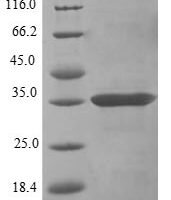
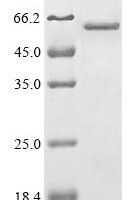
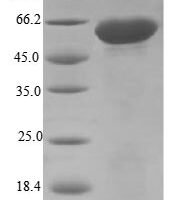
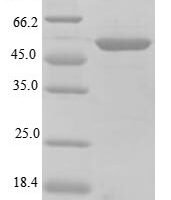
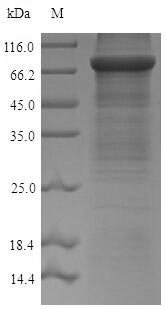
PurityGreater than 90% as determined by SDS-PAGE.
Expression SystemE.coli
Expression Region1-701aa
SpeciesMus musculus (Mouse)
Tag InfoN-terminal 6xHis-tagged
Molecular weight82.9kDa
ActivityPlease contact us to obtain bioactivity data.
BufferIf the delivery form is liquid, the default storage buffer is Tris/PBS-based buffer, 5%-50% glycerol. If the delivery form is lyophilized powder, the buffer before lyophilization is Tris/PBS-based buffer, 6% Trehalose.
StorageStore at -20°C/-80°C upon receipt, aliquoting is necessary for mutiple use. Avoid repeated freeze-thaw cycles.
Research AreasSignal Transduction

Function

Catalyzes the synthesis of acetyl-CoA from short-chain fatty acids. Acetate is the preferred substrate but can also utilize propionate with a much lower affinity. Catalyzes the conversion of lactate into lactoyl-CoA.

Biological Context

Subcellular Location: Cytoplasm, cytosol; Cytoplasm; Nucleus
Tissue Specificity: Expressed in the hippocampus

Product Specifications

Recombinant Mouse Acetyl-coenzyme A synthetase, cytoplasmic (Acss2) is a recombinant protein from Mus musculus (Mouse), expressed in E.coli, covering amino acids 1-701aa, with N-terminal 6xHis-tagged tag, molecular weight 82.9kDa, purity Greater than 90% as determined by SDS-PAGE.. Suitable for ELISA and Western Blot applications.

SDS-PAGE: Single band at expected molecular weight confirming purity.

ELISA: Suitable as coating antigen or detection standard.

Western Blot: Compatible with standard Western Blot protocols.

Protein Interaction: Validated for SPR (Surface Plasmon Resonance) and BLI (Bio-Layer Interferometry) studies.

Shipping: Shipped at ambient temperature. Lyophilized protein is stable during transit.

Storage: Store lyophilized protein at -20°C to -80°C. Reconstituted protein should be aliquoted and stored at -80°C. Avoid repeated freeze-thaw cycles.

Shelf Life: 12 months from date of receipt when stored as recommended.

Shipping Time: Orders placed before 2 PM EST ship same day. International orders typically deliver within 5-10 business days.

Protein Biology

Function

Catalyzes the synthesis of acetyl-CoA from short-chain fatty acids (PubMed:11150295, PubMed:16790548, PubMed:28562591). Acetate is the preferred substrate but can also utilize propionate with a much lower affinity (PubMed:11150295). Catalyzes the conversion of lactate into lactoyl-CoA (By similarity). Does not catalyze the conversion of butyrate or crotonate to their corresponding acyl-CoAs (By similarity). Nuclear ACSS2 promotes glucose deprivation-induced lysosomal biogenesis and autophagy, tumor cell survival and brain tumorigenesis (By similarity). Glucose deprivation results in AMPK-mediated phosphorylation of ACSS2 leading to its translocation to the nucleus where it binds to TFEB and locally produces acetyl-CoA for histone acetylation in the promoter regions of TFEB target genes thereby activating their transcription (By similarity). The regulation of genes associated with autophagy and lysosomal activity through ACSS2 is important for brain tumorigenesis and tumor survival (By similarity). Acts as a chromatin-bound transcriptional coactivator that up-regulates histone acetylation and expression of neuronal genes (PubMed:28562591). Can be recruited to the loci of memory-related neuronal genes to maintain a local acetyl-CoA pool, providing the substrate for histone acetylation and promoting the expression of specific genes, which is essential for maintaining long-term spatial memory (PubMed:28562591)

Subcellular Location

Cytoplasm, cytosol; Cytoplasm; Nucleus

Tissue Specificity

Expressed in the hippocampus

Subunit

Monomer (By similarity). Interacts with TFEB (By similarity). AMPK-mediated phosphorylated form at Ser-659 interacts with KPNA1; this interaction results in nuclear translocation of ACSS2 (By similarity). Interacts with the 'Thr-172' phosphorylated form of PRKAA2 (By similarity). Interacts with CREBBP (PubMed:28562591)

Gene: Acss2  |  Organism: Mus musculus  |  Synonyms: Acetate--CoA ligase; Acetyl-CoA synthetase; Acetyl-CoA synthetase 1; Acyl-CoA synthetase short-chain family member 2; Acyl-activating enzyme; Lactyl-CoA synthetase; Propionyl-CoA synthetase
Key Publications

Frequently Asked Questions

How do I order or inquire about this product?

Fill out the Online Inquiry form with your required quantity and specifications. You can also email sales@biocrestsci.com. Our team typically responds within 4 business hours with a quote and availability confirmation.

What is the shipping and delivery time?

Orders placed before 2 PM EST ship the same day. Domestic (US) delivery typically takes 2-3 business days. International orders deliver within 5-10 business days. All products are shipped at ambient temperature with appropriate packaging to ensure stability.

How should I store this recombinant protein?

Lyophilized proteins should be stored at -20°C to -80°C upon receipt. After reconstitution, aliquot and store at -80°C. Avoid repeated freeze-thaw cycles. Shelf life is 12 months from date of receipt when stored as recommended.

What quality controls are performed on your products?

Each product undergoes SDS-PAGE purity analysis (typically >85-95%), endotoxin testing, and bioactivity validation. Products are validated for ELISA, Western Blot, and SPR/BLI applications as specified on this product page. A Certificate of Analysis (CoA) is available upon request.

Shopping Cart
Scroll to Top