Recombinant Mouse Apolipoprotein E (Apoe)

Recombinant Mouse Apolipoprotein E (Apoe) — APOE is an apolipoprotein, a protein associating with lipid particles, that mainly functions in lipoprotein-mediated lipid transport between organs via the plasma and interstitial fluids. Purity >85%.

SKU: BCRECP-002117 Category:

Product Specifications

Product SkuBCRECP-002117
Product DescriptionRecombinant Mouse Apolipoprotein E (Apoe) Protein is expressed from Mammalian cell with N-terminal 10xHis-tagged and C-terminal Myc-tagged. It contains 19-311aa. [Accession | P08226].
Uniprot No.P08226
Gene NamesApoe
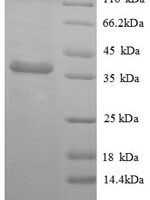
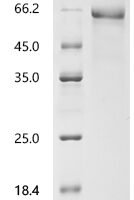
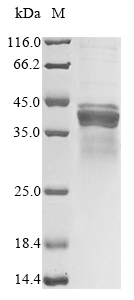
PurityGreater than 85% as determined by SDS-PAGE.
Expression SystemMammalian cell
Expression Region19-311aa
SpeciesMus musculus (Mouse)
Tag InfoN-terminal 10xHis-tagged and C-terminal Myc-tagged
Molecular weight39kDa
ActivityPlease contact us to obtain bioactivity data.
BufferIf the delivery form is liquid, the default storage buffer is Tris/PBS-based buffer, 5%-50% glycerol. If the delivery form is lyophilized powder, the buffer before lyophilization is Tris/PBS-based buffer, 6% Trehalose.
StorageStore at -20°C/-80°C upon receipt, aliquoting is necessary for mutiple use. Avoid repeated freeze-thaw cycles.
Research AreasCardiovascular

Function

APOE is an apolipoprotein, a protein associating with lipid particles, that mainly functions in lipoprotein-mediated lipid transport between organs via the plasma and interstitial fluids. APOE is a core component of plasma lipoproteins and is involved in their production, conversion and clearance. Apolipoproteins are amphipathic molecules that interact both with lipids of the lipoprotein particle core and the aqueous environment of the plasma.

Biological Context

Subcellular Location: Secreted; Secreted, extracellular space; Secreted, extracellular space, extracellular matrix; Extracellular vesicle; Endosome, multivesicular body

Product Specifications

Recombinant Mouse Apolipoprotein E (Apoe) is a recombinant protein from Mus musculus (Mouse), expressed in Mammalian cell, covering amino acids 19-311aa, with N-terminal 10xHis-tagged and C-terminal Myc-tagged tag, molecular weight 39kDa, purity Greater than 85% as determined by SDS-PAGE.. Suitable for ELISA and Western Blot applications.
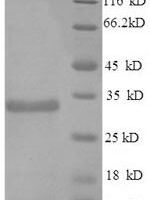
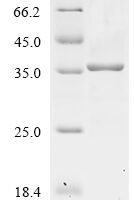
SDS-PAGE: Single band at expected molecular weight confirming purity.

ELISA: Suitable as coating antigen or detection standard.

Western Blot: Compatible with standard Western Blot protocols.

Protein Interaction: Validated for SPR (Surface Plasmon Resonance) and BLI (Bio-Layer Interferometry) studies.

Shipping: Shipped at ambient temperature. Lyophilized protein is stable during transit.

Storage: Store lyophilized protein at -20°C to -80°C. Reconstituted protein should be aliquoted and stored at -80°C. Avoid repeated freeze-thaw cycles.

Shelf Life: 12 months from date of receipt when stored as recommended.

Shipping Time: Orders placed before 2 PM EST ship same day. International orders typically deliver within 5-10 business days.

Protein Biology

Function

APOE is an apolipoprotein, a protein associating with lipid particles, that mainly functions in lipoprotein-mediated lipid transport between organs via the plasma and interstitial fluids. APOE is a core component of plasma lipoproteins and is involved in their production, conversion and clearance. Apolipoproteins are amphipathic molecules that interact both with lipids of the lipoprotein particle core and the aqueous environment of the plasma. As such, APOE associates with chylomicrons, chylomicron remnants, very low density lipoproteins (VLDL) and intermediate density lipoproteins (IDL) but shows a preferential binding to high-density lipoproteins (HDL). It also binds a wide range of cellular receptors including the LDL receptor/LDLR and the very low-density lipoprotein receptor/VLDLR that mediate the cellular uptake of the APOE-containing lipoprotein particles (By similarity). Finally, APOE also has a heparin-binding activity and binds heparan-sulfate proteoglycans on the surface of cells, a property that supports the capture and the receptor-mediated uptake of APOE-containing lipoproteins by cells (PubMed:23676495)

Subcellular Location

Secreted; Secreted, extracellular space; Secreted, extracellular space, extracellular matrix; Extracellular vesicle; Endosome, multivesicular body

Subunit

Homotetramer. May interact with ABCA1; functionally associated with ABCA1 in the biogenesis of HDLs. May interact with APP/A4 amyloid-beta peptide; the interaction is extremely stable in vitro but its physiological significance is unclear. May interact with MAPT. May interact with MAP2. In the cerebrospinal fluid, interacts with secreted SORL1. Interacts with PMEL; this allows the loading of PMEL luminal fragment on ILVs to induce fibril nucleation

Gene: Apoe  |  Organism: Mus musculus
Key Publications

Frequently Asked Questions

How do I order or inquire about this product?

Fill out the Online Inquiry form with your required quantity and specifications. You can also email sales@biocrestsci.com. Our team typically responds within 4 business hours with a quote and availability confirmation.

What is the shipping and delivery time?

Orders placed before 2 PM EST ship the same day. Domestic (US) delivery typically takes 2-3 business days. International orders deliver within 5-10 business days. All products are shipped at ambient temperature with appropriate packaging to ensure stability.

How should I store this recombinant protein?

Lyophilized proteins should be stored at -20°C to -80°C upon receipt. After reconstitution, aliquot and store at -80°C. Avoid repeated freeze-thaw cycles. Shelf life is 12 months from date of receipt when stored as recommended.

What quality controls are performed on your products?

Each product undergoes SDS-PAGE purity analysis (typically >85-95%), endotoxin testing, and bioactivity validation. Products are validated for ELISA, Western Blot, and SPR/BLI applications as specified on this product page. A Certificate of Analysis (CoA) is available upon request.

Shopping Cart
Scroll to Top