Function
Forms a water-specific channel that provides the plasma membranes of renal collecting duct with high permeability to water, thereby permitting water to move in the direction of an osmotic gradient. Plays an essential role in renal water homeostasis. Could also be permeable to glycerol.
Biological Context
Subcellular Location: Apical cell membrane (Multi-pass membrane protein); Basolateral cell membrane (Multi-pass membrane protein); Cell membrane (Multi-pass membrane protein); Cytoplasmic vesicle membrane (Multi-pass membrane protein); Golgi apparatus, trans-Golgi network membrane (Multi-pass membrane protein)
Tissue Specificity: Detected in principal cells in the collecting duct in kidney medulla and cortex (at protein level). Expressed in a radial pattern from the cortex through the outer medulla into the inner medulla. Higher levels in the inner medulla
Disease Association: [Defects in Aqp2 are a cause of congenital progressive hydronephrosis (cph). Homozygous mice appear grossly normal at birth, but grow slowly, and 90% die between 2 and 4 weeks after birth. They display symptoms reminiscent of diabetes insipidus, with excessive water drinking (polydipsia), excessive urine excretion (polyuria), and persistent hypotonic urine. When older than 14 days, they nearly always display severe bilateral hydronephrosis resulting from impaired downward urine transport, in spite of the absence of physical blockage of the urinary tract. Surviving adults have a shortened lifespan and die at the latest at an age of 10 months. They display reduced fertility or are infertile]
Product Specifications
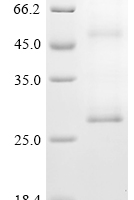
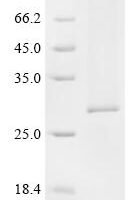
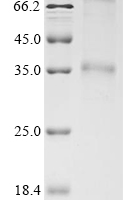
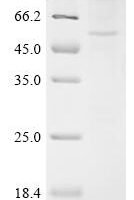
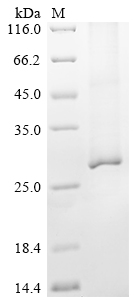
Recombinant Mouse Aquaporin-2 (Aqp2) Protein is a recombinant protein from Mus musculus (Mouse), expressed in in vitro E.coli expression system, covering amino acids 1-271aa, with N-terminal 10xHis-tagged tag, molecular weight 30.5kDa, purity Greater than 85% as determined by SDS-PAGE.. Suitable for ELISA and Western Blot applications.