Recombinant Mouse Complement C1q-like protein 3 (C1ql3)

Recombinant Mouse Complement C1q-like protein 3 (C1ql3) — May regulate the number of excitatory synapses that are formed on hippocampus neurons. Purity >85%.

SKU: BCRECP-002258 Category:

Product Specifications

Product SkuBCRECP-002258
Product DescriptionRecombinant Mouse Complement C1q-like protein 3 (C1ql3) Protein is expressed from Baculovirus with N-terminal 10xHis-tagged and C-terminal Myc-tagged. It contains 21-255aa. [Accession | Q9ESN4].
Uniprot No.Q9ESN4
Gene NamesC1ql3
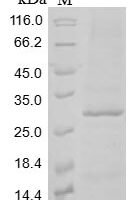
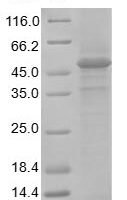
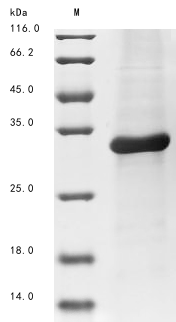
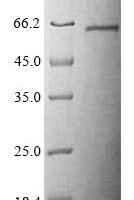
PurityGreater than 85% as determined by SDS-PAGE.
Expression SystemBaculovirus
Expression Region21-255aa
SpeciesMus musculus (Mouse)
Tag InfoN-terminal 10xHis-tagged and C-terminal Myc-tagged
Molecular weight28.6kDa
ActivityPlease contact us to obtain bioactivity data.
BufferIf the delivery form is liquid, the default storage buffer is Tris/PBS-based buffer, 5%-50% glycerol. If the delivery form is lyophilized powder, the buffer before lyophilization is Tris/PBS-based buffer, 6% Trehalose.
StorageStore at -20°C/-80°C upon receipt, aliquoting is necessary for mutiple use. Avoid repeated freeze-thaw cycles.
Research AreasOthers

Function

May regulate the number of excitatory synapses that are formed on hippocampus neurons. Has no effect on inhibitory synapses. Plays a role in glucose homeostasis.

Biological Context

Subcellular Location: Secreted
Tissue Specificity: Highly expressed in brain and white adipose tissue. In gonadal fat pad, expressed at lower levels in adipocytes than in the stromal vascular fraction (VSP), which contains preadipocytes, fibroblasts, endothelial cells and occasional immune cells. Expression exhibits sexually dimorphism, with higher levels in females than in males (at protein level). Tends to be up-regulated in adipose tissue from obese males, but not females. Expressed in glial cells

Product Specifications

Recombinant Mouse Complement C1q-like protein 3 (C1ql3) is a recombinant protein from Mus musculus (Mouse), expressed in Baculovirus, covering amino acids 21-255aa, with N-terminal 10xHis-tagged and C-terminal Myc-tagged tag, molecular weight 28.6kDa, purity Greater than 85% as determined by SDS-PAGE.. Suitable for ELISA and Western Blot applications.
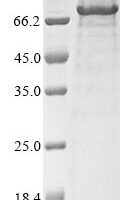
Recommended applications depend on the target, product format, and product-specific validation data. Refer to the product datasheet or Certificate of Analysis (CoA), or contact BioCrest Sci for application guidance.

Biological Activity: Please contact us to obtain bioactivity data.

Storage: Store at -20°C/-80°C upon receipt, aliquoting is necessary for mutiple use. Avoid repeated freeze-thaw cycles.

Shipping & Lead Time: Availability, shipping conditions, and estimated lead time are confirmed in the formal quotation or order confirmation based on the product format, destination, and order requirements.

Protein Biology

Function

May regulate the number of excitatory synapses that are formed on hippocampus neurons. Has no effect on inhibitory synapses. Plays a role in glucose homeostasis. Via AMPK signaling pathway, stimulates glucose uptake in adipocytes, myotubes and hepatocytes and enhances insulin-stimulated glucose uptake. In a hepatoma cell line, reduces the expression of gluconeogenic enzymes G6PC1 and PCK1 and hence decreases de novo glucose production

Subcellular Location

Secreted

Tissue Specificity

Highly expressed in brain and white adipose tissue. In gonadal fat pad, expressed at lower levels in adipocytes than in the stromal vascular fraction (VSP), which contains preadipocytes, fibroblasts, endothelial cells and occasional immune cells. Expression exhibits sexually dimorphism, with higher levels in females than in males (at protein level). Tends to be up-regulated in adipose tissue from obese males, but not females. Expressed in glial cells

Subunit

Forms homooligomers. Interacts with ADGRB3 (PubMed:21262840). Forms heterooligomers with C1QL2 and C1QL4, when proteins are coexpressed; this interaction does not occur after secretion

Gene: C1ql3  |  Organism: Mus musculus  |  Synonyms: C1q and tumor necrosis factor-related protein 13; Gliacolin
Key Publications

Frequently Asked Questions

How do I order or inquire about this product?

Submit the Online Inquiry form with your required quantity and specifications, or email sales@biocrestsci.com. Available sizes, pricing, stock status, documentation, and estimated lead time are confirmed in the formal quotation.

What is the shipping and delivery time?

Availability, dispatch timing, shipping conditions, and delivery estimates depend on the product format, destination, and order requirements. These details are confirmed in the formal quotation or order confirmation.

How should this product be stored?

Follow the storage and handling instructions in the product-specific datasheet and Certificate of Analysis (CoA). Requirements may vary by product form and formulation; contact BioCrest Sci if product-specific guidance is needed.

What quality controls are performed on your products?

Quality-control data such as identity, purity, endotoxin level, or biological activity are provided only when specified on this product page, the datasheet, or Certificate of Analysis (CoA). Biological activity is not implied unless explicitly stated.

Shopping Cart
Scroll to Top