Function
Core component of the complement C1 complex, a multiprotein complex that initiates the classical pathway of the complement system, a cascade of proteins that leads to phagocytosis and breakdown of pathogens and signaling that strengthens the adaptive immune system. The classical complement pathway is initiated by the C1Q subcomplex of the C1 complex, which specifically binds IgG or IgM immunoglobulins complexed with antigens, forming antigen-antibody complexes on the surface of pathogens: C1QA, together with C1QB and C1QC, specifically recognizes and binds the Fc regions of IgG or IgM via its C1q domain. Immunoglobulin-binding activates the proenzyme C1R, which cleaves C1S, initiating the proteolytic cascade of the complement system.
Biological Context
Subcellular Location: Secreted; Cell surface
Tissue Specificity: Highest expression in thioglycolate-activated peritoneal macrophages. Also found in spleen, thymus and heart. Very weak expression liver, kidney, lung and intestine
Product Specifications
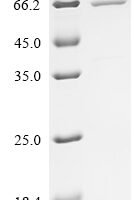
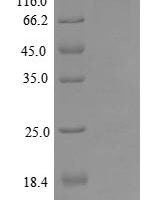
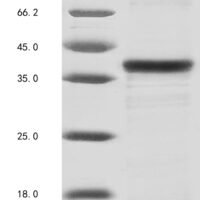
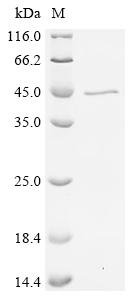
Recombinant Mouse Complement C1q subcomponent subunit B (C1qb), Biotinylated is a recombinant protein from Mus musculus (Mouse), expressed in E.coli, covering amino acids 26-253aa, with N-terminal 6xHis-SUMO3-Avi-tagged tag, molecular weight 37.7kDa, purity Greater than 85% as determined by SDS-PAGE.. Suitable for ELISA and Western Blot applications. Explore more Biotinylated proteins →