Recombinant Mouse Cryptochrome-2 (Cry2)

Recombinant Mouse Cryptochrome-2 (Cry2) — Transcriptional repressor which forms a core component of the circadian clock. Purity >85%.

SKU: BCRECP-002442 Category:

Product Specifications

Product SkuBCRECP-002442
Product DescriptionRecombinant Mouse Cryptochrome-2 (Cry2) Protein is expressed from E.coli with N-terminal 10xHis-tagged and C-terminal Myc-tagged. It contains 1-592aa. [Accession | Q9R194].
Uniprot No.Q9R194
Gene NamesCry2
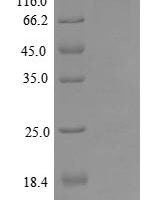
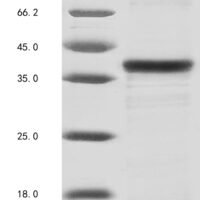
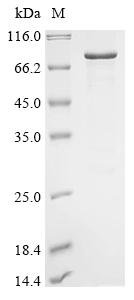
PurityGreater than 85% as determined by SDS-PAGE.
Expression SystemE.coli
Expression Region1-592aa
SpeciesMus musculus (Mouse)
Tag InfoN-terminal 10xHis-tagged and C-terminal Myc-tagged
Molecular weight74.3kDa
ActivityPlease contact us to obtain bioactivity data.
BufferIf the delivery form is liquid, the default storage buffer is Tris/PBS-based buffer, 5%-50% glycerol. If the delivery form is lyophilized powder, the buffer before lyophilization is Tris/PBS-based buffer, 6% Trehalose.
StorageStore at -20°C/-80°C upon receipt, aliquoting is necessary for mutiple use. Avoid repeated freeze-thaw cycles.
Research AreasCardiovascular

Function

Transcriptional repressor which forms a core component of the circadian clock. The circadian clock, an internal time-keeping system, regulates various physiological processes through the generation of approximately 24 hour circadian rhythms in gene expression, which are translated into rhythms in metabolism and behavior. It is derived from the Latin roots 'circa' (about) and 'diem' (day) and acts as an important regulator of a wide array of physiological functions including metabolism, sleep, body temperature, blood pressure, endocrine, immune, cardiovascular, and renal function.

Biological Context

Subcellular Location: Cytoplasm; Nucleus
Tissue Specificity: Expression in the retina is restricted to the photoreceptor layer (at protein level). Expressed in all tissues examined including heart, brain, spleen, lung, liver, skeletal muscle, kidney and testis. Weak expression in spleen

Product Specifications

Recombinant Mouse Cryptochrome-2 (Cry2) is a recombinant protein from Mus musculus (Mouse), expressed in E.coli, covering amino acids 1-592aa, with N-terminal 10xHis-tagged and C-terminal Myc-tagged tag, molecular weight 74.3kDa, purity Greater than 85% as determined by SDS-PAGE.. Suitable for ELISA and Western Blot applications.
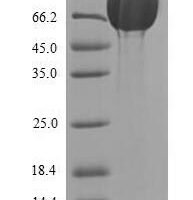
SDS-PAGE: Single band at expected molecular weight confirming purity.

ELISA: Suitable as coating antigen or detection standard.

Western Blot: Compatible with standard Western Blot protocols.

Protein Interaction: Validated for SPR (Surface Plasmon Resonance) and BLI (Bio-Layer Interferometry) studies.

Shipping: Shipped at ambient temperature. Lyophilized protein is stable during transit.

Storage: Store lyophilized protein at -20°C to -80°C. Reconstituted protein should be aliquoted and stored at -80°C. Avoid repeated freeze-thaw cycles.

Shelf Life: 12 months from date of receipt when stored as recommended.

Shipping Time: Orders placed before 2 PM EST ship same day. International orders typically deliver within 5-10 business days.

Protein Biology

Function

Transcriptional repressor which forms a core component of the circadian clock. The circadian clock, an internal time-keeping system, regulates various physiological processes through the generation of approximately 24 hour circadian rhythms in gene expression, which are translated into rhythms in metabolism and behavior. It is derived from the Latin roots 'circa' (about) and 'diem' (day) and acts as an important regulator of a wide array of physiological functions including metabolism, sleep, body temperature, blood pressure, endocrine, immune, cardiovascular, and renal function. Consists of two major components: the central clock, residing in the suprachiasmatic nucleus (SCN) of the brain, and the peripheral clocks that are present in nearly every tissue and organ system. Both the central and peripheral clocks can be reset by environmental cues, also known as Zeitgebers (German for 'timegivers'). The predominant Zeitgeber for the central clock is light, which is sensed by retina and signals directly to the SCN. The central clock entrains the peripheral clocks through neuronal and hormonal signals, body temperature and feeding-related cues, aligning all clocks with the external light/dark cycle. Circadian rhythms allow an organism to achieve temporal homeostasis with its environment at the molecular level by regulating gene expression to create a peak of protein expression once every 24 hours to control when a particular physiological process is most active with respect to the solar day. Transcription and translation of core clock components (CLOCK, NPAS2, BMAL1, BMAL2, PER1, PER2, PER3, CRY1 and CRY2) plays a critical role in rhythm generation, whereas delays imposed by post-translational modifications (PTMs) are important for determining the period (tau) of the rhythms (tau refers to the period of a rhythm and is the length, in time, of one complete cycle). A diurnal rhythm is synchronized with the day/night cycle, while the ultradian and infradian rhythms have a period shorter and longer than 24 hours, respectively. Disruptions in the circadian rhythms contribute to the pathology of cardiovascular diseases, cancer, metabolic syndromes and aging. A transcription/translation feedback loop (TTFL) forms the core of the molecular circadian clock mechanism. Transcription factors, CLOCK or NPAS2 and BMAL1 or BMAL2, form the positive limb of the feedback loop, act in the form of a heterodimer and activate the transcription of core clock genes and clock-controlled genes (involved in key metabolic processes), harboring E-box elements (5'-CACGTG-3') within their promoters. The core clock genes: PER1/2/3 and CRY1/2 which are transcriptional repressors form the negative limb of the feedback loop and interact with the CLOCK|NPAS2-BMAL1|BMAL2 heterodimer inhibiting its activity and thereby negatively regulating their own expression. This heterodimer also activates nuclear receptors NR1D1/2 and RORA/B/G, which form a second feedback loop and which activate and repress BMAL1 transcription, respectively. CRY1 and CRY2 have redundant functions but also differential and selective contributions at least in defining the pace of the SCN circadian clock and its circadian transcriptional outputs. Less potent transcriptional repressor in cerebellum and liver than CRY1, though less effective in lengthening the period of the SCN oscillator. Seems to play a critical role in tuning SCN circadian period by opposing the action of CRY1. With CRY1, dispensable for circadian rhythm generation but necessary for the development of intercellular networks for rhythm synchrony. May mediate circadian regulation of cAMP signaling and gluconeogenesis by blocking glucagon-mediated increases in intracellular cAMP concentrations and in CREB1 phosphorylation. Besides its role in the maintenance of the circadian clock, is also involved in the regulation of other processes. Plays a key role in glucose and lipid metabolism modulation, in part, through the transcriptional regulation of genes involved in these pathways, such as LEP or ACSL4. Represses glucocorticoid receptor NR3C1/GR-induced transcriptional activity by binding to glucocorticoid response elements (GREs). Represses the CLOCK-BMAL1 induced transcription of BHLHE40/DEC1 and NAMPT. Represses PPARD and its target genes in the skeletal muscle and limits exercise capacity (PubMed:28683290). Represses the transcriptional activity of NR1I2 (PubMed:28751364)

Subcellular Location

Cytoplasm; Nucleus

Tissue Specificity

Expression in the retina is restricted to the photoreceptor layer (at protein level) (PubMed:29561690). Expressed in all tissues examined including heart, brain, spleen, lung, liver, skeletal muscle, kidney and testis. Weak expression in spleen

Subunit

Component of the circadian core oscillator, which includes the CRY proteins, CLOCK or NPAS2, BMAL1 or BMAL2, CSNK1D and/or CSNK1E, TIMELESS, and the PER proteins (PubMed:11779462). Interacts with TIMELESS (PubMed:10428031). Interacts directly with PER1, PER2 and PER3; interaction with PER2 inhibits its ubiquitination and vice versa (PubMed:10428031, PubMed:11875063, PubMed:14701732, PubMed:20840750, PubMed:24154698). Interacts with CLOCK-BMAL1 (PubMed:16628007). Interacts with BMAL1 (PubMed:16717091, PubMed:19917250, PubMed:20840750). Interacts with CLOCK (PubMed:16717091, PubMed:19917250). Interacts with NFIL3 (PubMed:17274955). Interacts with FBXL3 and FBXL21 (PubMed:17462724, PubMed:23452855, PubMed:23452856). FBXL3, PER2 and the cofactor FAD compete for overlapping binding sites (PubMed:23503662, PubMed:24080726). FBXL3 cannot bind CRY2 that interacts already with PER2 or that contains bound FAD (PubMed:23503662). Interacts with PPP5C (via TPR repeats); the interaction down-regulates the PPP5C phosphatase activity on CSNK1E (By similarity). Interacts with nuclear receptors AR and NR3C1/GR; the interaction is ligand dependent (PubMed:22170608, PubMed:28751364). Interacts with PRKDC (PubMed:24158435). Interacts with CIART (PubMed:24736997). Interacts with DDB1, USP7 and TARDBP (PubMed:27123980). Interacts with HNF4A (PubMed:28751364). Interacts with PPARA (PubMed:28683290). Interacts with PPARG in a ligand-dependent manner (PubMed:28683290). Interacts with PPARD (via domain NR LBD) in a ligand-dependent manner (PubMed:28683290, PubMed:28751364). Interacts with NR1I2 (via domain NR LBD) in a ligand-dependent manner (PubMed:28751364). Interacts with NR1I3 and VDR in a ligand-dependent manner (PubMed:28751364)

Gene: Cry2  |  Organism: Mus musculus
Key Publications

Frequently Asked Questions

How do I order or inquire about this product?

Fill out the Online Inquiry form with your required quantity and specifications. You can also email sales@biocrestsci.com. Our team typically responds within 4 business hours with a quote and availability confirmation.

What is the shipping and delivery time?

Orders placed before 2 PM EST ship the same day. Domestic (US) delivery typically takes 2-3 business days. International orders deliver within 5-10 business days. All products are shipped at ambient temperature with appropriate packaging to ensure stability.

How should I store this recombinant protein?

Lyophilized proteins should be stored at -20°C to -80°C upon receipt. After reconstitution, aliquot and store at -80°C. Avoid repeated freeze-thaw cycles. Shelf life is 12 months from date of receipt when stored as recommended.

What quality controls are performed on your products?

Each product undergoes SDS-PAGE purity analysis (typically >85-95%), endotoxin testing, and bioactivity validation. Products are validated for ELISA, Western Blot, and SPR/BLI applications as specified on this product page. A Certificate of Analysis (CoA) is available upon request.

Shopping Cart
Scroll to Top