Recombinant Mouse Formyl peptide receptor 2 (Fpr2), partial

Recombinant Mouse Formyl peptide receptor 2 (Fpr2), partial — Pattern recognition G protein-coupled receptor (GPCR) that recognizes peptides with N-terminal formyl methionine, which are derived from invading pathogens or host mitochondria as pathogen or damag… Purity >85%.

SKU: BCRECP-002782 Category:

Product Specifications

Product SkuBCRECP-002782
Product DescriptionRecombinant Mouse Formyl peptide receptor 2 (Fpr2) Protein is expressed from E.coli with N-terminal 10xHis-GST-tagged and C-terminal Myc-tagged. It contains 1-29aa. [Accession | O88536].
Uniprot No.O88536
Gene NamesFpr2
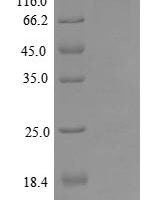
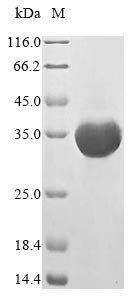
PurityGreater than 85% as determined by SDS-PAGE.
Expression SystemE.coli
Expression Region1-29aa
SpeciesMus musculus (Mouse)
Tag InfoN-terminal 10xHis-GST-tagged and C-terminal Myc-tagged
Molecular weight33.3kDa
ActivityPlease contact us to obtain bioactivity data.
BufferIf the delivery form is liquid, the default storage buffer is Tris/PBS-based buffer, 5%-50% glycerol. If the delivery form is lyophilized powder, the buffer before lyophilization is Tris/PBS-based buffer, 6% Trehalose.
StorageStore at -20°C/-80°C upon receipt, aliquoting is necessary for mutiple use. Avoid repeated freeze-thaw cycles.
Research AreasOthers

Function

Pattern recognition G protein-coupled receptor (GPCR) that recognizes peptides with N-terminal formyl methionine, which are derived from invading pathogens or host mitochondria as pathogen or damage-associated molecular patterns (PAMPs and DAMPs). Preferentially recognizes longer peptides or peptides with specific sequences such as the phenol-soluble modulin (PSM) family of formylated peptide toxins produced by Staphylococcus aureus. Ligand binding causes a conformation change that triggers signaling via G(i)/GNAI1 inhibiting adenylate cyclase activity, leading to decreased intracellular cAMP levels.

Biological Context

Subcellular Location: Cell membrane (Multi-pass membrane protein)
Tissue Specificity: Primarily expressed in neutrophils. Not detected in vomeronasal neurons

Product Specifications

Recombinant Mouse Formyl peptide receptor 2 (Fpr2), partial is a recombinant protein from Mus musculus (Mouse), expressed in E.coli, covering amino acids 1-29aa, with N-terminal 10xHis-GST-tagged and C-terminal Myc-tagged tag, molecular weight 33.3kDa, purity Greater than 85% as determined by SDS-PAGE.. Suitable for ELISA and Western Blot applications.
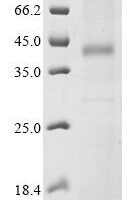
SDS-PAGE: Single band at expected molecular weight confirming purity.

ELISA: Suitable as coating antigen or detection standard.

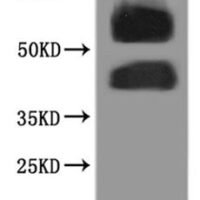
Western Blot: Compatible with standard Western Blot protocols.

Protein Interaction: Validated for SPR (Surface Plasmon Resonance) and BLI (Bio-Layer Interferometry) studies.

Shipping: Shipped at ambient temperature. Lyophilized protein is stable during transit.

Storage: Store lyophilized protein at -20°C to -80°C. Reconstituted protein should be aliquoted and stored at -80°C. Avoid repeated freeze-thaw cycles.

Shelf Life: 12 months from date of receipt when stored as recommended.

Shipping Time: Orders placed before 2 PM EST ship same day. International orders typically deliver within 5-10 business days.

Protein Biology

Function

Pattern recognition G protein-coupled receptor (GPCR) that recognizes peptides with N-terminal formyl methionine, which are derived from invading pathogens or host mitochondria as pathogen or damage-associated molecular patterns (PAMPs and DAMPs) (PubMed:10477558, PubMed:12218158, PubMed:19387439, PubMed:25605714). Preferentially recognizes longer peptides or peptides with specific sequences such as the phenol-soluble modulin (PSM) family of formylated peptide toxins produced by Staphylococcus aureus (By similarity). Ligand binding causes a conformation change that triggers signaling via G(i)/GNAI1 inhibiting adenylate cyclase activity, leading to decreased intracellular cAMP levels. In addition, can recognize a variety of chemically distinct endogenous ligands including proteins and lipids besides formylpeptides and thereby plays multiple roles in inflammation (PubMed:10477558, PubMed:19497865, PubMed:37056936). Acts as a receptor for the chemokine-like protein FAM19A5, mediating FAM19A5-stimulated macrophage chemotaxis and the inhibitory effect on TNFSF11/RANKL-induced osteoclast differentiation (PubMed:29138422). Acts also as a ceramide membrane receptor, and long-chain ceramides (C14 to C20) binding induces conformational changes that inhibits diet-induced adipose thermogenesis (By similarity). May participate in neuroprotection via interaction with MT-RNR2 and Amyloid-beta protein 42, product of APP (By similarity). Differential signaling is also defined by receptor oligomerization state. Binding of ANXA1 to FPR2 homodimer elicits activation of p38 MAPKinase pathway leading to HSPB1/HSP27 phosphorylation and IL10 production in monocytes. Whereas agonistic activation of FPR1:FPR2 heterodimers signals a proapoptotic JNK pathway in neutrophils (By similarity)

Subcellular Location

Cell membrane (Multi-pass membrane protein)

Tissue Specificity

Primarily expressed in neutrophils. Not detected in vomeronasal neurons

Subunit

Homodimer; the homodimerization is potentiated in response to the anti-inflammatory agonist ANXA1 and inhibited upon binding of pro-inflammatory agonist serum amyloid A (By similarity). Heterodimer with FPR1; the heterodimerization with FPR1 is potentiated in response to anti-inflammatory agonists such as lipoxin A4, ANXA1 and Ac2-26 ANXA1 peptide (By similarity). Forms a complex with heterotrimeric G(i) protein composed of GNAI1, GNB1 and GNG2 subunits (By similarity). Interacts with Amyloid-beta protein 42, product of APP; the interaction takes place at the cell surface and the complex is then rapidly internalized (By similarity). Interacts with S1PR4 (PubMed:37056936). Interacts with GNAI1. Interacts with humanin/MT-RNR2 (By similarity). Interacts with GNAI2 (By similarity)

Gene: Fpr2  |  Organism: Mus musculus  |  Synonyms: Formylpeptide receptor-related sequence 2; Lipoxin A4 receptor-like protein; N-formylpeptide receptor-like 2
Key Publications

Frequently Asked Questions

How do I order or inquire about this product?

Fill out the Online Inquiry form with your required quantity and specifications. You can also email sales@biocrestsci.com. Our team typically responds within 4 business hours with a quote and availability confirmation.

What is the shipping and delivery time?

Orders placed before 2 PM EST ship the same day. Domestic (US) delivery typically takes 2-3 business days. International orders deliver within 5-10 business days. All products are shipped at ambient temperature with appropriate packaging to ensure stability.

How should I store this recombinant protein?

Lyophilized proteins should be stored at -20°C to -80°C upon receipt. After reconstitution, aliquot and store at -80°C. Avoid repeated freeze-thaw cycles. Shelf life is 12 months from date of receipt when stored as recommended.

What quality controls are performed on your products?

Each product undergoes SDS-PAGE purity analysis (typically >85-95%), endotoxin testing, and bioactivity validation. Products are validated for ELISA, Western Blot, and SPR/BLI applications as specified on this product page. A Certificate of Analysis (CoA) is available upon request.

Shopping Cart
Scroll to Top