Function
Promotes microtubule assembly and stability, and might be involved in the establishment and maintenance of neuronal polarity. The C-terminus binds axonal microtubules while the N-terminus binds neural plasma membrane components, suggesting that tau functions as a linker protein between both. Axonal polarity is predetermined by tau localization (in the neuronal cell) in the domain of the cell body defined by the centrosome.
Biological Context
Subcellular Location: Cytoplasm, cytosol; Cell membrane (Peripheral membrane protein); Cytoplasm, cytoskeleton; Cell projection, axon; Cell projection, dendrite; Secreted
Tissue Specificity: Expressed in neurons and at a lower level in the liver and kidney. Isoform PNS-tau is expressed in the peripheral nervous system while the others are expressed in the central nervous system
Disease Association: [May be involved in the pathogenesis of cytoplasmic inclusions (as Mallory bodies) in livers of mice chronically intoxicated with Griseofulvin or DDC (3,5-diethoxycarbonyl-2,4-dihydrocollidine), a model for human alcoholic hepatitis. Alteration of Tau (abnormal phosphorylation and cross-linking) could contribute to Mallory bodies formation and disturbance of microtubule function in alcoholic liver disease]
Product Specifications
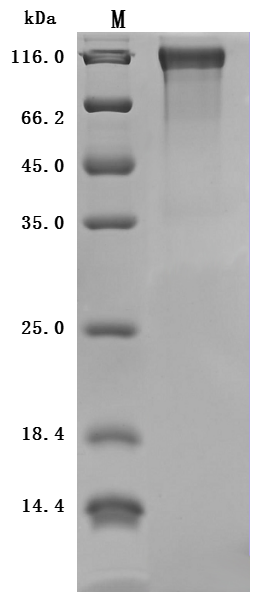
Recombinant Mouse Microtubule-associated protein tau (Mapt) (Active) is a recombinant protein from Mus musculus (Mouse), expressed in Mammalian cell, covering amino acids 2-733aa, with N-terminal 10xHis-tagged tag, molecular weight 78.9kDa, purity Greater than 90% as determined by SDS-PAGE.. Suitable for ELISA and Western Blot applications.