, ,

Recombinant Mouse Mixed lineage kinase domain-like protein (Mlkl)

Recombinant Mouse Mixed lineage kinase domain-like protein (Mlkl) — Pseudokinase that plays a key role in TNF-induced necroptosis, a programmed cell death process. Purity >90%.

SKU: BCRECP-003397 Categories: , ,

Product Specifications

Product SkuBCRECP-003397
Product DescriptionRecombinant Mouse Mixed lineage kinase domain-like protein (Mlkl) Protein is expressed from Yeast with N-terminal 6xHis-tagged. It contains 1-472aa. [Accession | Q9D2Y4].
Uniprot No.Q9D2Y4
Gene NamesMlkl
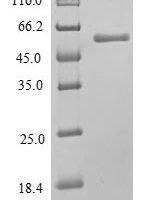
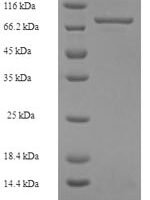
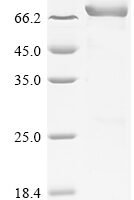
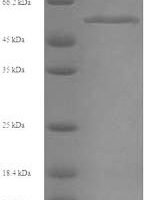
PurityGreater than 90% as determined by SDS-PAGE.
Expression SystemYeast
Expression Region1-472aa
SpeciesMus musculus (Mouse)
Tag InfoN-terminal 6xHis-tagged
Molecular weight56.3kDa
ActivityPlease contact us to obtain bioactivity data.
BufferIf the delivery form is liquid, the default storage buffer is Tris/PBS-based buffer, 5%-50% glycerol. If the delivery form is lyophilized powder, the buffer before lyophilization is Tris/PBS-based buffer, 6% Trehalose.
StorageStore at -20°C/-80°C upon receipt, aliquoting is necessary for mutiple use. Avoid repeated freeze-thaw cycles.
Research AreasOthers

Function

Pseudokinase that plays a key role in TNF-induced necroptosis, a programmed cell death process. Does not have protein kinase activity.

Product Specifications

Recombinant Mouse Mixed lineage kinase domain-like protein (Mlkl) — Pseudokinase that plays a key role in TNF-induced necroptosis, a programmed cell death process. Purity >90%. Suitable for ELISA and Western Blot applications.

Recommended applications depend on the target, product format, and product-specific validation data. Refer to the product datasheet or Certificate of Analysis (CoA), or contact BioCrest Sci for application guidance.

Biological Activity: Please contact us to obtain bioactivity data.

Storage: Store at -20°C/-80°C upon receipt, aliquoting is necessary for mutiple use. Avoid repeated freeze-thaw cycles.

Shipping & Lead Time: Availability, shipping conditions, and estimated lead time are confirmed in the formal quotation or order confirmation based on the product format, destination, and order requirements.

Protein Biology

Function

Pseudokinase that plays a key role in TNF-induced necroptosis, a programmed cell death process (PubMed:23835476, PubMed:24012422, PubMed:24019532, PubMed:27321907, PubMed:32200799, PubMed:32296175). Does not have protein kinase activity (PubMed:24012422). Activated following phosphorylation by RIPK3, leading to homotrimerization, localization to the plasma membrane and execution of programmed necrosis characterized by calcium influx and plasma membrane damage (PubMed:23835476, PubMed:24012422, PubMed:24019532, PubMed:27321907). In addition to TNF-induced necroptosis, necroptosis can also take place in the nucleus in response to orthomyxoviruses infection: following ZBP1 activation, which senses double-stranded Z-RNA structures, nuclear RIPK3 catalyzes phosphorylation and activation of MLKL, promoting disruption of the nuclear envelope and leakage of cellular DNA into the cytosol (PubMed:32200799, PubMed:32296175). Binds to highly phosphorylated inositol phosphates such as inositolhexakisphosphate (InsP6) which is essential for its necroptotic function (By similarity)

Subcellular Location

Cytoplasm; Cell membrane; Nucleus

Tissue Specificity

Highly expressed in thymus, colon, intestine, liver, spleen and lung. Expressed at much lower level in skeletal muscle, heart and kidney. Not detected in brain

Subunit

Homooligomer (By similarity). Homotrimer; forms homotrimers on necroptosis induction (By similarity). Upon TNF-induced necrosis, forms in complex with PGAM5, RIPK1 and RIPK3 (By similarity). Within this complex, may play a role in the proper targeting of RIPK1-RIPK3 to its downstream effector PGAM5 (By similarity). Interacts with RIPK3; the interaction is direct and promotes its phosphorylation and subsequent activation (PubMed:22265413, PubMed:23612963, PubMed:24012422, PubMed:24095729, PubMed:27321907)

Gene: Mlkl  |  Organism: Mus musculus
Key Publications

Frequently Asked Questions

How do I order or inquire about this product?

Submit the Online Inquiry form with your required quantity and specifications, or email sales@biocrestsci.com. Available sizes, pricing, stock status, documentation, and estimated lead time are confirmed in the formal quotation.

What is the shipping and delivery time?

Availability, dispatch timing, shipping conditions, and delivery estimates depend on the product format, destination, and order requirements. These details are confirmed in the formal quotation or order confirmation.
How should this product be stored?

Follow the storage and handling instructions in the product-specific datasheet and Certificate of Analysis (CoA). Requirements may vary by product form and formulation; contact BioCrest Sci if product-specific guidance is needed.

What quality controls are performed on your products?

Quality-control data such as identity, purity, endotoxin level, or biological activity are provided only when specified on this product page, the datasheet, or Certificate of Analysis (CoA). Biological activity is not implied unless explicitly stated.

Shopping Cart
Scroll to Top