Recombinant Mouse Tsukushi (Tsku)

Recombinant Mouse Tsukushi (Tsku) — Contributes to various developmental events and other processes such as wound healing and cholesterol homeostasis through its interactions with multiple signaling pathways. Purity >90%.

SKU: BCRECP-004636 Category:

Product Specifications

Product SkuBCRECP-004636
Product DescriptionRecombinant Mouse Tsukushi (Tsku) Protein is expressed from E.coli with N-terminal 10xHis-tagged and C-terminal Myc-tagged. It contains 18-354aa. [Accession | Q8CBR6].
Uniprot No.Q8CBR6
Gene NamesTsku
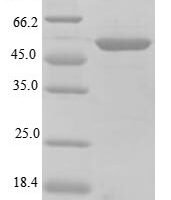
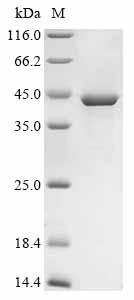
PurityGreater than 90% as determined by SDS-PAGE.
Expression SystemE.coli
Expression Region18-354aa
SpeciesMus musculus (Mouse)
Tag InfoN-terminal 10xHis-tagged and C-terminal Myc-tagged
Molecular weight44.0kDa
ActivityPlease contact us to obtain bioactivity data.
BufferIf the delivery form is liquid, the default storage buffer is Tris/PBS-based buffer, 5%-50% glycerol. If the delivery form is lyophilized powder, the buffer before lyophilization is Tris/PBS-based buffer, 6% Trehalose.
StorageStore at -20°C/-80°C upon receipt, aliquoting is necessary for mutiple use. Avoid repeated freeze-thaw cycles.
Research AreasOthers

Function

Contributes to various developmental events and other processes such as wound healing and cholesterol homeostasis through its interactions with multiple signaling pathways. Wnt signaling inhibitor which competes with WNT2B for binding to Wnt receptor FZD4 and represses WNT2B-dependent development of the peripheral eye. Plays a role in regulating the hair cycle by controlling TGFB1 signaling.

Biological Context

Subcellular Location: Secreted
Tissue Specificity: Expressed in macrophages in inflamed wounds with wound expression starting 2 days post-wounding (dpw) (at protein level). At 7 dpw, expressed from epidermis and extracellular matrix in the wound edge to neoepidermis and granulation tissue and in panniculus carnosus under the granulation tissue (at protein level). After fibrosis, disappears in the dermal area at 11 dpw (at protein level). Expressed in the hair follicle during morphogenesis and the hair cycle (at protein level). In embryonic brain, strong expression in the olfactory bulb, anterior olfactory nucleus, neocortex, piriform cortex, glial wedge, midline zipper glia, indusium griseum and the area surrounding the anterior commissure (AC) but not on AC axons (at protein level). In the adult eye, expressed in retinal layers, lens epithelium, and ciliary body where it is expressed predominantly in the inner non-pigmented layer. Expressed in almost all brain regions in the embryo, in the cortex and the lateral ventricle at P0 and is restricted to the subventricular zone and lateral nucleus of the amygdala in adults. Prominent expression in hippocampal regions from early postnatal stages until postnatal day 15 and gradually declines at later stages. Expressed in almost all bone regions in the femurs of juveniles. In the inner ear, accumulates in nonprosensory regions during early embryonic stages and in both nonprosensory and prosensory regions in late embryonic stages. In the adult ear, expressed in the organ of Corti, spiral ganglion cells, and the stria vascularis. Highly expressed in the liver where it is detected primarily in hepatocytes but not in non-parenchymal cells

Product Specifications

Recombinant Mouse Tsukushi (Tsku) is a recombinant protein from Mus musculus (Mouse), expressed in E.coli, covering amino acids 18-354aa, with N-terminal 10xHis-tagged and C-terminal Myc-tagged tag, molecular weight 44.0kDa, purity Greater than 90% as determined by SDS-PAGE.. Suitable for ELISA and Western Blot applications.
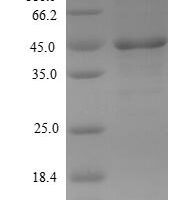
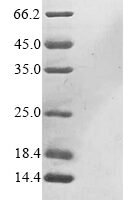
SDS-PAGE: Single band at expected molecular weight confirming purity.

ELISA: Suitable as coating antigen or detection standard.

Western Blot: Compatible with standard Western Blot protocols.

Protein Interaction: Validated for SPR (Surface Plasmon Resonance) and BLI (Bio-Layer Interferometry) studies.

Shipping: Shipped at ambient temperature. Lyophilized protein is stable during transit.

Storage: Store lyophilized protein at -20°C to -80°C. Reconstituted protein should be aliquoted and stored at -80°C. Avoid repeated freeze-thaw cycles.

Shelf Life: 12 months from date of receipt when stored as recommended.

Shipping Time: Orders placed before 2 PM EST ship same day. International orders typically deliver within 5-10 business days.

Protein Biology

Function

Contributes to various developmental events and other processes such as wound healing and cholesterol homeostasis through its interactions with multiple signaling pathways (PubMed:21856951, PubMed:22995554, PubMed:25159578, PubMed:31391339). Wnt signaling inhibitor which competes with WNT2B for binding to Wnt receptor FZD4 and represses WNT2B-dependent development of the peripheral eye (PubMed:21856951). Plays a role in regulating the hair cycle by controlling TGFB1 signaling (PubMed:22995554). Required for the development of the anterior commissure in the brain by inhibiting neurite outgrowth (PubMed:21055390, PubMed:23206892). Essential for terminal differentiation of hippocampal neural stem cells (PubMed:31983064). Plays a role in regulating bone elongation and bone mass by modulating growth plate chondrocyte function and overall body size (PubMed:30271858). Required for development of the inner ear through its involvement in stereocilia formation in inner hair cells (PubMed:32127020). Facilitates wound healing by inhibiting secretion of TGFB1 from macrophages which prevents myofibroblast differentiation, maintaining inflammatory cell quiescence (PubMed:25159578). Plays a role in cholesterol homeostasis by reducing circulating high-density lipoprotein cholesterol, lowering cholesterol efflux capacity and decreasing cholesterol-to-bile acid conversion in the liver (PubMed:31391339). In one study, shown to negatively regulate sympathetic innervation in brown fat, leading to reduced energy expenditure (PubMed:31535079). In another study, shown not to affect brown fat thermogenic capacity, body weight gain or glucose homeostasis (PubMed:31767170)

Subcellular Location

Secreted

Tissue Specificity

Expressed in macrophages in inflamed wounds with wound expression starting 2 days post-wounding (dpw) (at protein level) (PubMed:25159578). At 7 dpw, expressed from epidermis and extracellular matrix in the wound edge to neoepidermis and granulation tissue and in panniculus carnosus under the granulation tissue (at protein level) (PubMed:25159578). After fibrosis, disappears in the dermal area at 11 dpw (at protein level) (PubMed:25159578). Expressed in the hair follicle during morphogenesis and the hair cycle (at protein level) (PubMed:22995554). In embryonic brain, strong expression in the olfactory bulb, anterior olfactory nucleus, neocortex, piriform cortex, glial wedge, midline zipper glia, indusium griseum and the area surrounding the anterior commissure (AC) but not on AC axons (at protein level) (PubMed:23206892). In the adult eye, expressed in retinal layers, lens epithelium, and ciliary body where it is expressed predominantly in the inner non-pigmented layer (PubMed:21856951). Expressed in almost all brain regions in the embryo, in the cortex and the lateral ventricle at P0 and is restricted to the subventricular zone and lateral nucleus of the amygdala in adults (PubMed:21055390). Prominent expression in hippocampal regions from early postnatal stages until postnatal day 15 and gradually declines at later stages (PubMed:31983064). Expressed in almost all bone regions in the femurs of juveniles (PubMed:30271858). In the inner ear, accumulates in nonprosensory regions during early embryonic stages and in both nonprosensory and prosensory regions in late embryonic stages (PubMed:32127020). In the adult ear, expressed in the organ of Corti, spiral ganglion cells, and the stria vascularis (PubMed:32127020). Highly expressed in the liver where it is detected primarily in hepatocytes but not in non-parenchymal cells (PubMed:31535079)

Subunit

Interacts with FZD4 (via FZ domain); competes with WNT2B for binding to FZD4, inhibiting Wnt signaling and repressing peripheral eye development (PubMed:21856951). Interacts with TGFB1; the interaction contributes to regulation of the hair cycle (PubMed:22995554). Interacts with netrin (PubMed:23206892). Interacts with CCN2 (PubMed:30232710)

Gene: Tsku  |  Organism: Mus musculus  |  Synonyms: Leucine-rich repeat-containing protein 54
Key Publications

Frequently Asked Questions

How do I order or inquire about this product?

Fill out the Online Inquiry form with your required quantity and specifications. You can also email sales@biocrestsci.com. Our team typically responds within 4 business hours with a quote and availability confirmation.

What is the shipping and delivery time?

Orders placed before 2 PM EST ship the same day. Domestic (US) delivery typically takes 2-3 business days. International orders deliver within 5-10 business days. All products are shipped at ambient temperature with appropriate packaging to ensure stability.

How should I store this recombinant protein?

Lyophilized proteins should be stored at -20°C to -80°C upon receipt. After reconstitution, aliquot and store at -80°C. Avoid repeated freeze-thaw cycles. Shelf life is 12 months from date of receipt when stored as recommended.

What quality controls are performed on your products?

Each product undergoes SDS-PAGE purity analysis (typically >85-95%), endotoxin testing, and bioactivity validation. Products are validated for ELISA, Western Blot, and SPR/BLI applications as specified on this product page. A Certificate of Analysis (CoA) is available upon request.

Shopping Cart
Scroll to Top