Recombinant Pig Alpha-synuclein (SNCA)

Recombinant Pig Alpha-synuclein (SNCA) — Neuronal protein that plays several roles in synaptic activity such as regulation of synaptic vesicle trafficking and subsequent neurotransmitter release. Purity >85%.

SKU: BCRECP-004432 Category:

Product Specifications

Product SkuBCRECP-004432
Product DescriptionRecombinant Pig Alpha-synuclein (SNCA) Protein is expressed from E.coli with N-terminal 10xHis-tagged and C-terminal Myc-tagged. It contains 1-140aa. [Accession | Q3I5G7].
Uniprot No.Q3I5G7
Gene NamesSNCA
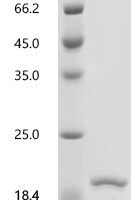
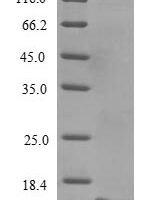
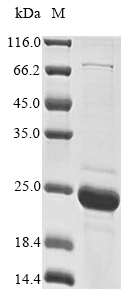
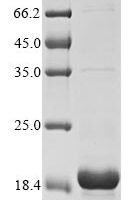
PurityGreater than 85% as determined by SDS-PAGE.
Expression SystemE.coli
Expression Region1-140aa
SpeciesSus scrofa (Pig)
Tag InfoN-terminal 10xHis-tagged and C-terminal Myc-tagged
Molecular weight22.0kDa
ActivityPlease contact us to obtain bioactivity data.
BufferIf the delivery form is liquid, the default storage buffer is Tris/PBS-based buffer, 5%-50% glycerol. If the delivery form is lyophilized powder, the buffer before lyophilization is Tris/PBS-based buffer, 6% Trehalose.
StorageStore at -20°C/-80°C upon receipt, aliquoting is necessary for mutiple use. Avoid repeated freeze-thaw cycles.
Research AreasNeuroscience

Function

Neuronal protein that plays several roles in synaptic activity such as regulation of synaptic vesicle trafficking and subsequent neurotransmitter release. Participates as a monomer in synaptic vesicle exocytosis by enhancing vesicle priming, fusion and dilation of exocytotic fusion pores. Mechanistically, acts by increasing local Ca(2+) release from microdomains which is essential for the enhancement of ATP-induced exocytosis.

Biological Context

Subcellular Location: Cytoplasm; Membrane; Nucleus; Synapse; Secreted; Cell projection, axon

Product Specifications

Recombinant Pig Alpha-synuclein (SNCA) is a recombinant protein from Sus scrofa (Pig), expressed in E.coli, covering amino acids 1-140aa, with N-terminal 10xHis-tagged and C-terminal Myc-tagged tag, molecular weight 22.0kDa, purity Greater than 85% as determined by SDS-PAGE.. Suitable for ELISA and Western Blot applications.
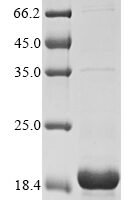
Recommended applications depend on the target, product format, and product-specific validation data. Refer to the product datasheet or Certificate of Analysis (CoA), or contact BioCrest Sci for application guidance.

Biological Activity: Please contact us to obtain bioactivity data.

Storage: Store at -20°C/-80°C upon receipt, aliquoting is necessary for mutiple use. Avoid repeated freeze-thaw cycles.

Shipping & Lead Time: Availability, shipping conditions, and estimated lead time are confirmed in the formal quotation or order confirmation based on the product format, destination, and order requirements.

Protein Biology

Function

Neuronal protein that plays several roles in synaptic activity such as regulation of synaptic vesicle trafficking and subsequent neurotransmitter release (By similarity). Participates as a monomer in synaptic vesicle exocytosis by enhancing vesicle priming, fusion and dilation of exocytotic fusion pores (By similarity). Mechanistically, acts by increasing local Ca(2+) release from microdomains which is essential for the enhancement of ATP-induced exocytosis (By similarity). Also acts as a molecular chaperone in its multimeric membrane-bound state, assisting in the folding of synaptic fusion components called SNAREs (Soluble NSF Attachment Protein REceptors) at presynaptic plasma membrane in conjunction with cysteine string protein-alpha/DNAJC5 (By similarity). This chaperone activity is important to sustain normal SNARE-complex assembly during aging (By similarity). Also plays a role in the regulation of the dopamine neurotransmission by associating with the dopamine transporter (DAT1) and thereby modulating its activity (By similarity)

Subcellular Location

Cytoplasm; Membrane; Nucleus; Synapse; Secreted; Cell projection, axon

Subunit

Soluble monomer. Homotetramer. A dynamic intracellular population of tetramers and monomers coexists normally and the tetramer plays an essential role in maintaining homeostasis (By similarity). Interacts with UCHL1 (By similarity). Interacts with phospholipase D and histones. Interacts (via N-terminus) with synphilin-1/SNCAIP; this interaction promotes formation of SNCA inclusions in the cytoplasm. Interacts with CALM1. Interacts with STXBP1; this interaction controls SNCA self-replicating aggregation. Interacts with SNARE components VAMP2 and SNAP25; these interactions allows SNARE complex assembly and integrity (By similarity). Interacts with RPH3A and RAB3A (By similarity). Interacts with SERF1A; this interaction promotes the aggregation of SNCA (By similarity). Interacts with SEPTIN4 (By similarity). Interacts with DDX10; this interaction causes DDX10 mislocalization to the nucleoplasm and cytoplasmic inclusions (By similarity)

Gene: SNCA  |  Organism: Sus scrofa

Frequently Asked Questions

How do I order or inquire about this product?

Submit the Online Inquiry form with your required quantity and specifications, or email sales@biocrestsci.com. Available sizes, pricing, stock status, documentation, and estimated lead time are confirmed in the formal quotation.

What is the shipping and delivery time?

Availability, dispatch timing, shipping conditions, and delivery estimates depend on the product format, destination, and order requirements. These details are confirmed in the formal quotation or order confirmation.

How should this product be stored?

Follow the storage and handling instructions in the product-specific datasheet and Certificate of Analysis (CoA). Requirements may vary by product form and formulation; contact BioCrest Sci if product-specific guidance is needed.

What quality controls are performed on your products?

Quality-control data such as identity, purity, endotoxin level, or biological activity are provided only when specified on this product page, the datasheet, or Certificate of Analysis (CoA). Biological activity is not implied unless explicitly stated.

Shopping Cart
Scroll to Top