Function
G protein-coupled receptor for cannabinoids, including endocannabinoids (eCBs), such as N-arachidonoylethanolamide (also called anandamide or AEA) and 2-arachidonoylglycerol (2-AG). Mediates many cannabinoid-induced effects, acting, among others, on food intake, memory loss, gastrointestinal motility, catalepsy, ambulatory activity, anxiety, chronic pain. Signaling typically involves reduction in cyclic AMP.
Biological Context
Subcellular Location: Cell membrane (Multi-pass membrane protein); Mitochondrion outer membrane; Cell projection, axon; Presynapse
Tissue Specificity: Expressed in the brain, in the striatum, medial septum, descending arm of the band of Broca, the amygdaloid nucleus, the hippocampus and cortex (at protein level). High levels in the lateral striatum. In rostral brain regions, high expression levels in the dorsal lateral striatum, while in the caudal brain regions, high levels are observed in the ventral lateral striatum. Expressed in monocytes/macrophages (at protein level). Expressed in striated muscles and in vascular smooth muscles cells (at protein level)
Product Specifications
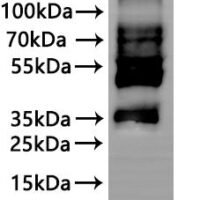
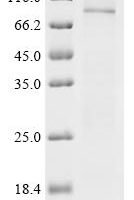
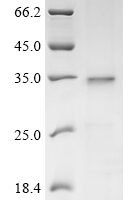
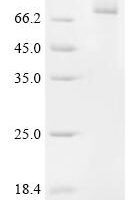
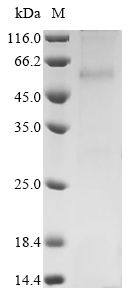
Recombinant Rat Cannabinoid receptor 1 (CNR1) Protein is a recombinant protein from Rattus norvegicus (Rat), expressed in in vitro E.coli expression system, covering amino acids 1-473aa, with N-terminal 10xHis-tagged tag, molecular weight 58.9kDa, purity Greater than 90% as determined by SDS-PAGE.. Suitable for ELISA and Western Blot applications.