, ,

Recombinant Rat Dipeptidyl peptidase 4 (Dpp4),Partial Protein

Recombinant Rat Dipeptidyl peptidase 4 (Dpp4),Partial Protein — Cell surface glycoprotein receptor involved in the costimulatory signal essential for T-cell receptor (TCR)-mediated T-cell activation. Purity >85%.

SKU: BCRECP-00701TM Categories: , ,

Product Specifications

Uniprot No.P14740
Gene NamesDpp4
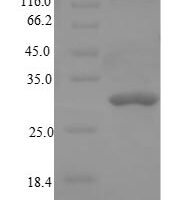
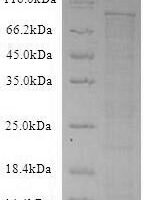
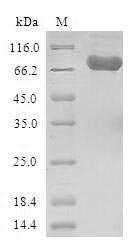
PurityGreater than 85% as determined by SDS-PAGE.
Expression Systemin vitro E.coli expression system
Expression Region37-767aa
SpeciesRattus norvegicus (Rat)
Tag InfoN-terminal 6xHis-tagged
Molecular weight88.3kDa
BufferIf the delivery form is liquid, the default storage buffer is Tris/PBS-based buffer, 5%-50% glycerol.If the delivery form is lyophilized powder, the buffer before lyophilization is Tris/PBS-based buffer, 6% Trehalose.
StorageStore at -20°C/-80°C upon receipt, aliquoting is necessary for mutiple use. Avoid repeated freeze-thaw cycles.

Function

Cell surface glycoprotein receptor involved in the costimulatory signal essential for T-cell receptor (TCR)-mediated T-cell activation. Acts as a positive regulator of T-cell coactivation, by binding at least ADA, CAV1, IGF2R, and PTPRC. Its binding to CAV1 and CARD11 induces T-cell proliferation and NF-kappa-B activation in a T-cell receptor/CD3-dependent manner.

Biological Context

Subcellular Location: Cell membrane (Single-pass type II membrane protein); Apical cell membrane (Single-pass type II membrane protein); Cell projection, invadopodium membrane (Single-pass type II membrane protein); Cell projection, lamellipodium membrane (Single-pass type II membrane protein); Cell junction; Membrane raft
Tissue Specificity: Expressed in bile ducts and other epithelial brush borders (small intestine, kidney, colon, pancreatic duct); acinar structures in salivary glands; endothelial structures and T cell areas in thymus, spleen and lymph node

Product Specifications

Recombinant Rat Dipeptidyl peptidase 4 (Dpp4),Partial Protein is a recombinant protein from Rattus norvegicus (Rat), expressed in in vitro E.coli expression system, covering amino acids 37-767aa, with N-terminal 6xHis-tagged tag, molecular weight 88.3kDa, purity Greater than 85% as determined by SDS-PAGE.. Suitable for ELISA and Western Blot applications.

SDS-PAGE: Single band at expected molecular weight confirming purity.

ELISA: Suitable as coating antigen or detection standard.

Western Blot: Compatible with standard Western Blot protocols.

Protein Interaction: Validated for SPR (Surface Plasmon Resonance) and BLI (Bio-Layer Interferometry) studies.

Shipping: Shipped at ambient temperature. Lyophilized protein is stable during transit.

Storage: Store lyophilized protein at -20°C to -80°C. Reconstituted protein should be aliquoted and stored at -80°C. Avoid repeated freeze-thaw cycles.

Shelf Life: 12 months from date of receipt when stored as recommended.

Shipping Time: Orders placed before 2 PM EST ship same day. International orders typically deliver within 5-10 business days.

Protein Biology

Function

Cell surface glycoprotein receptor involved in the costimulatory signal essential for T-cell receptor (TCR)-mediated T-cell activation. Acts as a positive regulator of T-cell coactivation, by binding at least ADA, CAV1, IGF2R, and PTPRC. Its binding to CAV1 and CARD11 induces T-cell proliferation and NF-kappa-B activation in a T-cell receptor/CD3-dependent manner. Its interaction with ADA also regulates lymphocyte-epithelial cell adhesion. In association with FAP is involved in the pericellular proteolysis of the extracellular matrix (ECM), the migration and invasion of endothelial cells into the ECM. May be involved in the promotion of lymphatic endothelial cells adhesion, migration and tube formation. When overexpressed, enhanced cell proliferation, a process inhibited by GPC3. Also acts as a serine exopeptidase with a dipeptidyl peptidase activity that regulates various physiological processes by cleaving peptides in the circulation, including many chemokines, mitogenic growth factors, neuropeptides and peptide hormones. Removes N-terminal dipeptides sequentially from polypeptides having unsubstituted N-termini provided that the penultimate residue is proline

Subcellular Location

Cell membrane (Single-pass type II membrane protein); Apical cell membrane (Single-pass type II membrane protein); Cell projection, invadopodium membrane (Single-pass type II membrane protein); Cell projection, lamellipodium membrane (Single-pass type II membrane protein); Cell junction; Membrane raft

Tissue Specificity

Expressed in bile ducts and other epithelial brush borders (small intestine, kidney, colon, pancreatic duct); acinar structures in salivary glands; endothelial structures and T cell areas in thymus, spleen and lymph node

Subunit

Monomer. Homodimer. Heterodimer with Seprase (FAP). Requires homodimerization for optimal dipeptidyl peptidase activity and T-cell costimulation. Found in a membrane raft complex, at least composed of BCL10, CARD11, DPP4 and IKBKB. Associates with collagen. Interacts with PTPRC; the interaction is enhanced in an interleukin-12-dependent manner in activated lymphocytes. Interacts (via extracellular domain) with ADA; does not inhibit its dipeptidyl peptidase activity. Interacts with CAV1 (via the N-terminus); the interaction is direct. Interacts (via cytoplasmic tail) with CARD11 (via PDZ domain); its homodimerization is necessary for interaction with CARD11. Interacts with IGF2R; the interaction is direct. Interacts with GPC3

Gene: Dpp4  |  Organism: Rattus norvegicus  |  Synonyms: Bile canaliculus domain-specific membrane glycoprotein; Dipeptidyl peptidase IV; GP110 glycoprotein; T-cell activation antigen CD26
Key Publications

Frequently Asked Questions

How do I order or inquire about this product?

Fill out the Online Inquiry form with your required quantity and specifications. You can also email sales@biocrestsci.com. Our team typically responds within 4 business hours with a quote and availability confirmation.

What is the shipping and delivery time?

Orders placed before 2 PM EST ship the same day. Domestic (US) delivery typically takes 2-3 business days. International orders deliver within 5-10 business days. All products are shipped at ambient temperature with appropriate packaging to ensure stability.

How should I store this recombinant protein?

Lyophilized proteins should be stored at -20°C to -80°C upon receipt. After reconstitution, aliquot and store at -80°C. Avoid repeated freeze-thaw cycles. Shelf life is 12 months from date of receipt when stored as recommended.

What quality controls are performed on your products?

Each product undergoes SDS-PAGE purity analysis (typically >85-95%), endotoxin testing, and bioactivity validation. Products are validated for ELISA, Western Blot, and SPR/BLI applications as specified on this product page. A Certificate of Analysis (CoA) is available upon request.

Shopping Cart
Scroll to Top