Recombinant Rat Heat shock protein beta-6 (Hspb6)

Recombinant Rat Heat shock protein beta-6 (Hspb6) — Small heat shock protein which functions as a molecular chaperone probably maintaining denatured proteins in a folding-competent state. Purity >90%.

SKU: BCRECP-003035 Category:

Product Specifications

Product SkuBCRECP-003035
Product DescriptionRecombinant Rat Heat shock protein beta-6 (Hspb6) Protein is expressed from E.coli with C-terminal 6xHis-tagged. It contains 1-162aa. [Accession | P97541].
Uniprot No.P97541
Gene NamesHspb6
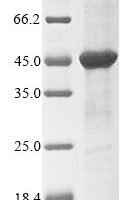
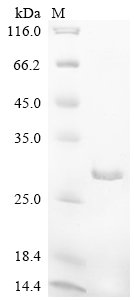
PurityGreater than 90% as determined by SDS-PAGE.
Expression SystemE.coli
Expression Region1-162aa
SpeciesRattus norvegicus (Rat)
Tag InfoC-terminal 6xHis-tagged
Molecular weight24.4kDa
ActivityPlease contact us to obtain bioactivity data.
BufferIf the delivery form is liquid, the default storage buffer is Tris/PBS-based buffer, 5%-50% glycerol. If the delivery form is lyophilized powder, the buffer before lyophilization is Tris/PBS-based buffer, 6% Trehalose.
StorageStore at -20°C/-80°C upon receipt, aliquoting is necessary for mutiple use. Avoid repeated freeze-thaw cycles.
Research AreasOthers

Function

Small heat shock protein which functions as a molecular chaperone probably maintaining denatured proteins in a folding-competent state. Seems to have versatile functions in various biological processes. Plays a role in regulating muscle function such as smooth muscle vasorelaxation and cardiac myocyte contractility.

Biological Context

Subcellular Location: Cytoplasm; Nucleus; Secreted
Tissue Specificity: Widely expressed. High expression in muscle tissues

Product Specifications

Recombinant Rat Heat shock protein beta-6 (Hspb6) is a recombinant protein from Rattus norvegicus (Rat), expressed in E.coli, covering amino acids 1-162aa, with C-terminal 6xHis-tagged tag, molecular weight 24.4kDa, purity Greater than 90% as determined by SDS-PAGE.. Suitable for ELISA and Western Blot applications.
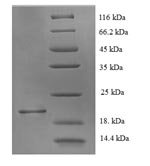
SDS-PAGE: Single band at expected molecular weight confirming purity.

ELISA: Suitable as coating antigen or detection standard.

Western Blot: Compatible with standard Western Blot protocols.

Protein Interaction: Validated for SPR (Surface Plasmon Resonance) and BLI (Bio-Layer Interferometry) studies.

Shipping: Shipped at ambient temperature. Lyophilized protein is stable during transit.

Storage: Store lyophilized protein at -20°C to -80°C. Reconstituted protein should be aliquoted and stored at -80°C. Avoid repeated freeze-thaw cycles.

Shelf Life: 12 months from date of receipt when stored as recommended.

Shipping Time: Orders placed before 2 PM EST ship same day. International orders typically deliver within 5-10 business days.

Protein Biology

Function

Small heat shock protein which functions as a molecular chaperone probably maintaining denatured proteins in a folding-competent state (By similarity). Seems to have versatile functions in various biological processes (By similarity). Plays a role in regulating muscle function such as smooth muscle vasorelaxation and cardiac myocyte contractility (By similarity). May regulate myocardial angiogenesis implicating KDR (By similarity). Overexpression mediates cardioprotection and angiogenesis after induced damage (PubMed:15105294). Stabilizes monomeric YWHAZ thereby supporting YWHAZ chaperone-like activity (By similarity)

Subcellular Location

Cytoplasm; Nucleus; Secreted

Tissue Specificity

Widely expressed. High expression in muscle tissues

Subunit

Homodimer (PubMed:19646995). Small heat shock proteins form high molecular mass oligomers containing variable number of monomers; these oligomers display a very flexible quaternary structure easily exchanging their subunits. Heterooligomer with HSPB1; formed through oligomerization of HSPB1:HSBP6 dimers; subunit exchange leads to formation of at least two different heterooligomeric complexes, differing in variable quantities of HSPB1 and HSPB6 homodimers in addition to HSPB1:HSPB6 heterodimers. Heterooligomer with CRYAB; large heterooligomers consist of CRYAB homodimers and HSPB5:HSPB6 heterodimers but lacking HSPB6 homodimers. Interacts with BAG3. Interacts (phosphorylated) with YWHAZ. Interacts with PDE4A and PDE4D; required for maintenance of the non-phosphorylated state of HSPB6 under basal conditions. Interacts with KDR. Interacts with PRKD1 (By similarity)

Gene: Hspb6  |  Organism: Rattus norvegicus  |  Synonyms: Heat shock 20 kDa-like protein p20
Key Publications

Frequently Asked Questions

How do I order or inquire about this product?

Fill out the Online Inquiry form with your required quantity and specifications. You can also email sales@biocrestsci.com. Our team typically responds within 4 business hours with a quote and availability confirmation.

What is the shipping and delivery time?

Orders placed before 2 PM EST ship the same day. Domestic (US) delivery typically takes 2-3 business days. International orders deliver within 5-10 business days. All products are shipped at ambient temperature with appropriate packaging to ensure stability.

How should I store this recombinant protein?

Lyophilized proteins should be stored at -20°C to -80°C upon receipt. After reconstitution, aliquot and store at -80°C. Avoid repeated freeze-thaw cycles. Shelf life is 12 months from date of receipt when stored as recommended.

What quality controls are performed on your products?

Each product undergoes SDS-PAGE purity analysis (typically >85-95%), endotoxin testing, and bioactivity validation. Products are validated for ELISA, Western Blot, and SPR/BLI applications as specified on this product page. A Certificate of Analysis (CoA) is available upon request.

Shopping Cart
Scroll to Top