Recombinant Rat TGF-beta receptor type-2 (Tgfbr2), partial

Recombinant Rat TGF-beta receptor type-2 (Tgfbr2), partial — Transmembrane serine/threonine kinase forming with the TGF-beta type I serine/threonine kinase receptor, TGFBR1, the non-promiscuous receptor for the TGF-beta cytokines TGFB1, TGFB2 and TGFB3. Purity >85%.

SKU: BCRECP-004559 Category:

Product Specifications

Product SkuBCRECP-004559
Product DescriptionRecombinant Rat TGF-beta receptor type-2 (Tgfbr2) Protein is expressed from Baculovirus with N-terminal 10xHis-tagged and C-terminal Myc-tagged. It contains 24-166aa. [Accession | P38438].
Uniprot No.P38438
Gene NamesTgfbr2
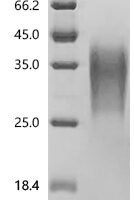
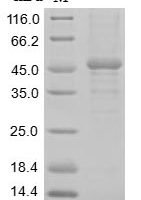
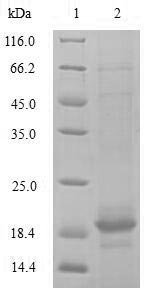
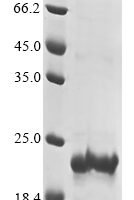
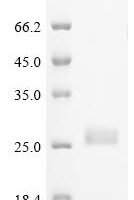
PurityGreater than 85% as determined by SDS-PAGE.
Expression SystemBaculovirus
Expression Region24-166aa
SpeciesRattus norvegicus (Rat)
Tag InfoN-terminal 10xHis-tagged and C-terminal Myc-tagged
Molecular weight20.0kDa
ActivityPlease contact us to obtain bioactivity data.
BufferIf the delivery form is liquid, the default storage buffer is Tris/PBS-based buffer, 5%-50% glycerol. If the delivery form is lyophilized powder, the buffer before lyophilization is Tris/PBS-based buffer, 6% Trehalose.
StorageStore at -20°C/-80°C upon receipt, aliquoting is necessary for mutiple use. Avoid repeated freeze-thaw cycles.
Research AreasSignal Transduction

Function

Transmembrane serine/threonine kinase forming with the TGF-beta type I serine/threonine kinase receptor, TGFBR1, the non-promiscuous receptor for the TGF-beta cytokines TGFB1, TGFB2 and TGFB3. Transduces the TGFB1, TGFB2 and TGFB3 signal from the cell surface to the cytoplasm and is thus regulating a plethora of physiological and pathological processes including cell cycle arrest in epithelial and hematopoietic cells, control of mesenchymal cell proliferation and differentiation, wound healing, extracellular matrix production, immunosuppression and carcinogenesis. The formation of the receptor complex composed of 2 TGFBR1 and 2 TGFBR2 molecules symmetrically bound to the cytokine dimer results in the phosphorylation and the activation of TGFRB1 by the constitutively active TGFBR2.

Biological Context

Subcellular Location: Cell membrane (Single-pass type I membrane protein); Membrane raft

Product Specifications

Recombinant Rat TGF-beta receptor type-2 (Tgfbr2), partial is a recombinant protein from Rattus norvegicus (Rat), expressed in Baculovirus, covering amino acids 24-166aa, with N-terminal 10xHis-tagged and C-terminal Myc-tagged tag, molecular weight 20.0kDa, purity Greater than 85% as determined by SDS-PAGE.. Suitable for ELISA and Western Blot applications.
Recommended applications depend on the target, product format, and product-specific validation data. Refer to the product datasheet or Certificate of Analysis (CoA), or contact BioCrest Sci for application guidance.

Biological Activity: Please contact us to obtain bioactivity data.

Storage: Store at -20°C/-80°C upon receipt, aliquoting is necessary for mutiple use. Avoid repeated freeze-thaw cycles.

Shipping & Lead Time: Availability, shipping conditions, and estimated lead time are confirmed in the formal quotation or order confirmation based on the product format, destination, and order requirements.

Protein Biology

Function

Transmembrane serine/threonine kinase forming with the TGF-beta type I serine/threonine kinase receptor, TGFBR1, the non-promiscuous receptor for the TGF-beta cytokines TGFB1, TGFB2 and TGFB3. Transduces the TGFB1, TGFB2 and TGFB3 signal from the cell surface to the cytoplasm and is thus regulating a plethora of physiological and pathological processes including cell cycle arrest in epithelial and hematopoietic cells, control of mesenchymal cell proliferation and differentiation, wound healing, extracellular matrix production, immunosuppression and carcinogenesis. The formation of the receptor complex composed of 2 TGFBR1 and 2 TGFBR2 molecules symmetrically bound to the cytokine dimer results in the phosphorylation and the activation of TGFRB1 by the constitutively active TGFBR2. Activated TGFBR1 phosphorylates SMAD2 which dissociates from the receptor and interacts with SMAD4. The SMAD2-SMAD4 complex is subsequently translocated to the nucleus where it modulates the transcription of the TGF-beta-regulated genes. This constitutes the canonical SMAD-dependent TGF-beta signaling cascade. Also involved in non-canonical, SMAD-independent TGF-beta signaling pathways (By similarity)

Subcellular Location

Cell membrane (Single-pass type I membrane protein); Membrane raft

Subunit

Homodimer. Heterohexamer; TGFB1, TGFB2 and TGFB3 homodimeric ligands assemble a functional receptor composed of two TGFBR1 and TGFBR2 heterodimers to form a ligand-receptor heterohexamer. The respective affinity of TGFRB1 and TGFRB2 for the ligands may modulate the kinetics of assembly of the receptor and may explain the different biological activities of TGFB1, TGFB2 and TGFB3. Component of a complex composed of TSC22D1 (via N-terminus), TGFBR1 and TGFBR2; the interaction between TSC22D1 and TGFBR1 is inhibited by SMAD7 and promoted by TGFB1 (By similarity). Interacts with DAXX. Interacts with DYNLT4. Interacts with ZFYVE9; ZFYVE9 recruits SMAD2 and SMAD3 to the TGF-beta receptor (By similarity). Interacts with and is activated by SCUBE3; this interaction does not affect TGFB1-binding to TGFBR2 (By similarity). Interacts with VPS39; this interaction is independent of the receptor kinase activity and of the presence of TGF-beta (By similarity). Interacts with CLU (By similarity)

Gene: Tgfbr2  |  Organism: Rattus norvegicus  |  Synonyms: TGF-beta type II receptor; Transforming growth factor-beta receptor type II

Frequently Asked Questions

How do I order or inquire about this product?

Submit the Online Inquiry form with your required quantity and specifications, or email sales@biocrestsci.com. Available sizes, pricing, stock status, documentation, and estimated lead time are confirmed in the formal quotation.

What is the shipping and delivery time?

Availability, dispatch timing, shipping conditions, and delivery estimates depend on the product format, destination, and order requirements. These details are confirmed in the formal quotation or order confirmation.

How should this product be stored?

Follow the storage and handling instructions in the product-specific datasheet and Certificate of Analysis (CoA). Requirements may vary by product form and formulation; contact BioCrest Sci if product-specific guidance is needed.

What quality controls are performed on your products?

Quality-control data such as identity, purity, endotoxin level, or biological activity are provided only when specified on this product page, the datasheet, or Certificate of Analysis (CoA). Biological activity is not implied unless explicitly stated.

Shopping Cart
Scroll to Top