Recombinant Rat Cytochrome P450 1A1 (Cyp1a1)

Recombinant Rat Cytochrome P450 1A1 (Cyp1a1) — A cytochrome P450 monooxygenase involved in the metabolism of various endogenous substrates, including fatty acids, steroid hormones and vitamins. Purity >90%.

SKU: BCRECP-002493 Category:

Product Specifications

Product SkuBCRECP-002493
Product DescriptionRecombinant Rat Cytochrome P450 1A1 (Cyp1a1) Protein is expressed from E.coli with N-terminal 10xHis-tagged and C-terminal Myc-tagged. It contains 2-524aa. [Accession | P00185].
Uniprot No.P00185
Gene NamesCyp1a1
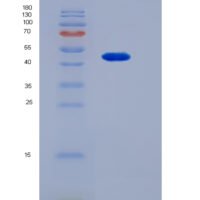
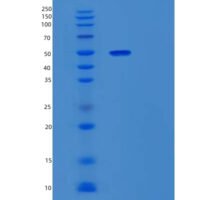
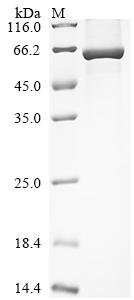
PurityGreater than 90% as determined by SDS-PAGE.
Expression SystemE.coli
Expression Region2-524aa
SpeciesRattus norvegicus (Rat)
Tag InfoN-terminal 10xHis-tagged and C-terminal Myc-tagged
Molecular weight66.7kDa
ActivityPlease contact us to obtain bioactivity data.
BufferIf the delivery form is liquid, the default storage buffer is Tris/PBS-based buffer, 5%-50% glycerol. If the delivery form is lyophilized powder, the buffer before lyophilization is Tris/PBS-based buffer, 6% Trehalose.
StorageStore at -20°C/-80°C upon receipt, aliquoting is necessary for mutiple use. Avoid repeated freeze-thaw cycles.
Research AreasOthers

Function

A cytochrome P450 monooxygenase involved in the metabolism of various endogenous substrates, including fatty acids, steroid hormones and vitamins. Mechanistically, uses molecular oxygen inserting one oxygen atom into a substrate, and reducing the second into a water molecule, with two electrons provided by NADPH via cytochrome P450 reductase (CPR; NADPH-ferrihemoprotein reductase). Catalyzes the hydroxylation of carbon-hydrogen bonds.

Biological Context

Subcellular Location: Endoplasmic reticulum membrane (Peripheral membrane protein); Mitochondrion inner membrane (Peripheral membrane protein); Microsome membrane (Peripheral membrane protein)
Tissue Specificity: Liver
Pathway: Cofactor metabolism; retinol metabolism

Product Specifications

Recombinant Rat Cytochrome P450 1A1 (Cyp1a1) is a recombinant protein from Rattus norvegicus (Rat), expressed in E.coli, covering amino acids 2-524aa, with N-terminal 10xHis-tagged and C-terminal Myc-tagged tag, molecular weight 66.7kDa, purity Greater than 90% as determined by SDS-PAGE.. Suitable for ELISA and Western Blot applications.
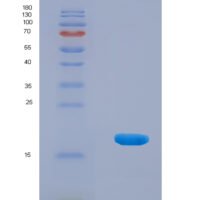
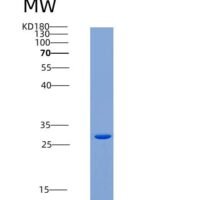
SDS-PAGE: Single band at expected molecular weight confirming purity.

ELISA: Suitable as coating antigen or detection standard.

Western Blot: Compatible with standard Western Blot protocols.

Protein Interaction: Validated for SPR (Surface Plasmon Resonance) and BLI (Bio-Layer Interferometry) studies.

Shipping: Shipped at ambient temperature. Lyophilized protein is stable during transit.

Storage: Store lyophilized protein at -20°C to -80°C. Reconstituted protein should be aliquoted and stored at -80°C. Avoid repeated freeze-thaw cycles.

Shelf Life: 12 months from date of receipt when stored as recommended.

Shipping Time: Orders placed before 2 PM EST ship same day. International orders typically deliver within 5-10 business days.

Protein Biology

Function

A cytochrome P450 monooxygenase involved in the metabolism of various endogenous substrates, including fatty acids, steroid hormones and vitamins. Mechanistically, uses molecular oxygen inserting one oxygen atom into a substrate, and reducing the second into a water molecule, with two electrons provided by NADPH via cytochrome P450 reductase (CPR; NADPH-ferrihemoprotein reductase). Catalyzes the hydroxylation of carbon-hydrogen bonds. Exhibits high catalytic activity for the formation of hydroxyestrogens from estrone (E1) and 17beta-estradiol (E2), namely 2-hydroxy E1 and E2, as well as D-ring hydroxylated E1 and E2 at the C15alpha and C16alpha positions (By similarity). Displays different regioselectivities for polyunsaturated fatty acids (PUFA) hydroxylation (By similarity). Catalyzes the epoxidation of double bonds of certain PUFA (PubMed:20972997). Converts arachidonic acid toward epoxyeicosatrienoic acid (EET) regioisomers, 8,9-, 11,12-, and 14,15-EET, that function as lipid mediators in the vascular system. Displays an absolute stereoselectivity in the epoxidation of eicosapentaenoic acid (EPA) producing the 17(R),18(S) enantiomer (By similarity). May play an important role in all-trans retinoic acid biosynthesis in extrahepatic tissues. Catalyzes two successive oxidative transformation of all-trans retinol to all-trans retinal and then to the active form all-trans retinoic acid (By similarity). May also participate in eicosanoids metabolism by converting hydroperoxide species into oxo metabolites (lipoxygenase-like reaction, NADPH-independent) (By similarity)

Subcellular Location

Endoplasmic reticulum membrane (Peripheral membrane protein); Mitochondrion inner membrane (Peripheral membrane protein); Microsome membrane (Peripheral membrane protein)

Tissue Specificity

Liver

Subunit

Both Cytochrome P450MT2A and Cytochrome P450MT2B interact with cytosolic chaperones HSP70 and HSP90; this interaction is required for initial targeting to mitochondria. P450MT2B interacts (via mitochondrial targeting signal) with TOMM40 (via N-terminus); this interaction is required for translocation across the mitochondrial outer membrane

Pathway

Cofactor metabolism; retinol metabolism

Gene: Cyp1a1  |  Organism: Rattus norvegicus  |  Synonyms: CYPIA1; Cytochrome P450 form 6; Cytochrome P450-C; Cytochrome P450-P1; Cytochrome P450MT2; Hydroperoxy icosatetraenoate dehydratase
Key Publications

Frequently Asked Questions

How do I order or inquire about this product?

Fill out the Online Inquiry form with your required quantity and specifications. You can also email sales@biocrestsci.com. Our team typically responds within 4 business hours with a quote and availability confirmation.

What is the shipping and delivery time?

Orders placed before 2 PM EST ship the same day. Domestic (US) delivery typically takes 2-3 business days. International orders deliver within 5-10 business days. All products are shipped at ambient temperature with appropriate packaging to ensure stability.

How should I store this recombinant protein?

Lyophilized proteins should be stored at -20°C to -80°C upon receipt. After reconstitution, aliquot and store at -80°C. Avoid repeated freeze-thaw cycles. Shelf life is 12 months from date of receipt when stored as recommended.

What quality controls are performed on your products?

Each product undergoes SDS-PAGE purity analysis (typically >85-95%), endotoxin testing, and bioactivity validation. Products are validated for ELISA, Western Blot, and SPR/BLI applications as specified on this product page. A Certificate of Analysis (CoA) is available upon request.

Shopping Cart
Scroll to Top