Function
Has very strong antibacterial activity against the marine Gram-negative bacteria V.alginolyticus (MIC=24 uM), V.fluvialis, V.harveyis (MIC=12 uM) and V.parahaemolyticus (MIC=6 uM). Has antibacterial activity against the Gram-negative bacteria A.hydrophila (MIC=6 uM), E.coli (MIC=24 uM), and E.coli BL21(DE3)plysS (MIC=6 uM), and the Gram-positive bacteria B.cereus (MIC=24 uM), B.subtilis (MIC=6 uM), C.glutamicum (MIC=3 uM), M.luteus (MIC=3 uM), M.lysodeikticus, S.aureus (MIC=6 uM) and S.epidermis (MIC=12 uM). Possesses antifungal activity against A.niger (MIC=24 uM), F.graminearum (MIC24 uM) and F.solani (MIC=24 uM), but lacks antifungal activity against the yeasts P.pastoris GS115 and C.albicans.
Biological Context
Subcellular Location: Secreted
Tissue Specificity: Expressed in all tissues tested, with highest levels of expression in kidney and lowest levels in liver. Intra-peritoneal injection of lipopolysaccharide results in increased expression in heart, spleen and stomach, but not in kidney or liver
Product Specifications
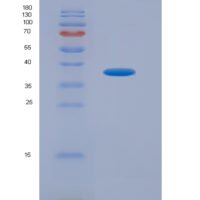
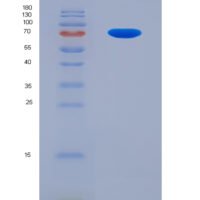
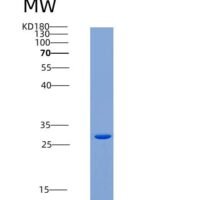
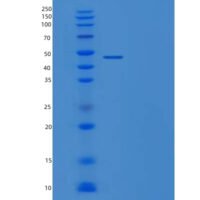
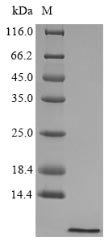
Recombinant Larimichthys crocea Hepcidin (hamp) is a recombinant protein from Larimichthys crocea (Large yellow croaker) (Pseudosciaena crocea), expressed in E.coli, covering amino acids 65-85aa, with Tag-Free tag, molecular weight 2.5kDa, purity Greater than 90% as determined by SDS-PAGE.. Suitable for ELISA and Western Blot applications.