Recombinant Arabidopsis thaliana Transcription factor HY5 (HY5)

Recombinant Arabidopsis thaliana Transcription factor HY5 (HY5) — Transcription factor that promotes photomorphogenesis in light. Purity >90%.

SKU: BCRECP-003046 Category:

Product Specifications

Product SkuBCRECP-003046
Product DescriptionRecombinant Arabidopsis thaliana Transcription factor HY5 (HY5) Protein is expressed from E.coli with N-terminal 10xHis-tagged and C-terminal Myc-tagged. It contains 1-168aa. [Accession | O24646].
Uniprot No.O24646
Gene NamesHY5
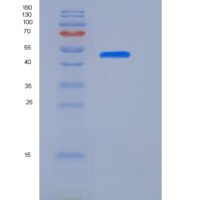
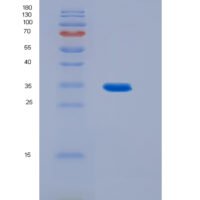
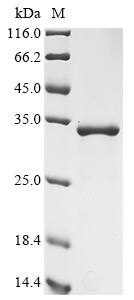
PurityGreater than 90% as determined by SDS-PAGE.
Expression SystemE.coli
Expression Region1-168aa
SpeciesArabidopsis thaliana (Mouse-ear cress)
Tag InfoN-terminal 10xHis-tagged and C-terminal Myc-tagged
Molecular weight25.9kDa
ActivityPlease contact us to obtain bioactivity data.
BufferIf the delivery form is liquid, the default storage buffer is Tris/PBS-based buffer, 5%-50% glycerol. If the delivery form is lyophilized powder, the buffer before lyophilization is Tris/PBS-based buffer, 6% Trehalose.
StorageStore at -20°C/-80°C upon receipt, aliquoting is necessary for mutiple use. Avoid repeated freeze-thaw cycles.
Research AreasOthers

Function

Transcription factor that promotes photomorphogenesis in light. Acts downstream of the light receptor network and directly affects transcription of light-induced genes. Specifically involved in the blue light specific pathway, suggesting that it participates in transmission of cryptochromes (CRY1 and CRY2) signals to downstream responses.

Biological Context

Subcellular Location: Nucleus
Tissue Specificity: Expressed in root, hypocotyl, cotyledon, leaf, stem and floral organs

Product Specifications

Recombinant Arabidopsis thaliana Transcription factor HY5 (HY5) is a recombinant protein from Arabidopsis thaliana (Mouse-ear cress), expressed in E.coli, covering amino acids 1-168aa, with N-terminal 10xHis-tagged and C-terminal Myc-tagged tag, molecular weight 25.9kDa, purity Greater than 90% as determined by SDS-PAGE.. Suitable for ELISA and Western Blot applications.
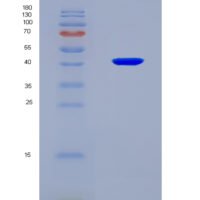
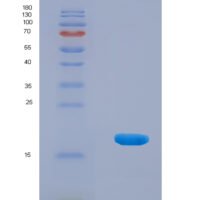
SDS-PAGE: Single band at expected molecular weight confirming purity.

ELISA: Suitable as coating antigen or detection standard.

Western Blot: Compatible with standard Western Blot protocols.

Protein Interaction: Validated for SPR (Surface Plasmon Resonance) and BLI (Bio-Layer Interferometry) studies.

Shipping: Shipped at ambient temperature. Lyophilized protein is stable during transit.

Storage: Store lyophilized protein at -20°C to -80°C. Reconstituted protein should be aliquoted and stored at -80°C. Avoid repeated freeze-thaw cycles.

Shelf Life: 12 months from date of receipt when stored as recommended.

Shipping Time: Orders placed before 2 PM EST ship same day. International orders typically deliver within 5-10 business days.

Protein Biology

Function

Transcription factor that promotes photomorphogenesis in light. Acts downstream of the light receptor network and directly affects transcription of light-induced genes. Specifically involved in the blue light specific pathway, suggesting that it participates in transmission of cryptochromes (CRY1 and CRY2) signals to downstream responses. In darkness, its degradation prevents the activation of light-induced genes (Probable). Involved in responses to cold conditions probably by modulating the expression of several genes and triggering anthocyanin biosynthesis (PubMed:28412546). Acts coordinately with SPL7 to regulate the microRNA miR408 and its target genes in response to changes in light and copper conditions (PubMed:25516599). Regulates the abscisic acid (ABA) signaling pathway. Also involved in root gravitropism (PubMed:26474641). Involved in the repression of hypocotyl cell elongation to promote photomorphogenesis (PubMed:31061103). Recruits the histone deacetylase HDA15 to the promoters of a subset of cell wall organization and auxin signaling-related genes (PubMed:31061103). HDA15 represses their transcription by decreasing the levels of histone H4 acetylation in a light-dependent manner (PubMed:31061103)

Subcellular Location

Nucleus

Tissue Specificity

Expressed in root, hypocotyl, cotyledon, leaf, stem and floral organs

Subunit

Homodimer; homodimerizes via the leucine-zipper domains (PubMed:17261584). Heterodimer; heterodimerizes with HYH via the leucine-zipper domains (PubMed:12023303). Interacts with COP1 WD40 domain (PubMed:11226162). Interacts with BBX21 (PubMed:21632973), BBX24/STO (PubMed:23733077) and BBX25/STH (PubMed:23624715). Interacts with SPL7 (PubMed:25516599). Binds to SHW1 in the nucleus (PubMed:26474641). Interacts with HDA15 in the nucleus (PubMed:31061103). Interacts with PFD4 in the nucleus and at low temperature (e.g. at 4 degrees Celsius) (PubMed:28412546)

Gene: HY5  |  Organism: Arabidopsis thaliana  |  Synonyms: Protein LONG HYPOCOTYL 5; bZIP transcription factor 56
Key Publications

Frequently Asked Questions

How do I order or inquire about this product?

Fill out the Online Inquiry form with your required quantity and specifications. You can also email sales@biocrestsci.com. Our team typically responds within 4 business hours with a quote and availability confirmation.

What is the shipping and delivery time?

Orders placed before 2 PM EST ship the same day. Domestic (US) delivery typically takes 2-3 business days. International orders deliver within 5-10 business days. All products are shipped at ambient temperature with appropriate packaging to ensure stability.

How should I store this recombinant protein?

Lyophilized proteins should be stored at -20°C to -80°C upon receipt. After reconstitution, aliquot and store at -80°C. Avoid repeated freeze-thaw cycles. Shelf life is 12 months from date of receipt when stored as recommended.

What quality controls are performed on your products?

Each product undergoes SDS-PAGE purity analysis (typically >85-95%), endotoxin testing, and bioactivity validation. Products are validated for ELISA, Western Blot, and SPR/BLI applications as specified on this product page. A Certificate of Analysis (CoA) is available upon request.

Shopping Cart
Scroll to Top