Function
(Microbial infection) Receptor for human coronavirus HKU1-CoV, acts synergistically with disialoside glycans to facilitate the entry of the virus. After binding to cell-surface disialoside glycans, the viral S protein interacts with the inactive form of TMPRSS2 and inhibits its protease activity.
Biological Context
Subcellular Location: Secreted
Tissue Specificity: Expressed in several tissues that comprise large populations of epithelial cells with the highest level of transcripts measured in the prostate gland. Expressed in type II pneumocytes in the lung (at protein level). Expressed strongly in small intestine. Also expressed in colon, stomach and salivary gland. Coexpressed with ACE2 within lung type II pneumocytes, ileal absorptive enterocytes, intestinal epithelial cells, cornea, gallbladder and nasal goblet secretory cells (Ref.21)
Product Specifications
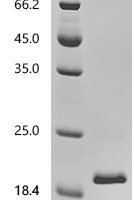
Recombinant Human Transmembrane protease serine 2 (TMPRSS2), partial (Active) is a recombinant protein from Homo sapiens (Human), expressed in Yeast, covering amino acids 106-492 aa, with N-terminal 6xHis-tagged tag, molecular weight 44.8kDa, purity Greater than 85% as determined by SDS-PAGE.. Suitable for ELISA and Western Blot applications. Explore more Protease proteins →