Recombinant Human Triggering receptor expressed on myeloid cells 2 (TREM2), partial (Active)

Recombinant Human Triggering receptor expressed on myeloid cells 2 (TREM2), partial (Active) — Forms a receptor signaling complex with TYROBP which mediates signaling and cell activation following ligand binding. Purity >90%.

SKU: BCACP-000027 Category:
Product SKUBCACP-000027
Product DescriptionRecombinant Human Triggering receptor expressed on myeloid cells 2 (TREM2) protein is expressed from Mammalian cell with N-terminal 10xHis-tagged and C-terminal Myc-tagged. It contains 19-174aa. [Accession | Q9NZC2].
Uniprot No.Q9NZC2
Gene NamesTREM2
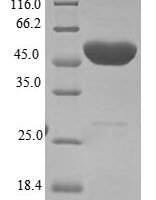
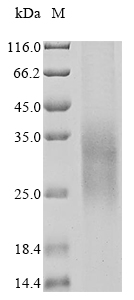
PurityGreater than 90% as determined by SDS-PAGE.
Expression SystemMammalian cell
Expression Region19-174aa
SpeciesHomo sapiens (Human)
Tag InfoN-terminal 10xHis-tagged and C-terminal Myc-tagged
Molecular weight22.5 kDa
ActivityMeasured by its binding ability in a functional ELISA.Immobilized Human TREM2 at 2 μg/mL can bind Anti-TREM2 recombinant antibody. The EC50 is 1.145-1.358 ng/mL.;TREM2 Recombinant Monoclonal Antibody captured on Protein A Chip can bind Recombinant Human TREM2 with an affinity constant of 0.146 nM as detected by TREM2aSPR Assay (WeSPRTM 200).
BufferLyophilized from a 0.2 μm filtered 20 mM Tris-HCl, 0.5 M NaCl, 6% Trehalose, pH 8.0
StorageStore at -20°C/-80°C upon receipt, aliquoting is necessary for mutiple use. Avoid repeated freeze-thaw cycles.
Alternative NamesTriggering receptor expressed on myeloid cells 2; TREM-2; Triggering receptor expressed on monocytes 2

Function

Forms a receptor signaling complex with TYROBP which mediates signaling and cell activation following ligand binding. Acts as a receptor for amyloid-beta protein 42, a cleavage product of the amyloid-beta precursor protein APP, and mediates its uptake and degradation by microglia. Binding to amyloid-beta 42 mediates microglial activation, proliferation, migration, apoptosis and expression of pro-inflammatory cytokines, such as IL6R and CCL3, and the anti-inflammatory cytokine ARG1.

Biological Context

Subcellular Location: Secreted
Tissue Specificity: Expressed in the brain, specifically in microglia and in the fusiform gyrus (at protein level). Expressed on macrophages and dendritic cells but not on granulocytes or monocytes. In the CNS strongest expression seen in the basal ganglia, corpus callosum, medulla oblongata and spinal cord
Disease Association: Polycystic lipomembranous osteodysplasia with sclerosing leukoencephalopathy 2 (PLOSL2) : An autosomal recessive disease characterized by presenile frontal dementia with leukoencephalopathy and basal ganglia calcification. In most cases the disorder first manifests in early adulthood as pain and swelling in ankles and feet, followed by bone fractures. Neurologic symptoms manifest in the fourth decade of life as a frontal lobe syndrome with loss of judgment, euphoria, and disinhibition. Progressive decline in other cognitive domains begins to develop at about the same time. The disorder culminates in a profound dementia and death by age 50 years. [The disease is caused by variants affecting the gene represented in this entry] | Alzheimer disease 17 (AD17) : A late-onset form of Alzheimer disease. Alzheimer disease is a neurodegenerative disorder characterized by progressive dementia, loss of cognitive abilities, and deposition of fibrillar amyloid proteins as intraneuronal neurofibrillary tangles, extracellular amyloid plaques and vascular amyloid deposits. The major constituents of these plaques are neurotoxic amyloid-beta protein 40 and amyloid-beta protein 42, that are produced by the proteolysis of the transmembrane APP protein. The cytotoxic C-terminal fragments (CTFs) and the caspase-cleaved products, such as C31, are also implicated in neuronal death. [Disease susceptibility is associated with variants affecting the gene represented in this entry]

Product Specifications

Recombinant Human Triggering receptor expressed on myeloid cells 2 (TREM2), partial (Active) is a recombinant protein from Homo sapiens (Human), expressed in Mammalian cell, covering amino acids 19-174aa, with N-terminal 10xHis-tagged and C-terminal Myc-tagged tag, molecular weight 22.5 kDa, purity Greater than 90% as determined by SDS-PAGE.. Suitable for ELISA and Western Blot applications.
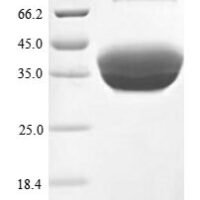
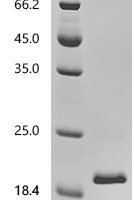
SDS-PAGE: Single band at expected molecular weight confirming purity.

ELISA: Suitable as coating antigen or detection standard.

Western Blot: Compatible with standard Western Blot protocols.

Protein Interaction: Validated for SPR (Surface Plasmon Resonance) and BLI (Bio-Layer Interferometry) studies.

Shipping: Shipped at ambient temperature. Lyophilized protein is stable during transit.

Storage: Store lyophilized protein at -20°C to -80°C. Reconstituted protein should be aliquoted and stored at -80°C. Avoid repeated freeze-thaw cycles.

Shelf Life: 12 months from date of receipt when stored as recommended.

Shipping Time: Orders placed before 2 PM EST ship same day. International orders typically deliver within 5-10 business days.

Protein Biology

Function

Forms a receptor signaling complex with TYROBP which mediates signaling and cell activation following ligand binding (PubMed:10799849). Acts as a receptor for amyloid-beta protein 42, a cleavage product of the amyloid-beta precursor protein APP, and mediates its uptake and degradation by microglia (PubMed:27477018, PubMed:29518356). Binding to amyloid-beta 42 mediates microglial activation, proliferation, migration, apoptosis and expression of pro-inflammatory cytokines, such as IL6R and CCL3, and the anti-inflammatory cytokine ARG1 (By similarity). Acts as a receptor for lipoprotein particles such as LDL, VLDL, and HDL and for apolipoproteins such as APOA1, APOA2, APOB, APOE, APOE2, APOE3, APOE4, and CLU and enhances their uptake in microglia (PubMed:27477018). Binds phospholipids (preferably anionic lipids) such as phosphatidylserine, phosphatidylethanolamine, phosphatidylglycerol and sphingomyelin (PubMed:29794134). Regulates microglial proliferation by acting as an upstream regulator of the Wnt/beta-catenin signaling cascade (By similarity). Required for microglial phagocytosis of apoptotic neurons (PubMed:24990881). Also required for microglial activation and phagocytosis of myelin debris after neuronal injury and of neuronal synapses during synapse elimination in the developing brain (By similarity). Regulates microglial chemotaxis and process outgrowth, and also the microglial response to oxidative stress and lipopolysaccharide (By similarity). It suppresses PI3K and NF-kappa-B signaling in response to lipopolysaccharide; thus promoting phagocytosis, suppressing pro-inflammatory cytokine and nitric oxide production, inhibiting apoptosis and increasing expression of IL10 and TGFB (By similarity). During oxidative stress, it promotes anti-apoptotic NF-kappa-B signaling and ERK signaling (By similarity). Plays a role in microglial MTOR activation and metabolism (By similarity). Regulates age-related changes in microglial numbers (PubMed:29752066). Triggers activation of the immune responses in macrophages and dendritic cells (PubMed:10799849). Mediates cytokine-induced formation of multinucleated giant cells which are formed by the fusion of macrophages (By similarity). In dendritic cells, receptor of SEMA6D with PLEXNA1 as coreceptor and mediates up-regulation of chemokine receptor CCR7 and dendritic cell maturation and survival (PubMed:11602640). Involved in the positive regulation of osteoclast differentiation (PubMed:12925681)

Subcellular Location

Secreted

Disease Association

Polycystic lipomembranous osteodysplasia with sclerosing leukoencephalopathy 2 (PLOSL2) : An autosomal recessive disease characterized by presenile frontal dementia with leukoencephalopathy and basal ganglia calcification. In most cases the disorder first manifests in early adulthood as pain and swelling in ankles and feet, followed by bone fractures. Neurologic symptoms manifest in the fourth decade of life as a frontal lobe syndrome with loss of judgment, euphoria, and disinhibition. Progressive decline in other cognitive domains begins to develop at about the same time. The disorder culminates in a profound dementia and death by age 50 years. [The disease is caused by variants affecting the gene represented in this entry] | Alzheimer disease 17 (AD17) : A late-onset form of Alzheimer disease. Alzheimer disease is a neurodegenerative disorder characterized by progressive dementia, loss of cognitive abilities, and deposition of fibrillar amyloid proteins as intraneuronal neurofibrillary tangles, extracellular amyloid plaques and vascular amyloid deposits. The major constituents of these plaques are neurotoxic amyloid-beta protein 40 and amyloid-beta protein 42, that are produced by the proteolysis of the transmembrane APP protein. The cytotoxic C-terminal fragments (CTFs) and the caspase-cleaved products, such as C31, are also implicated in neuronal death. [Disease susceptibility is associated with variants affecting the gene represented in this entry]

Tissue Specificity

Expressed in the brain, specifically in microglia and in the fusiform gyrus (at protein level) (PubMed:27477018, PubMed:28802038, PubMed:28855300, PubMed:29752066). Expressed on macrophages and dendritic cells but not on granulocytes or monocytes (PubMed:10799849, PubMed:28855301). In the CNS strongest expression seen in the basal ganglia, corpus callosum, medulla oblongata and spinal cord (PubMed:12080485)

Subunit

Monomer (PubMed:27995897). After ectodomain shedding, the extracellular domain oligomerizes, which is enhanced and stabilized by binding of phosphatidylserine (PubMed:29794134). Interacts with TYROBP/DAP12 (PubMed:11602640, PubMed:25957402). Interaction with TYROBP is required for stabilization of the TREM2 C-terminal fragment (TREM2-CTF) which is produced by proteolytic processing (PubMed:25957402). Interacts with PLXNA1 (via TIG domains); the interaction mediates SEMA6D binding and signaling through TYROBP (By similarity)

Gene: TREM2  |  Organism: Homo sapiens  |  Synonyms: Triggering receptor expressed on monocytes 2
Key Publications

Frequently Asked Questions

How do I order or inquire about this product?

Fill out the Online Inquiry form with your required quantity and specifications. You can also email sales@biocrestsci.com. Our team typically responds within 4 business hours with a quote and availability confirmation.

What is the shipping and delivery time?

Orders placed before 2 PM EST ship the same day. Domestic (US) delivery typically takes 2-3 business days. International orders deliver within 5-10 business days. All products are shipped at ambient temperature with appropriate packaging to ensure stability.

How should I store this recombinant protein?

Lyophilized proteins should be stored at -20°C to -80°C upon receipt. After reconstitution, aliquot and store at -80°C. Avoid repeated freeze-thaw cycles. Shelf life is 12 months from date of receipt when stored as recommended.

What quality controls are performed on your products?

Each product undergoes SDS-PAGE purity analysis (typically >85-95%), endotoxin testing, and bioactivity validation. Products are validated for ELISA, Western Blot, and SPR/BLI applications as specified on this product page. A Certificate of Analysis (CoA) is available upon request.

Shopping Cart
Scroll to Top