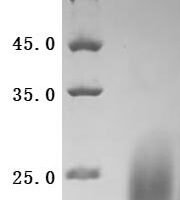
Recombinant Human Superoxide dismutase [Cu-Zn] protein (SOD1) (Active)

Recombinant Human Superoxide dismutase [Cu-Zn] protein (SOD1) (Active) — Destroys radicals which are normally produced within the cells and which are toxic to biological systems. Purity >95%.

SKU: BCACP-000851 Category:
Product SKUBCACP-000851
Product DescriptionRecombinant Human Superoxide dismutase [Cu-Zn] protein (SOD1) protein is expressed from E.Coli with Tag-Free. It contains 2-154aa. [Accession | P00441].
Uniprot No.P00441
Gene NamesSOD1
Purity>95% as determined by SDS-PAGE.
Expression SystemE.Coli
Expression Region2-154aa
SpeciesHomo sapiens (Human)
Tag InfoTag-Free
Molecular weight15.8 kDa
ActivityFully biologically active when compared to standard. The specific activity determined by fibrining lysis in agarose plate is 5.0x10⁴ IU/mg.
BufferLyophilized from a 0.2 μm filtered 20 mM Tris-HCl, 0.5 M NaCl, 6% Trehalose, pH 8.0
StorageStore at -20°C/-80°C upon receipt, aliquoting is necessary for mutiple use. Avoid repeated freeze-thaw cycles.
Alternative NamesALS; ALS1; Amyotrophic lateral sclerosis 1 adult; Cu/Zn SOD; Cu/Zn superoxide dismutase; Epididymis secretory protein Li 44; HEL S 44; Homodimer; hSod1; Indophenoloxidase A; IPOA; Mn superoxide dismutase; SOD; SOD soluble; SOD1; SOD2; SODC; SODC_HUMAN; Superoxide dismutase [Cu-Zn]; Superoxide dismutase 1; Superoxide dismutase 1 soluble; Superoxide dismutase Cu Zn; Superoxide dismutase cystolic

Function

Destroys radicals which are normally produced within the cells and which are toxic to biological systems. Catalyzes the oxidation of hydrogen sulfide (H2S) to sulfate, playing an important role in detoxifying H2S and limiting the accumulation of reactive sulfur species (RSS) such as persulfides and polysulfides.

Biological Context

Subcellular Location: Cytoplasm; Nucleus
Disease Association: Amyotrophic lateral sclerosis 1 (ALS1) : A neurodegenerative disorder affecting upper motor neurons in the brain and lower motor neurons in the brain stem and spinal cord, resulting in fatal paralysis. Sensory abnormalities are absent. The pathologic hallmarks of the disease include pallor of the corticospinal tract due to loss of motor neurons, presence of ubiquitin-positive inclusions within surviving motor neurons, and deposition of pathologic aggregates. The etiology of amyotrophic lateral sclerosis is likely to be multifactorial, involving both genetic and environmental factors. The disease is inherited in 5-10% of the cases. [The disease is caused by variants affecting the gene represented in this entry] | Spastic tetraplegia and axial hypotonia, progressive (STAHP) : An autosomal recessive, neurologic disorder characterized by loss of motor abilities in the first year of life, after which severe, progressive spastic tetraparesis develops. Affected individuals have severe axial hypotonia, hyperekplexia, hypertonia, and myokymia, reflecting upper motor neuron involvement. Cognitive development may be affected. [The disease is caused by variants affecting the gene represented in this entry]

Product Specifications

Recombinant Human Superoxide dismutase [Cu-Zn] protein (SOD1) (Active) is a recombinant protein from Homo sapiens (Human), expressed in E.Coli, covering amino acids 2-154aa, with Tag-Free tag, molecular weight 15.8 kDa, purity >95% as determined by SDS-PAGE.. Suitable for ELISA and Western Blot applications.
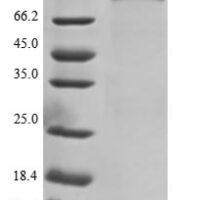
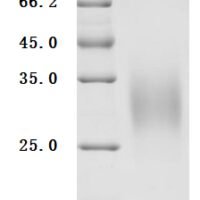
SDS-PAGE: Single band at expected molecular weight confirming purity.

ELISA: Suitable as coating antigen or detection standard.

Western Blot: Compatible with standard Western Blot protocols.

Protein Interaction: Validated for SPR (Surface Plasmon Resonance) and BLI (Bio-Layer Interferometry) studies.

Shipping: Shipped at ambient temperature. Lyophilized protein is stable during transit.

Storage: Store lyophilized protein at -20°C to -80°C. Reconstituted protein should be aliquoted and stored at -80°C. Avoid repeated freeze-thaw cycles.

Shelf Life: 12 months from date of receipt when stored as recommended.

Shipping Time: Orders placed before 2 PM EST ship same day. International orders typically deliver within 5-10 business days.

Protein Biology

Function

Destroys radicals which are normally produced within the cells and which are toxic to biological systems (PubMed:18948262, PubMed:24140062). Catalyzes the oxidation of hydrogen sulfide (H2S) to sulfate, playing an important role in detoxifying H2S and limiting the accumulation of reactive sulfur species (RSS) such as persulfides and polysulfides (PubMed:36630448)

Subcellular Location

Cytoplasm; Nucleus

Disease Association

Amyotrophic lateral sclerosis 1 (ALS1) : A neurodegenerative disorder affecting upper motor neurons in the brain and lower motor neurons in the brain stem and spinal cord, resulting in fatal paralysis. Sensory abnormalities are absent. The pathologic hallmarks of the disease include pallor of the corticospinal tract due to loss of motor neurons, presence of ubiquitin-positive inclusions within surviving motor neurons, and deposition of pathologic aggregates. The etiology of amyotrophic lateral sclerosis is likely to be multifactorial, involving both genetic and environmental factors. The disease is inherited in 5-10% of the cases. [The disease is caused by variants affecting the gene represented in this entry] | Spastic tetraplegia and axial hypotonia, progressive (STAHP) : An autosomal recessive, neurologic disorder characterized by loss of motor abilities in the first year of life, after which severe, progressive spastic tetraparesis develops. Affected individuals have severe axial hypotonia, hyperekplexia, hypertonia, and myokymia, reflecting upper motor neuron involvement. Cognitive development may be affected. [The disease is caused by variants affecting the gene represented in this entry]

Subunit

Homodimer; non-disulfide-linked (By similarity). Homodimerization may take place via the ditryptophan cross-link at Trp-33. Heterodimer with SOD1 (PubMed:31292775). The heterodimer CCS:SOD1 interacts with SLC31A1; this heterotrimer is Cu(1+)-mediated and its maintenance is regulated through SOD1 activation (PubMed:31292775). Interacts with DAOA; the interaction is direct (PubMed:30037290)

Gene: SOD1  |  Organism: Homo sapiens  |  Synonyms: Hydrogen sulfide oxidase; Superoxide dismutase 1
Key Publications

Frequently Asked Questions

How do I order or inquire about this product?

Fill out the Online Inquiry form with your required quantity and specifications. You can also email sales@biocrestsci.com. Our team typically responds within 4 business hours with a quote and availability confirmation.

What is the shipping and delivery time?

Orders placed before 2 PM EST ship the same day. Domestic (US) delivery typically takes 2-3 business days. International orders deliver within 5-10 business days. All products are shipped at ambient temperature with appropriate packaging to ensure stability.

How should I store this recombinant protein?

Lyophilized proteins should be stored at -20°C to -80°C upon receipt. After reconstitution, aliquot and store at -80°C. Avoid repeated freeze-thaw cycles. Shelf life is 12 months from date of receipt when stored as recommended.

What quality controls are performed on your products?

Each product undergoes SDS-PAGE purity analysis (typically >85-95%), endotoxin testing, and bioactivity validation. Products are validated for ELISA, Western Blot, and SPR/BLI applications as specified on this product page. A Certificate of Analysis (CoA) is available upon request.

Shopping Cart
Scroll to Top