Recombinant Human Protein NOV homolog protein (NOV)

Recombinant Human Protein NOV homolog protein (NOV) — Immediate-early protein playing a role in various cellular processes including proliferation, adhesion, migration, differentiation and survival. Purity >95%.

SKU: BCACP-000950 Category:
Product SKUBCACP-000950
Product DescriptionRecombinant Human Protein NOV homolog protein (NOV) protein is expressed from E.Coli with Tag-Free. It contains 28-357aa. [Accession | P48745].
Uniprot No.P48745
Gene NamesNOV
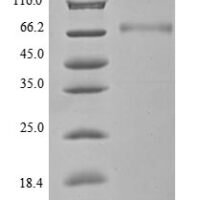
Purity>95% as determined by SDS-PAGE.
Expression SystemE.Coli
Expression Region28-357aa
SpeciesHomo sapiens (Human)
Tag InfoTag-Free
Molecular weight36.2 kDa
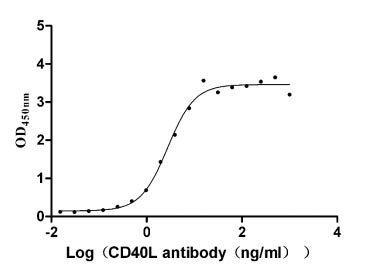
ActivityFully biologically active when compared to standard. The ED50 as determined by inhibiting TWEAK- dependent proliferation of human umbilical vein endothelial cells (HUVEC) is less than 30 ng/ml, corresponding to a specific activity of >3.3x10⁴ IU/mg, in the presence of 15 ng/ml of rHuTWEAK.
BufferLyophilized from a 0.2 μm filtered 20 mM Tris-HCl, 0.5 M NaCl, 6% Trehalose, pH 8.0
StorageStore at -20°C/-80°C upon receipt, aliquoting is necessary for mutiple use. Avoid repeated freeze-thaw cycles.
Alternative NamesCCN family member 3; CCN3; IBP-9; IGF-binding protein 9; IGFBP-9; IGFBP9; Insulin-like growth factor-binding protein 9; Nephroblastoma overexpressed; Nephroblastoma overexpressed gene protein homolog; Nephroblastoma-overexpressed gene protein homolog; NOV; NOV_HUMAN; NovH; Protein NOV homolog

Function

Immediate-early protein playing a role in various cellular processes including proliferation, adhesion, migration, differentiation and survival. Acts by binding to integrins or membrane receptors such as NOTCH1. Essential regulator of hematopoietic stem and progenitor cell function.

Product Specifications

Recombinant Human Protein NOV homolog protein (NOV) is a recombinant protein, expressed in E.Coli, covering amino acids 28-357aa, with Tag-Free tag, molecular weight 36.2 kDa, purity >95% as determined by SDS-PAGE.. Suitable for ELISA and Western Blot applications.

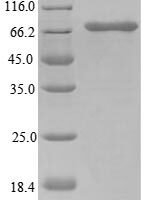
SDS-PAGE: Single band at expected molecular weight confirming purity.

ELISA: Suitable as coating antigen or detection standard.

Western Blot: Compatible with standard Western Blot protocols.

Protein Interaction: Validated for SPR (Surface Plasmon Resonance) and BLI (Bio-Layer Interferometry) studies.

Shipping: Shipped at ambient temperature. Lyophilized protein is stable during transit.

Storage: Store lyophilized protein at -20°C to -80°C. Reconstituted protein should be aliquoted and stored at -80°C. Avoid repeated freeze-thaw cycles.

Shelf Life: 12 months from date of receipt when stored as recommended.

Shipping Time: Orders placed before 2 PM EST ship same day. International orders typically deliver within 5-10 business days.

Protein Biology

Function

Immediate-early protein playing a role in various cellular processes including proliferation, adhesion, migration, differentiation and survival (PubMed:12050162, PubMed:12695522, PubMed:15181016, PubMed:15611078, PubMed:21344378). Acts by binding to integrins or membrane receptors such as NOTCH1 (PubMed:12695522, PubMed:15611078, PubMed:21344378). Essential regulator of hematopoietic stem and progenitor cell function (PubMed:17463287). Inhibits myogenic differentiation through the activation of Notch-signaling pathway (PubMed:12050162). Inhibits vascular smooth muscle cells proliferation by increasing expression of cell-cycle regulators such as CDKN2B or CDKN1A independently of TGFB1 signaling (PubMed:20139355). Ligand of integrins ITGAV:ITGB3 and ITGA5:ITGB1, acts directly upon endothelial cells to stimulate pro-angiogenic activities and induces angiogenesis. In endothelial cells, supports cell adhesion, induces directed cell migration (chemotaxis) and promotes cell survival (PubMed:12695522). Also plays a role in cutaneous wound healing acting as integrin receptor ligand. Supports skin fibroblast adhesion through ITGA5:ITGB1 and ITGA6:ITGB1 and induces fibroblast chemotaxis through ITGAV:ITGB5. Seems to enhance bFGF-induced DNA synthesis in fibroblasts (PubMed:15611078). Involved in bone regeneration as a negative regulator (By similarity). Enhances the articular chondrocytic phenotype, whereas it repressed the one representing endochondral ossification (PubMed:21871891). Impairs pancreatic beta-cell function, inhibits beta-cell proliferation and insulin secretion (By similarity). Plays a role as negative regulator of endothelial pro-inflammatory activation reducing monocyte adhesion, its anti-inflammatory effects occur secondary to the inhibition of NF-kappaB signaling pathway (PubMed:21063504). Contributes to the control and coordination of inflammatory processes in atherosclerosis (By similarity). Attenuates inflammatory pain through regulation of IL1B- and TNF-induced MMP9, MMP2 and CCL2 expression. Inhibits MMP9 expression through ITGB1 engagement (PubMed:21871891). Brain osteoanabolic hormone (By similarity). Drives osteogenesis in osteochondral skeletal stem cells (PubMed:38987585). During lactation, maintains the maternal skeleton and viability of offspring (By similarity)

Gene: CCN3  |  Organism: Homo sapiens

Frequently Asked Questions

How do I order or inquire about this product?

Fill out the Online Inquiry form with your required quantity and specifications. You can also email sales@biocrestsci.com. Our team typically responds within 4 business hours with a quote and availability confirmation.

What is the shipping and delivery time?

Orders placed before 2 PM EST ship the same day. Domestic (US) delivery typically takes 2-3 business days. International orders deliver within 5-10 business days. All products are shipped at ambient temperature with appropriate packaging to ensure stability.
How should I store this recombinant protein?

Lyophilized proteins should be stored at -20°C to -80°C upon receipt. After reconstitution, aliquot and store at -80°C. Avoid repeated freeze-thaw cycles. Shelf life is 12 months from date of receipt when stored as recommended.

What quality controls are performed on your products?

Each product undergoes SDS-PAGE purity analysis (typically >85-95%), endotoxin testing, and bioactivity validation. Products are validated for ELISA, Western Blot, and SPR/BLI applications as specified on this product page. A Certificate of Analysis (CoA) is available upon request.

Shopping Cart
Scroll to Top