Function
Is a modulator of endothelial barrier permeability, required for proper organization of endothelial cell-cell junctions and cytoskeleton. It also plays a role in the modulation of secretory autophagy. May affect blood-brain barrier permeability.
Biological Context
Subcellular Location: Cell membrane (Multi-pass membrane protein); Cell junction; Cytoplasmic vesicle, secretory vesicle
Tissue Specificity: Expressed in neonatal dermal microvascular endothelial cells
Disease Association: Bleeding disorder, vascular-type (BDVAS) : An autosomal dominant disorder characterized by increased bleeding tendency, without platelet dysfunction. Affected individuals experience spontaneous episodic bleeding, usually beginning in childhood. Clinical manifestations include epistaxis, oral cavity bleeding, menorrhagia, and excessive bleeding during surgery or childbirth. [The disease may be caused by variants affecting the gene represented in this entry]
Product Specifications
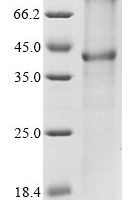
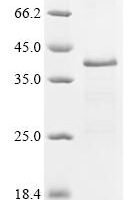
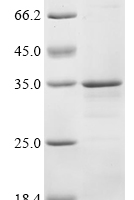
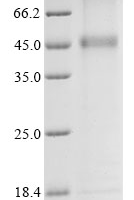
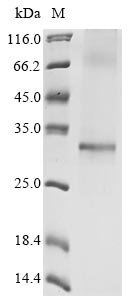
Recombinant Human Apolipoprotein L domain-containing protein 1 (APOLD1) Protein is a recombinant protein from Homo sapiens (Human), expressed in in vitro E.coli expression system, covering amino acids 1-279aa, with N-terminal 10xHis-tagged tag, molecular weight 33.4kDa, purity Greater than 85% as determined by SDS-PAGE.. Suitable for ELISA and Western Blot applications.