Recombinant Human G protein-activated inward rectifier potassium channel 4 (KCNJ5) Protein

Recombinant Human G protein-activated inward rectifier potassium channel 4 (KCNJ5) Protein — Inward rectifier potassium channels are characterized by a greater tendency to allow potassium to flow into the cell rather than out of it. Purity >90%.

SKU: BCRECP-00127TM Category:

Product Specifications

Uniprot No.P48544
Gene NamesKCNJ5
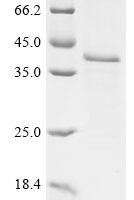
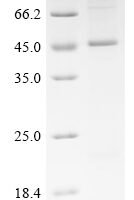
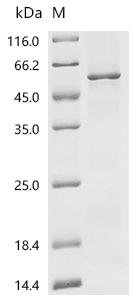
PurityGreater than 90% as determined by SDS-PAGE.
Expression Systemin vitro E.coli expression system
Expression Region1-419aa
SpeciesHomo sapiens (Human)
Tag InfoN-terminal 10xHis-tagged
Molecular weight53.7kDa
ActivityNot Test
BufferIf the delivery form is liquid, the default storage buffer is Tris/PBS-based buffer, 5%-50% glycerol.If the delivery form is lyophilized powder, the buffer before lyophilization is Tris/PBS-based buffer, 6% Trehalose.
StorageStore at -20°C/-80°C upon receipt, aliquoting is necessary for mutiple use. Avoid repeated freeze-thaw cycles.

Function

Inward rectifier potassium channels are characterized by a greater tendency to allow potassium to flow into the cell rather than out of it. Their voltage dependence is regulated by the concentration of extracellular potassium; as external potassium is raised, the voltage range of the channel opening shifts to more positive voltages. The inward rectification is mainly due to the blockage of outward current by internal magnesium.

Biological Context

Subcellular Location: Membrane (Multi-pass membrane protein)
Tissue Specificity: Islets, exocrine pancreas and heart. Expressed in the adrenal cortex, particularly the zona glomerulosa
Disease Association: Long QT syndrome 13 (LQT13) : A heart disorder characterized by a prolonged QT interval on the ECG and polymorphic ventricular arrhythmias. They cause syncope and sudden death in response to exercise or emotional stress, and can present with a sentinel event of sudden cardiac death in infancy. [The disease is caused by variants affecting the gene represented in this entry] | Hyperaldosteronism, familial, 3 (HALD3) : A form of hyperaldosteronism characterized by hypertension secondary to massive adrenal mineralocorticoid production. HALD3 patients present with childhood hypertension, elevated aldosteronism levels, and high levels of the hybrid steroids 18-oxocortisol and 18-hydroxycortisol. Hypertension and aldosteronism are not reversed by administration of exogenous glucocorticoids and patients require adrenalectomy to control hypertension. [The disease is caused by variants affecting the gene represented in this entry] | [Somatic mutations in KCNJ5 have been found in aldosterone-producing adrenal adenomas and can be responsible for aldosteronism associated with cell autonomous proliferation. APAs are typically solitary, well circumscribed tumors diagnosed between ages 30 and 70. They come to medical attention due to new or worsening hypertension, often with hypokalemia. The precise role of KCNJ5 mutations in APA is under debate. They produce increased sodium conductance and cell depolarization, which in adrenal glomerulosa cells produces calcium entry, the signal for aldosterone production and cell proliferation. However, they may not be causative of APA development but may be a consequence of tumorigenesis, playing only a contributory role toward aldosterone overproduction and tumor growth. Somatic mutations in KCNJ5 have not been found in non-aldosterone secreting adrenal adenomas suggesting that they are specifically associated with APA ] | [Mutations in KCNJ5 are involved in the pathogenesis of hypertension without primary aldosteronism but with increased aldosterone response to ACTH stimulation]

Product Specifications

Recombinant Human G protein-activated inward rectifier potassium channel 4 (KCNJ5) Protein is a recombinant protein from Homo sapiens (Human), expressed in in vitro E.coli expression system, covering amino acids 1-419aa, with N-terminal 10xHis-tagged tag, molecular weight 53.7kDa, purity Greater than 90% as determined by SDS-PAGE.. Suitable for ELISA and Western Blot applications.
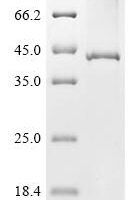
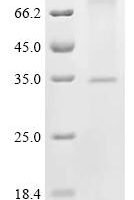
SDS-PAGE: Single band at expected molecular weight confirming purity.

ELISA: Suitable as coating antigen or detection standard.

Western Blot: Compatible with standard Western Blot protocols.

Protein Interaction: Validated for SPR (Surface Plasmon Resonance) and BLI (Bio-Layer Interferometry) studies.

Shipping: Shipped at ambient temperature. Lyophilized protein is stable during transit.

Storage: Store lyophilized protein at -20°C to -80°C. Reconstituted protein should be aliquoted and stored at -80°C. Avoid repeated freeze-thaw cycles.

Shelf Life: 12 months from date of receipt when stored as recommended.

Shipping Time: Orders placed before 2 PM EST ship same day. International orders typically deliver within 5-10 business days.

Protein Biology

Function

Inward rectifier potassium channels are characterized by a greater tendency to allow potassium to flow into the cell rather than out of it. Their voltage dependence is regulated by the concentration of extracellular potassium; as external potassium is raised, the voltage range of the channel opening shifts to more positive voltages. The inward rectification is mainly due to the blockage of outward current by internal magnesium. Can be blocked by external barium. This potassium channel is controlled by G proteins

Subcellular Location

Membrane (Multi-pass membrane protein)

Disease Association

Long QT syndrome 13 (LQT13) : A heart disorder characterized by a prolonged QT interval on the ECG and polymorphic ventricular arrhythmias. They cause syncope and sudden death in response to exercise or emotional stress, and can present with a sentinel event of sudden cardiac death in infancy. [The disease is caused by variants affecting the gene represented in this entry] | Hyperaldosteronism, familial, 3 (HALD3) : A form of hyperaldosteronism characterized by hypertension secondary to massive adrenal mineralocorticoid production. HALD3 patients present with childhood hypertension, elevated aldosteronism levels, and high levels of the hybrid steroids 18-oxocortisol and 18-hydroxycortisol. Hypertension and aldosteronism are not reversed by administration of exogenous glucocorticoids and patients require adrenalectomy to control hypertension. [The disease is caused by variants affecting the gene represented in this entry] | [Somatic mutations in KCNJ5 have been found in aldosterone-producing adrenal adenomas and can be responsible for aldosteronism associated with cell autonomous proliferation. APAs are typically solitary, well circumscribed tumors diagnosed between ages 30 and 70. They come to medical attention due to new or worsening hypertension, often with hypokalemia. The precise role of KCNJ5 mutations in APA is under debate. They produce increased sodium conductance and cell depolarization, which in adrenal glomerulosa cells produces calcium entry, the signal for aldosterone production and cell proliferation. However, they may not be causative of APA development but may be a consequence of tumorigenesis, playing only a contributory role toward aldosterone overproduction and tumor growth (PubMed:22275527). Somatic mutations in KCNJ5 have not been found in non-aldosterone secreting adrenal adenomas suggesting that they are specifically associated with APA (PubMed:22275527, PubMed:22848660)] | [Mutations in KCNJ5 are involved in the pathogenesis of hypertension without primary aldosteronism but with increased aldosterone response to ACTH stimulation]

Tissue Specificity

Islets, exocrine pancreas and heart. Expressed in the adrenal cortex, particularly the zona glomerulosa

Subunit

Associates with KCNJ3/GIRK1 to form a G protein-activated heteromultimer pore-forming unit. The resulting inward current is much larger (PubMed:8868049, PubMed:10659995, PubMed:8558261). Associates with KCNJ6/GIRK2 to form a G protein-activated heteromultimer pore-forming unit (By similarity)

Gene: KCNJ5  |  Organism: Homo sapiens  |  Synonyms: Cardiac inward rectifier; Heart KATP channel; Inward rectifier K(+) channel Kir3.4; KATP-1; Potassium channel, inwardly rectifying subfamily J member 5
Key Publications

Frequently Asked Questions

How do I order or inquire about this product?

Fill out the Online Inquiry form with your required quantity and specifications. You can also email sales@biocrestsci.com. Our team typically responds within 4 business hours with a quote and availability confirmation.

What is the shipping and delivery time?

Orders placed before 2 PM EST ship the same day. Domestic (US) delivery typically takes 2-3 business days. International orders deliver within 5-10 business days. All products are shipped at ambient temperature with appropriate packaging to ensure stability.

How should I store this recombinant protein?

Lyophilized proteins should be stored at -20°C to -80°C upon receipt. After reconstitution, aliquot and store at -80°C. Avoid repeated freeze-thaw cycles. Shelf life is 12 months from date of receipt when stored as recommended.

What quality controls are performed on your products?

Each product undergoes SDS-PAGE purity analysis (typically >85-95%), endotoxin testing, and bioactivity validation. Products are validated for ELISA, Western Blot, and SPR/BLI applications as specified on this product page. A Certificate of Analysis (CoA) is available upon request.

Shopping Cart
Scroll to Top