Recombinant Mouse Otopetrin-1 (Otop1) Protein

Recombinant Mouse Otopetrin-1 (Otop1) Protein — Proton-selective ion channel. Purity >85%.

SKU: BCRECP-00332TM Category:

Product Specifications

Uniprot No.Q80VM9
Gene NamesOtop1
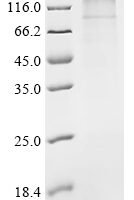
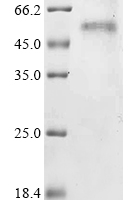
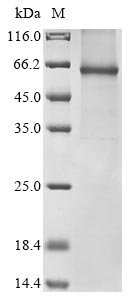
PurityGreater than 85% as determined by SDS-PAGE.
Expression Systemin vitro E.coli expression system
Expression Region1-600aa
SpeciesMus musculus (Mouse)
Tag InfoN-terminal 10xHis-tagged
Molecular weight68.6kDa
BufferIf the delivery form is liquid, the default storage buffer is Tris/PBS-based buffer, 5%-50% glycerol.If the delivery form is lyophilized powder, the buffer before lyophilization is Tris/PBS-based buffer, 6% Trehalose.
StorageStore at -20°C/-80°C upon receipt, aliquoting is necessary for mutiple use. Avoid repeated freeze-thaw cycles.

Function

Proton-selective ion channel. Biphasically modulated by acid and alkali, mediating proton influx and efflux in response to extracellular acid and base stimulation, respectively. Sour taste receptor, which carries inward currents in response to extracellular acidification.

Biological Context

Subcellular Location: Cell membrane (Multi-pass membrane protein); Cell projection, microvillus
Tissue Specificity: Expressed in thymus, heart, kidney, skin, vestibular system of the inner ear, sour taste cells, heart, uterus, dorsal root ganglion, adrenal gland, lactating mammary gland and stimulated mast cells. In the inner ear, expressed in the supporting cells in extrastriolar regions of the saccule and in the utricle, but not in the cochlea. Expressed in brown adipose tissue. Expressed in epididymal white adipose tissue (eWAT), as well as in inguinal fat, in obese animals, but hardly detectable in eWAT from lean mice. Expressed in acid-sensing taste receptor cells (PKD2L1-positive cells), but not in other types of taste cells (at protein level)

Product Specifications

Recombinant Mouse Otopetrin-1 (Otop1) Protein is a recombinant protein from Mus musculus (Mouse), expressed in in vitro E.coli expression system, covering amino acids 1-600aa, with N-terminal 10xHis-tagged tag, molecular weight 68.6kDa, purity Greater than 85% as determined by SDS-PAGE.. Suitable for ELISA and Western Blot applications.
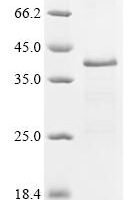
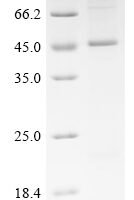
SDS-PAGE: Single band at expected molecular weight confirming purity.

ELISA: Suitable as coating antigen or detection standard.

Western Blot: Compatible with standard Western Blot protocols.

Protein Interaction: Validated for SPR (Surface Plasmon Resonance) and BLI (Bio-Layer Interferometry) studies.

Shipping: Shipped at ambient temperature. Lyophilized protein is stable during transit.

Storage: Store lyophilized protein at -20°C to -80°C. Reconstituted protein should be aliquoted and stored at -80°C. Avoid repeated freeze-thaw cycles.

Shelf Life: 12 months from date of receipt when stored as recommended.

Shipping Time: Orders placed before 2 PM EST ship same day. International orders typically deliver within 5-10 business days.

Protein Biology

Function

Proton-selective ion channel (PubMed:29371428, PubMed:31160780, PubMed:31543453, PubMed:36596786, PubMed:37798269). Biphasically modulated by acid and alkali, mediating proton influx and efflux in response to extracellular acid and base stimulation, respectively (PubMed:36596786, PubMed:37798269). Sour taste receptor, which carries inward currents in response to extracellular acidification (PubMed:29371428, PubMed:31543264, PubMed:31543453, PubMed:37053086). Sensor for ammonium chloride (NH(4)Cl) in taste receptor cells. NH(4)Cl acts by increasing the intracellular pH, thereby generating a driving force for proton entry through OTOP1 channel (PubMed:37798269). Might also participate in alkaline sensation (PubMed:37798269). Plays a role in the regulation of Ca(2+) flux in response to purigenic (ATP, ADP and UDP) stimuli, leading to increase in cytosolic Ca(2+) due to influx of extracellular calcium (PubMed:17606897, PubMed:20554841). May play this role by inhibiting P2Y purinoceptor-mediated Ca(2+) release in a Ca(2+)-dependent manner and promote an influx of Ca(2+) in response to ATP (PubMed:20554841). Through this mechanism and possibly others, plays a role in the formation and function of calcium carbonate-based structures in the vestibular system of the inner ear, called otoconia, that sense gravity and linear acceleration (PubMed:12651873, PubMed:20554841). In obesity, may attenuate adipose tissue inflammation, through the negative regulation of IFNG signaling, hence may play an adaptive role in the maintainance of metabolic homeostasis (PubMed:24379350). Following alkali activation, may also be permeable Na(+), K(+), Cs(+) and Li(+) (PubMed:37798269)

Subcellular Location

Cell membrane (Multi-pass membrane protein); Cell projection, microvillus

Tissue Specificity

Expressed in thymus, heart, kidney, skin, vestibular system of the inner ear, sour taste cells, heart, uterus, dorsal root ganglion, adrenal gland, lactating mammary gland and stimulated mast cells (PubMed:12651873, PubMed:29371428). In the inner ear, expressed in the supporting cells in extrastriolar regions of the saccule and in the utricle, but not in the cochlea (PubMed:20554841). Expressed in brown adipose tissue. Expressed in epididymal white adipose tissue (eWAT), as well as in inguinal fat, in obese animals, but hardly detectable in eWAT from lean mice (PubMed:24379350). Expressed in acid-sensing taste receptor cells (PKD2L1-positive cells), but not in other types of taste cells (at protein level) (PubMed:29371428, PubMed:31543264, PubMed:31543453, PubMed:36596786)

Subunit

Homodimer (By similarity). Interacts with STAT1, independently of STAT1 phosphorylation status (PubMed:24379350)

Gene: Otop1  |  Organism: Mus musculus  |  Synonyms: Otopetrin-1
Key Publications

Frequently Asked Questions

How do I order or inquire about this product?

Fill out the Online Inquiry form with your required quantity and specifications. You can also email sales@biocrestsci.com. Our team typically responds within 4 business hours with a quote and availability confirmation.

What is the shipping and delivery time?

Orders placed before 2 PM EST ship the same day. Domestic (US) delivery typically takes 2-3 business days. International orders deliver within 5-10 business days. All products are shipped at ambient temperature with appropriate packaging to ensure stability.

How should I store this recombinant protein?

Lyophilized proteins should be stored at -20°C to -80°C upon receipt. After reconstitution, aliquot and store at -80°C. Avoid repeated freeze-thaw cycles. Shelf life is 12 months from date of receipt when stored as recommended.

What quality controls are performed on your products?

Each product undergoes SDS-PAGE purity analysis (typically >85-95%), endotoxin testing, and bioactivity validation. Products are validated for ELISA, Western Blot, and SPR/BLI applications as specified on this product page. A Certificate of Analysis (CoA) is available upon request.

Shopping Cart
Scroll to Top