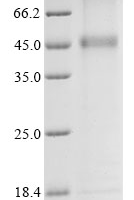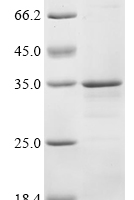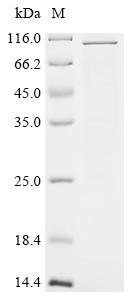
Recombinant Human Transient receptor potential cation channel subfamily V member 1 (TRPV1), partial Protein

Recombinant Human Transient receptor potential cation channel subfamily V member 1 (TRPV1), partial Protein — Non-selective calcium permeant cation channel involved in detection of noxious chemical and thermal stimuli. Purity >85%.

SKU: BCRECP-00395TM Category:

Product Specifications

Uniprot No.Q8NER1
Gene NamesTRPV1
PurityGreater than 85% as determined by SDS-PAGE.
Expression Systemin vitro E.coli expression system
Expression Region39-839aa
SpeciesHomo sapiens (Human)
Tag InfoN-terminal 10xHis-tagged
Molecular weight92.5kDa
ActivityNot Test
BufferIf the delivery form is liquid, the default storage buffer is Tris/PBS-based buffer, 5%-50% glycerol.If the delivery form is lyophilized powder, the buffer before lyophilization is Tris/PBS-based buffer, 6% Trehalose.
StorageStore at -20°C/-80°C upon receipt, aliquoting is necessary for mutiple use. Avoid repeated freeze-thaw cycles.

Function

Non-selective calcium permeant cation channel involved in detection of noxious chemical and thermal stimuli. Seems to mediate proton influx and may be involved in intracellular acidosis in nociceptive neurons. Involved in mediation of inflammatory pain and hyperalgesia.

Biological Context

Subcellular Location: Postsynaptic cell membrane (Multi-pass membrane protein); Cell projection, dendritic spine membrane (Multi-pass membrane protein); Cell membrane (Multi-pass membrane protein)
Tissue Specificity: Widely expressed at low levels. Expression is elevated in dorsal root ganglia. In skin, expressed in cutaneous sensory nerve fibers, mast cells, epidermal keratinocytes, dermal blood vessels, the inner root sheet and the infundibulum of hair follicles, differentiated sebocytes, sweat gland ducts, and the secretory portion of eccrine sweat glands (at protein level)

Product Specifications

Recombinant Human Transient receptor potential cation channel subfamily V member 1 (TRPV1), partial Protein is a recombinant protein from Homo sapiens (Human), expressed in in vitro E.coli expression system, covering amino acids 39-839aa, with N-terminal 10xHis-tagged tag, molecular weight 92.5kDa, purity Greater than 85% as determined by SDS-PAGE.. Suitable for ELISA and Western Blot applications.
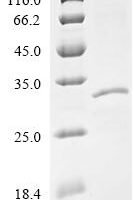
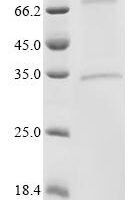
SDS-PAGE: Single band at expected molecular weight confirming purity.

ELISA: Suitable as coating antigen or detection standard.

Western Blot: Compatible with standard Western Blot protocols.

Protein Interaction: Validated for SPR (Surface Plasmon Resonance) and BLI (Bio-Layer Interferometry) studies.

Shipping: Shipped at ambient temperature. Lyophilized protein is stable during transit.

Storage: Store lyophilized protein at -20°C to -80°C. Reconstituted protein should be aliquoted and stored at -80°C. Avoid repeated freeze-thaw cycles.

Shelf Life: 12 months from date of receipt when stored as recommended.

Shipping Time: Orders placed before 2 PM EST ship same day. International orders typically deliver within 5-10 business days.

Protein Biology

Function

Non-selective calcium permeant cation channel involved in detection of noxious chemical and thermal stimuli (PubMed:11050376, PubMed:11243859, PubMed:11226139, PubMed:12077606). Seems to mediate proton influx and may be involved in intracellular acidosis in nociceptive neurons. Involved in mediation of inflammatory pain and hyperalgesia. Sensitized by a phosphatidylinositol second messenger system activated by receptor tyrosine kinases, which involves PKC isozymes and PCL. Activated by vanilloids, like capsaicin, and temperatures higher than 42 degrees Celsius (PubMed:37117175). Upon activation, exhibits a time- and Ca(2+)-dependent outward rectification, followed by a long-lasting refractory state. Mild extracellular acidic pH (6.5) potentiates channel activation by noxious heat and vanilloids, whereas acidic conditions (pH <6) directly activate the channel. Can be activated by endogenous compounds, including 12-hydroperoxytetraenoic acid and bradykinin. Acts as ionotropic endocannabinoid receptor with central neuromodulatory effects. Triggers a form of long-term depression (TRPV1-LTD) mediated by the endocannabinoid anandamine in the hippocampus and nucleus accumbens by affecting AMPA receptors endocytosis

Subcellular Location

Postsynaptic cell membrane (Multi-pass membrane protein); Cell projection, dendritic spine membrane (Multi-pass membrane protein); Cell membrane (Multi-pass membrane protein)

Tissue Specificity

Widely expressed at low levels. Expression is elevated in dorsal root ganglia. In skin, expressed in cutaneous sensory nerve fibers, mast cells, epidermal keratinocytes, dermal blood vessels, the inner root sheet and the infundibulum of hair follicles, differentiated sebocytes, sweat gland ducts, and the secretory portion of eccrine sweat glands (at protein level)

Subunit

Homotetramer (PubMed:37117175). Interacts with PIRT (By similarity). Interacts with TRPV3 and may also form a heteromeric channel with TRPV3 (PubMed:12077606). Interacts with CALM, PRKCM and CSK. Interacts with PRKCG and NTRK1, probably by forming a trimeric complex (By similarity). Interacts with the Scolopendra mutilans RhTx toxin (By similarity). Interacts with TMEM100 (By similarity). Interacts with PACS2 (PubMed:29656858)

Gene: TRPV1  |  Organism: Homo sapiens  |  Synonyms: Capsaicin receptor; Osm-9-like TRP channel 1; Vanilloid receptor 1
Key Publications

Frequently Asked Questions

How do I order or inquire about this product?

Fill out the Online Inquiry form with your required quantity and specifications. You can also email sales@biocrestsci.com. Our team typically responds within 4 business hours with a quote and availability confirmation.

What is the shipping and delivery time?

Orders placed before 2 PM EST ship the same day. Domestic (US) delivery typically takes 2-3 business days. International orders deliver within 5-10 business days. All products are shipped at ambient temperature with appropriate packaging to ensure stability.

How should I store this recombinant protein?

Lyophilized proteins should be stored at -20°C to -80°C upon receipt. After reconstitution, aliquot and store at -80°C. Avoid repeated freeze-thaw cycles. Shelf life is 12 months from date of receipt when stored as recommended.

What quality controls are performed on your products?

Each product undergoes SDS-PAGE purity analysis (typically >85-95%), endotoxin testing, and bioactivity validation. Products are validated for ELISA, Western Blot, and SPR/BLI applications as specified on this product page. A Certificate of Analysis (CoA) is available upon request.

Shopping Cart
Scroll to Top