Function
Non-selective channel that modulates the membrane potential under normal conditions and oxidative stress, and is involved in mitochondrial homeostasis. Involved in mitochondrial deoxynucleoside triphosphates (dNTP) pool homeostasis and mitochondrial DNA (mtDNA) maintenance. May be involved in the regulation of reactive oxygen species metabolism and the control of oxidative phosphorylation.
Biological Context
Subcellular Location: Mitochondrion inner membrane (Multi-pass membrane protein)
Tissue Specificity: Ubiquitous. Expressed in pancreas, kidney, muscle, liver, lung, placenta, brain and heart
Disease Association: Mitochondrial DNA depletion syndrome 6 (MTDPS6) : A disease due to mitochondrial dysfunction. It is characterized by infantile onset of progressive liver failure, often leading to death in the first year of life, peripheral neuropathy, corneal scarring, acral ulceration and osteomyelitis leading to autoamputation, cerebral leukoencephalopathy, failure to thrive, and recurrent metabolic acidosis with intercurrent infections. [The disease is caused by variants affecting the gene represented in this entry] | Charcot-Marie-Tooth disease, axonal, type 2EE (CMT2EE) : A recessive axonal form of Charcot-Marie-Tooth disease, a disorder of the peripheral nervous system, characterized by progressive weakness and atrophy, initially of the peroneal muscles and later of the distal muscles of the arms. Charcot-Marie-Tooth disease is classified in two main groups on the basis of electrophysiologic properties and histopathology: primary peripheral demyelinating neuropathies (designated CMT1 when they are dominantly inherited) and primary peripheral axonal neuropathies (CMT2). Neuropathies of the CMT2 group are characterized by signs of axonal degeneration in the absence of obvious myelin alterations, normal or slightly reduced nerve conduction velocities, and progressive distal muscle weakness and atrophy. CMT2EE is a slowly progressive, sensorimotor peripheral axonal neuropathy with onset in the first or second decades of life. The disorder primarily affects the lower limbs, sometimes resulting in loss of ambulation, with later onset of upper limb involvement. [The disease is caused by variants affecting the gene represented in this entry]
Product Specifications
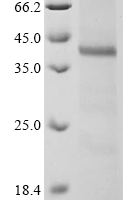
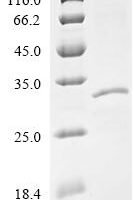
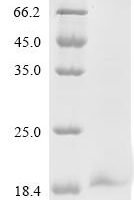
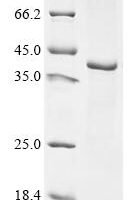
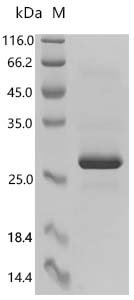
Recombinant Human Protein Mpv17 (MPV17) Protein is a recombinant protein from Homo sapiens (Human), expressed in E.coli, covering amino acids 1-176aa, with C-terminal 6xHis-tagged tag, molecular weight 25.7kDa, purity Greater than 95% as determined by SDS-PAGE.. Suitable for ELISA and Western Blot applications.