Function
Multifunctional protein that encodes the first 3 enzymatic activities of the de novo pyrimidine pathway: carbamoylphosphate synthetase (CPSase; EC 6.3.5.5), aspartate transcarbamylase (ATCase; EC 2.1.3.2) and dihydroorotase (DHOase; EC 3.5.2.3). The CPSase-function is accomplished in 2 steps, by a glutamine-dependent amidotransferase activity (GATase) that binds and cleaves glutamine to produce ammonia, followed by an ammonium-dependent carbamoyl phosphate synthetase, which reacts with the ammonia, hydrogencarbonate and ATP to form carbamoyl phosphate. The endogenously produced carbamoyl phosphate is sequestered and channeled to the ATCase active site.
Biological Context
Subcellular Location: Cytoplasm; Nucleus
Disease Association: Developmental and epileptic encephalopathy 50 (DEE50) : A form of epileptic encephalopathy, a heterogeneous group of severe early-onset epilepsies characterized by refractory seizures, neurodevelopmental impairment, and poor prognosis. Development is normal prior to seizure onset, after which cognitive and motor delays become apparent. DEE50 is an autosomal recessive, progressive disease with onset in infancy and favorable response to treatment with oral uridine. [The disease is caused by variants affecting the gene represented in this entry]
Pathway: Pyrimidine metabolism; UMP biosynthesis via de novo pathway; (S)-dihydroorotate from bicarbonate: step 3/3
Product Specifications
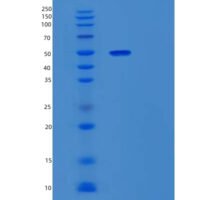
Recombinant Human CAD protein (CAD), partial is a recombinant protein from Homo sapiens (Human), expressed in Yeast, covering amino acids 1456-1846aa, with C-terminal 6xHis-tagged tag, molecular weight 43.5kDa, purity Greater than 95% as determined by SDS-PAGE.. Suitable for ELISA and Western Blot applications.