Recombinant Human Gamma-aminobutyric acid receptor subunit alpha-1 (GABRA1), partial

Recombinant Human Gamma-aminobutyric acid receptor subunit alpha-1 (GABRA1), partial — Alpha subunit of the heteropentameric ligand-gated chloride channel gated by Gamma-aminobutyric acid (GABA), a major inhibitory neurotransmitter in the brain. Purity >85%.

SKU: BCRECP-000720 Category:

Product Specifications

Product SkuBCRECP-000720
Product DescriptionRecombinant Human Gamma-aminobutyric acid receptor subunit alpha-1 (GABRA1) Protein is expressed from E.coli with N-terminal 6xHis-tagged. It contains 28-251aa. [Accession | P14867].
Uniprot No.P14867
Gene NamesGABRA1
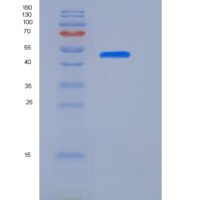
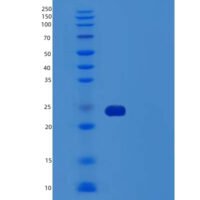
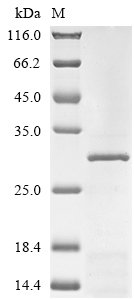
PurityGreater than 85% as determined by SDS-PAGE.
Expression SystemE.coli
Expression Region28-251aa
SpeciesHomo sapiens (Human)
Tag InfoN-terminal 6xHis-tagged
Molecular weight29.9kDa
ActivityPlease contact us to obtain bioactivity data.
BufferIf the delivery form is liquid, the default storage buffer is Tris/PBS-based buffer, 5%-50% glycerol. If the delivery form is lyophilized powder, the buffer before lyophilization is Tris/PBS-based buffer, 6% Trehalose.
StorageStore at -20°C/-80°C upon receipt, aliquoting is necessary for mutiple use. Avoid repeated freeze-thaw cycles.
Research AreasNeuroscience

Function

Alpha subunit of the heteropentameric ligand-gated chloride channel gated by Gamma-aminobutyric acid (GABA), a major inhibitory neurotransmitter in the brain. GABA-gated chloride channels, also named GABA(A) receptors (GABAAR), consist of five subunits arranged around a central pore and contain GABA active binding site(s) located at the alpha and beta subunit interface(s). When activated by GABA, GABAARs selectively allow the flow of chloride anions across the cell membrane down their electrochemical gradient.

Biological Context

Subcellular Location: Postsynaptic cell membrane (Multi-pass membrane protein); Cell membrane (Multi-pass membrane protein); Cytoplasmic vesicle membrane (Multi-pass membrane protein)
Disease Association: Epilepsy, childhood absence 4 (ECA4) : A subtype of idiopathic generalized epilepsy characterized by an onset at age 6-7 years, frequent absence seizures (several per day) and bilateral, synchronous, symmetric 3-Hz spike waves on EEG. Tonic-clonic seizures often develop in adolescence. Absence seizures may either remit or persist into adulthood. [Disease susceptibility is associated with variants affecting the gene represented in this entry] | Epilepsy, idiopathic generalized 13 (EIG13) : A disorder characterized by recurring generalized seizures in the absence of detectable brain lesions and/or metabolic abnormalities. Generalized seizures arise diffusely and simultaneously from both hemispheres of the brain. Seizure types include juvenile myoclonic seizures, absence seizures, and generalized tonic-clonic seizures. [Disease susceptibility is associated with variants affecting the gene represented in this entry] | Juvenile myoclonic epilepsy 5 (EJM5) : A subtype of idiopathic generalized epilepsy. Patients have afebrile seizures only, with onset in adolescence (rather than in childhood) and myoclonic jerks which usually occur after awakening and are triggered by sleep deprivation and fatigue. [Disease susceptibility is associated with variants affecting the gene represented in this entry] | Developmental and epileptic encephalopathy 19 (DEE19) : A severe neurologic disorder characterized by onset of seizures in the first months of life and usually associated with EEG abnormalities. Affected infants have convulsive seizures (hemiclonic or generalized) that are often prolonged and triggered by fever. Other seizure types include focal, myoclonic, absence seizures, and drop attacks. Development is normal in the first year of life with later slowing and intellectual disability. [The disease is caused by variants affecting the gene represented in this entry]

Product Specifications

Recombinant Human Gamma-aminobutyric acid receptor subunit alpha-1 (GABRA1), partial is a recombinant protein from Homo sapiens (Human), expressed in E.coli, covering amino acids 28-251aa, with N-terminal 6xHis-tagged tag, molecular weight 29.9kDa, purity Greater than 85% as determined by SDS-PAGE.. Suitable for ELISA and Western Blot applications.
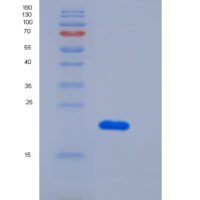
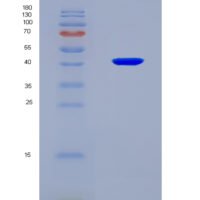
SDS-PAGE: Single band at expected molecular weight confirming purity.

ELISA: Suitable as coating antigen or detection standard.

Western Blot: Compatible with standard Western Blot protocols.

Protein Interaction: Validated for SPR (Surface Plasmon Resonance) and BLI (Bio-Layer Interferometry) studies.

Shipping: Shipped at ambient temperature. Lyophilized protein is stable during transit.

Storage: Store lyophilized protein at -20°C to -80°C. Reconstituted protein should be aliquoted and stored at -80°C. Avoid repeated freeze-thaw cycles.

Shelf Life: 12 months from date of receipt when stored as recommended.

Shipping Time: Orders placed before 2 PM EST ship same day. International orders typically deliver within 5-10 business days.

Protein Biology

Function

Alpha subunit of the heteropentameric ligand-gated chloride channel gated by Gamma-aminobutyric acid (GABA), a major inhibitory neurotransmitter in the brain (PubMed:23909897, PubMed:25489750, PubMed:29950725, PubMed:30602789). GABA-gated chloride channels, also named GABA(A) receptors (GABAAR), consist of five subunits arranged around a central pore and contain GABA active binding site(s) located at the alpha and beta subunit interface(s) (PubMed:29950725, PubMed:30602789). When activated by GABA, GABAARs selectively allow the flow of chloride anions across the cell membrane down their electrochemical gradient (PubMed:23909897, PubMed:29950725, PubMed:30602789). Alpha-1/GABRA1-containing GABAARs are largely synaptic (By similarity). Chloride influx into the postsynaptic neuron following GABAAR opening decreases the neuron ability to generate a new action potential, thereby reducing nerve transmission (By similarity). GABAARs containing alpha-1 and beta-2 or -3 subunits exhibit synaptogenic activity; the gamma-2 subunit being necessary but not sufficient to induce rapid synaptic contacts formation (PubMed:23909897, PubMed:25489750). GABAARs function also as histamine receptor where histamine binds at the interface of two neighboring beta subunits and potentiates GABA response (By similarity). GABAARs containing alpha, beta and epsilon subunits also permit spontaneous chloride channel activity while preserving the structural information required for GABA-gated openings (By similarity). Alpha-1-mediated plasticity in the orbitofrontal cortex regulates context-dependent action selection (By similarity). Together with rho subunits, may also control neuronal and glial GABAergic transmission in the cerebellum (By similarity)

Subcellular Location

Postsynaptic cell membrane (Multi-pass membrane protein); Cell membrane (Multi-pass membrane protein); Cytoplasmic vesicle membrane (Multi-pass membrane protein)

Disease Association

Epilepsy, childhood absence 4 (ECA4) : A subtype of idiopathic generalized epilepsy characterized by an onset at age 6-7 years, frequent absence seizures (several per day) and bilateral, synchronous, symmetric 3-Hz spike waves on EEG. Tonic-clonic seizures often develop in adolescence. Absence seizures may either remit or persist into adulthood. [Disease susceptibility is associated with variants affecting the gene represented in this entry] | Epilepsy, idiopathic generalized 13 (EIG13) : A disorder characterized by recurring generalized seizures in the absence of detectable brain lesions and/or metabolic abnormalities. Generalized seizures arise diffusely and simultaneously from both hemispheres of the brain. Seizure types include juvenile myoclonic seizures, absence seizures, and generalized tonic-clonic seizures. [Disease susceptibility is associated with variants affecting the gene represented in this entry] | Juvenile myoclonic epilepsy 5 (EJM5) : A subtype of idiopathic generalized epilepsy. Patients have afebrile seizures only, with onset in adolescence (rather than in childhood) and myoclonic jerks which usually occur after awakening and are triggered by sleep deprivation and fatigue. [Disease susceptibility is associated with variants affecting the gene represented in this entry] | Developmental and epileptic encephalopathy 19 (DEE19) : A severe neurologic disorder characterized by onset of seizures in the first months of life and usually associated with EEG abnormalities. Affected infants have convulsive seizures (hemiclonic or generalized) that are often prolonged and triggered by fever. Other seizure types include focal, myoclonic, absence seizures, and drop attacks. Development is normal in the first year of life with later slowing and intellectual disability. [The disease is caused by variants affecting the gene represented in this entry]

Subunit

Heteropentamer, formed by a combination of alpha (GABRA1-6), beta (GABRB1-3), gamma (GABRG1-3), delta (GABRD), epsilon (GABRE), rho (GABRR1-3), pi (GABRP) and theta (GABRQ) subunits, each subunit exhibiting distinct physiological and pharmacological properties (PubMed:29950725, PubMed:30266951, PubMed:30602789). Interacts with UBQLN1 (By similarity). Interacts with TRAK1 (By similarity). Interacts with KIF21B (By similarity). Identified in a complex of 720 kDa composed of LHFPL4, NLGN2, GABRA1, GABRB2, GABRG2 and GABRB3 (By similarity). Interacts with LHFPL4 (PubMed:28978485, PubMed:29742426). Interacts with NLGN2 (By similarity). Interacts with SHISA7; interaction leads regulation of GABAAR trafficking, channel deactivation kinetics and pharmacology (By similarity)

Gene: GABRA1  |  Organism: Homo sapiens  |  Synonyms: GABA(A) receptor subunit alpha-1
Key Publications

Frequently Asked Questions

How do I order or inquire about this product?

Fill out the Online Inquiry form with your required quantity and specifications. You can also email sales@biocrestsci.com. Our team typically responds within 4 business hours with a quote and availability confirmation.

What is the shipping and delivery time?

Orders placed before 2 PM EST ship the same day. Domestic (US) delivery typically takes 2-3 business days. International orders deliver within 5-10 business days. All products are shipped at ambient temperature with appropriate packaging to ensure stability.

How should I store this recombinant protein?

Lyophilized proteins should be stored at -20°C to -80°C upon receipt. After reconstitution, aliquot and store at -80°C. Avoid repeated freeze-thaw cycles. Shelf life is 12 months from date of receipt when stored as recommended.

What quality controls are performed on your products?

Each product undergoes SDS-PAGE purity analysis (typically >85-95%), endotoxin testing, and bioactivity validation. Products are validated for ELISA, Western Blot, and SPR/BLI applications as specified on this product page. A Certificate of Analysis (CoA) is available upon request.

Shopping Cart
Scroll to Top